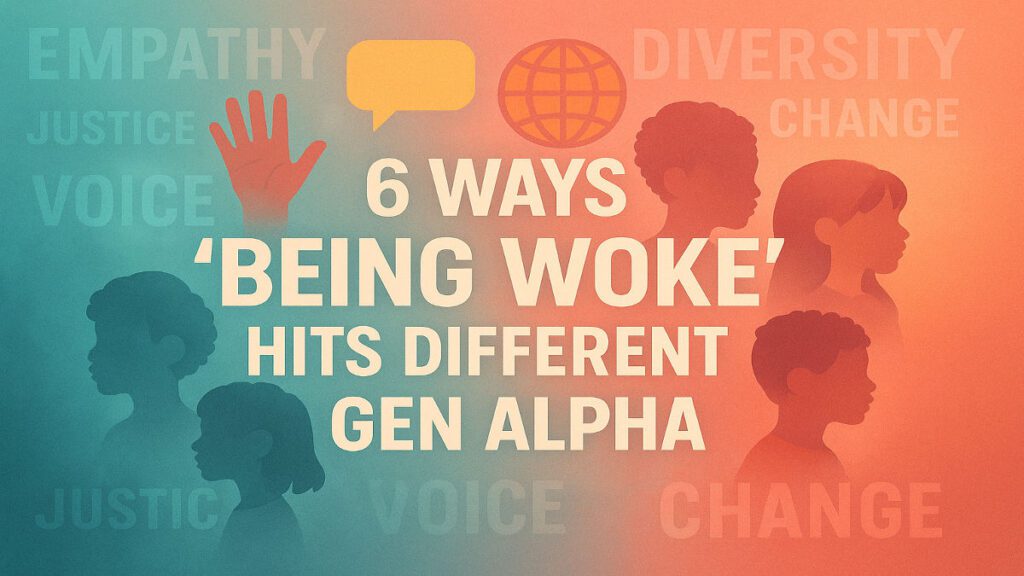
Short answer: For Gen Alpha (born after 2013), being “woke” in 2025 means empathy plus action. They spot everyday injustice, treat diversity as default, understand privilege, and use digital platforms to back real causes, not just post hashtags.
In 2025, the word “woke” is no longer just a buzzword. It is a mindset. For Generation Alpha (born after 2013), being woke carries layers of meaning rooted in empathy, justice, and digital awareness.
The word started in African American Vernacular English (AAVE) to describe racial awareness. It has since evolved into a broader cultural code for social consciousness. Gen Alpha is not just inheriting the term. They are redefining it in real time.
How does Gen Alpha spot everyday injustice?
Gen Alpha is growing up with more tools, stories, and exposure to inequality than any generation before. Whether it is colonialism explained in a Minecraft history mod or racial bias videos on YouTube Kids, this generation is tuned in early.
They notice big injustices and small ones. They question why their favourite cartoons lack differently-abled characters, or why certain toys are labelled “for boys only.” Awareness starts in these everyday moments.
Take 11-year-old Rehan from Pune. He once told his teacher that school sports teams should let girls join cricket by default, “not as an option, but as a rule.” That is Gen Alpha challenging the status quo, one playground at a time.
Why is Gen Alpha activism about action, not awareness?
To Gen Alpha, being woke is not about showing off on social media. It is about showing up. That might mean collecting plastic waste during school clean-up drives or donating birthday money to animal shelters.
This generation does not wait to grow up before supporting causes. They sign online petitions with their parents, make digital posters for climate change, and join campaigns like Earth Hour. Advocacy is not reserved for adults. It is something they do now.
Why is diversity the default for Gen Alpha?
For Gen Alpha, diversity is not a lesson. It is their lived reality. They grow up in classrooms filled with kids of different races, religions, gender identities, and family structures. That shapes their expectations.
They want inclusion reflected everywhere, from TV shows and video games to schoolbooks and holiday celebrations. “Why doesn’t this cartoon have a kid who wears a hearing aid like my cousin?” asked 9-year-old Aira from Delhi. It is not a complaint. It is a demand for fairness.
For Gen Alpha, inclusivity is not radical. It is reasonable.
How does Gen Alpha understand privilege?
Privilege can be a complex idea for kids, but Gen Alpha is surprisingly intuitive about it. They get that some people have easier access to education, safety, or healthcare based on where they were born or how they look.
What sets them apart is their instinct to use privilege positively. That might mean standing up for a bullied classmate or pushing a school fundraiser for underprivileged children.
One school in Bengaluru had its 5th graders do a “privilege walk” in the school courtyard. The exercise visually highlights unequal starting points. The reflections were deeply insightful. One child wrote, “I didn’t choose to be lucky, but I can choose to help.”
How does social media shape Gen Alpha’s awareness?
Gen Alpha is the first generation to grow up completely digital. They have seen Black Lives Matter protests on Instagram reels, climate change speeches by kids their age, and world leaders making statements on YouTube.
Social media amplifies their awareness, but it is a double-edged sword. Platforms spread causes and conversations, but also risk encouraging performative wokeness, where people say the right things without doing anything meaningful.
Even at 10 or 11, many Gen Alpha kids are learning to ask, “Is this person helping for real, or just for likes?”
How does Gen Alpha handle the word “woke” itself?
Many Gen Alpha kids are aware that “woke” can be misunderstood or weaponised. They have heard adults use it sarcastically or politicians call it a threat. Rather than being discouraged, many use that as fuel for deeper thinking.
Former U.S. President Barack Obama once said, “That’s not activism. That’s not bringing about change.” It is a message that resonates with this generation: real change takes more than hashtags.
They are not perfect, and they know it. But they are curious, aware, and increasingly committed to doing better.
The Future Is Thoughtful
To Generation Alpha, being woke in 2025 is not about being loud. It is about being aware, empathetic, and engaged. It is about asking tough questions, learning from others, and showing up for people and the planet.
They are not here to cancel. They are here to connect.
Adults, educators, and mentors owe them spaces where their version of wokeness is nurtured, not mocked or dismissed. If we listen closely, we might learn something from a generation already dreaming, and demanding, a fairer world.
Stay woke with them, not just for them.
FAQs on Gen Alpha and Being Woke
What does being woke mean to Gen Alpha?
For Gen Alpha, being woke in 2025 means staying aware of social injustice, taking action through small and large efforts, and treating diversity as the default state of the world.
How does Gen Alpha practise activism?
They sign online petitions, join school clean-up drives, donate birthday money to shelters, create digital posters for climate change, and participate in campaigns like Earth Hour with their parents.
Why is Gen Alpha so aware of privilege?
They see privilege discussed online, at home, and in school exercises like the “privilege walk” used by one Bengaluru school. They are taught to recognise advantage and use it to help others.
Is Gen Alpha influenced by social media activism?
Yes, but they are learning to separate real help from performative posting. Many already ask whether someone is helping for real or just chasing likes.
How can adults support Gen Alpha’s wokeness?
Avoid mocking their awareness, listen to their questions, support their causes, and model action-based allyship rather than hashtag-only activism.