
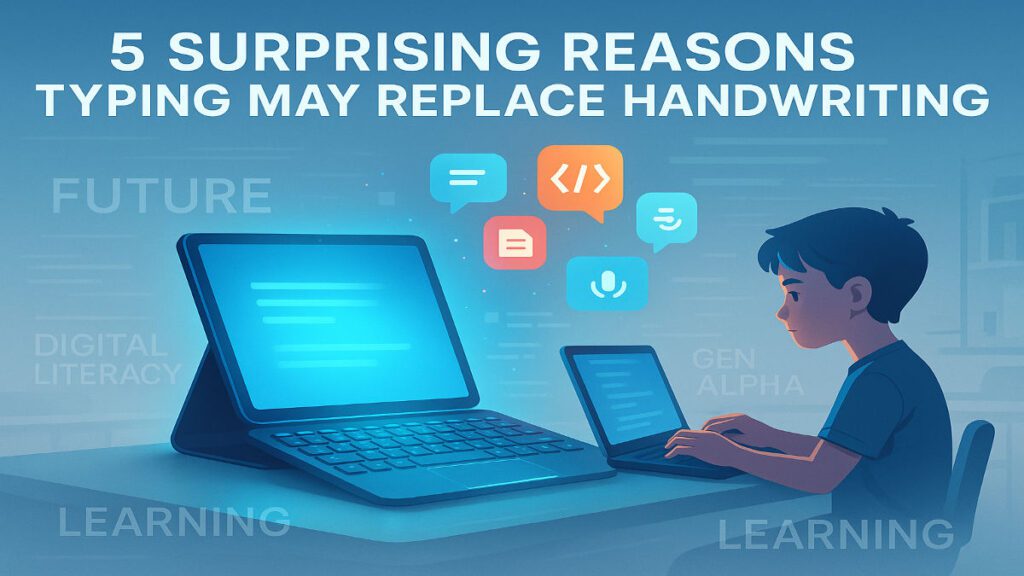
Short answer: Typing is overtaking handwriting for Gen Alpha because digital-first classrooms, accessibility tools and career demand all reward keyboard fluency. Over 70% of urban Indian schools now use digital platforms for learning, and 88% of early-career professionals call typing critical to their work. Handwriting still helps memory and creativity, so the future is balanced, not either-or.
In 2025, pens and paper still have their place. Peek into a Gen Alpha classroom and you will see something different. Students tap on tablets, submit assignments and chat with teachers through digital platforms instead of scribbling cursive in lined notebooks. Typing is no longer a side skill. It is a way of life.
Generation Alpha was born into a tech-saturated world. While handwriting still carries benefits, typing is emerging as their preferred mode of expression. Here is why the keyboard may soon take centre stage.
Why does typing feel natural for digital natives?
From the moment they can swipe on a tablet, Gen Alpha is surrounded by screens. Smartphones, voice assistants, laptops and smartboards are toys, teachers and companions.
Keyboards feel intuitive to them. Many kids start learning to type before they can form letters correctly. By age six or seven, some type faster than they write.
“My son typed out a birthday invitation on a tablet before he could tie his shoes,” says Ananya, a Delhi-based parent. “It’s just second nature to him.”
Speed matters to Gen Alpha. Typing is faster and cleaner, especially for longer thoughts or digital projects.
How are classrooms going digital-first?
Blackboards have been replaced by smartboards. Textbooks often carry QR codes linking to interactive modules. Homework is submitted on apps. Group discussions happen on shared Google Docs or Microsoft Teams.
Typing is the core skill behind all of this. Whether it is a class blog, an online test or a coding project, written interaction now happens on screens.
According to a 2024 report by Education World India, over 70% of urban schools use digital platforms for learning and assignments.
The shift is not only academic. Kids chat on WhatsApp, post stories on Instagram and comment on YouTube. All of it requires typing, and they do it constantly.
What accessibility benefits does typing offer?
Typing is inclusive and adaptable.
For children with dyslexia, fine motor challenges or other learning differences, typing provides a smoother experience. Spell check, predictive text and text-to-speech offer support that handwriting cannot match.
Editing is frictionless. Typed documents can be rearranged, reformatted and shared in seconds. That encourages experimentation instead of fear of mistakes.
How do education and careers now reward typing?
Education is shifting toward 21st-century skills such as digital literacy, collaboration and coding. All of them are typing-based.
Whether students are writing essays, building websites or developing games, they type to create and communicate. These skills carry into the modern workplace, where emails, reports and presentations dominate.
A 2023 survey by LinkedIn India found that 88% of early-career professionals cited typing proficiency as critical to their day-to-day work.
For Gen Alpha, preparing for the future means typing efficiently, communicating digitally and thinking in structured, tech-friendly formats.
How is voice and AI changing writing?
Voice-to-text tools add another layer of ease. Siri, Google Assistant and classroom dictation apps turn speech into text almost instantly.
AI tools like ChatGPT also help kids brainstorm, rephrase and structure content. Even then, typing remains the main interface for guiding these tools.
Writing is not disappearing. The traditional image of pen and paper is being reimagined.
Why does handwriting still matter?
Handwriting is not obsolete.
Science backs its benefits. It activates multiple brain regions, enhances memory and supports creativity. A 2022 study from Frontiers in Psychology found that students who take handwritten notes retain information better than those who type.
Writing by hand is also personal and tactile. Whether it is sketching a mind map, journaling or signing a document, handwriting still holds space in meaningful moments.
The balanced future for Gen Alpha
Typing is not replacing handwriting overnight. For Generation Alpha, it is becoming the primary mode of written communication in school, online and in life.
The answer is balance. Children should learn to type with skill and speed while also nurturing the cognitive and creative gifts that handwriting offers.
In 2025 and beyond, both tools have a place. Keyboards are moving from accessory to essential, and Gen Alpha is leading the charge.
FAQs on typing vs handwriting
Is typing really replacing handwriting in schools?
Not entirely, but the balance is shifting. A 2024 Education World India report found that more than 70% of urban schools already use digital platforms for learning and assignments, making typing the dominant mode for Gen Alpha.
At what age do Gen Alpha kids learn to type?
Many start informally as soon as they can use a tablet. By age six or seven, some children type faster than they can write by hand, especially if they grow up around smartphones, voice assistants and smartboards.
Does handwriting help memory more than typing?
Research suggests it does. A 2022 study from Frontiers in Psychology found that students who take handwritten notes retain information better than those who type their notes.
Why is typing good for kids with learning differences?
Typing supports children with dyslexia or fine motor challenges through spell check, predictive text and text-to-speech. It also makes editing quick, which reduces the fear of mistakes that handwriting can trigger.
Should parents still teach handwriting in 2025?
Yes. Handwriting activates multiple brain regions, supports creativity and is still needed for signing documents, journaling and personal notes. The goal is balance, not choosing one skill over the other.