
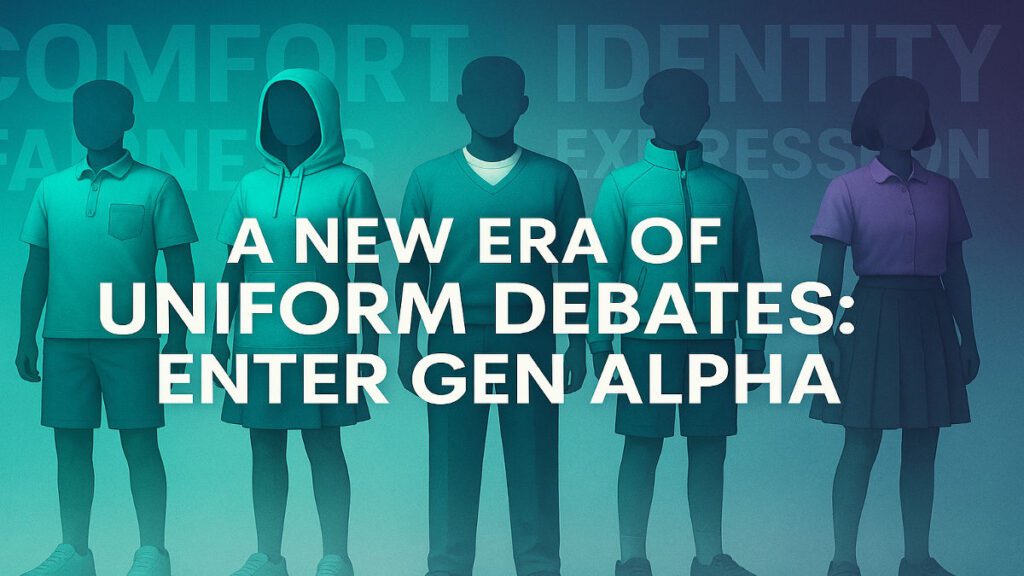
Short answer: Gen Alpha students in India (born 2010 to 2025) want school uniforms that are comfortable, inclusive, eco-friendly, and leave room for personal expression. They question rigid dress codes and push for flexible, gender-neutral options that match real-world values in 2025.
Why are Gen Alpha kids rethinking school uniforms?
In 2025, the conversation around school uniforms in India has moved beyond tradition and discipline. For Generation Alpha, those born roughly between 2010 and 2025, uniforms sit at the intersection of comfort, identity, fairness and expression. Shaped by digital media, diversity and shifting social norms, these students are questioning and reimagining what a dress code should do.
Here are five truths about how Gen Alpha views school uniforms today.
1. Why does comfort come first for Gen Alpha?
Itchy collars and stiff polyester pants are non-starters. Gen Alpha moves a lot, running, playing, stretching, participating, and wants clothes that keep up.
“I remember my nephew flat-out refusing to wear his winter uniform blazer because he said it felt like wearing a cardboard box,” laughs Priya Malhotra, a parent from Bengaluru. “He preferred layering up with hoodies because they were ‘cozy and cool’.”
Climate-appropriate uniforms are also gaining traction. Cotton-rich fabrics for humid regions, breathable knits for summer, and stretchable sportswear-inspired pieces are treated as must-haves, not luxuries. According to a 2025 update by Chirag Uniforms, stretchable, moisture-wicking materials are among the most requested features by schools redesigning their dress codes.
2. How do uniforms limit self-expression?
Gen Alpha sees clothing as a language that reflects mood, personality and beliefs. Uniforms, to many of them, feel like silence.
In a recent classroom discussion at a Delhi international school, several 12-year-olds said they felt “invisible” in their uniforms. “It’s like everyone is a copy-paste version of each other,” said one student.
Kids who grow up curating Instagram filters and Minecraft avatars want ways to personalise their look, even in small doses. Custom name tags, fun socks, colourful hair ties and badge pins become subtle signatures. As Sixth Element School puts it, “Uniforms need not be abolished but reimagined with flexibility and flair.”
3. Why does inclusivity matter in school uniforms?
Gender-specific clothing norms are losing favour. Gen Alpha is growing up in a more inclusive environment, where boys can cry, girls can lead, and clothes are not binary.
Trousers only for boys? Skirts mandatory for girls? Gen Alpha asks why. Many schools are adopting gender-neutral options that let students choose based on comfort and identity rather than societal roles.
Beyond gender, there is also growing sensitivity to cultural and religious diversity. Uniforms that do not accommodate headscarves or sensory sensitivities are increasingly seen as outdated and exclusionary.
4. Do uniforms actually reduce bullying and inequality?
Uniforms have long been sold as an antidote to bullying and inequality. Gen Alpha is not convinced.
A student from Babaji Vidhyashram School noted, “Even with the same clothes, kids still tease each other about hairstyles, lunchboxes, or how clean your shoes are.” In their eyes, uniforms offer a veneer of equality but do not address the roots of peer judgment or exclusion.
They also argue uniforms do not mirror the real world. Adults choose what to wear every day, so why shouldn’t students learn the same skill in a guided way? As Sixth Element School writes, preparing for diverse social environments requires more than a dress code; it needs open conversations and real-world exposure.
5. How is digital culture reshaping uniform expectations?
From YouTube shorts to Instagram reels, Gen Alpha is deeply influenced by what they see online. Uniforms feel like a wall between their real and school selves.
This generation is also eco-conscious. Thanks to awareness spread by Millennial parents and teachers, Gen Alpha is questioning fast fashion and textile waste. According to Chirag Uniforms’ 2025 Trends Report, schools are adopting recycled fabrics and circular uniform programmes, where old clothes are refurbished or donated.
For Gen Alpha, sustainability is not a trend, it is a value.
Rethinking the meaning of uniformity
To Gen Alpha, a school uniform is a statement that can either support or suppress who they are. As educators, parents and policymakers re-evaluate school dress codes in 2025, a flexible, inclusive and student-friendly approach is emerging as the way forward.
So here is the real question: can we create uniforms that unify without erasing individuality? Gen Alpha hopes so, and it may be time we listened.
FAQs about Gen Alpha and school uniforms
What is Gen Alpha?
Gen Alpha refers to children born roughly between 2010 and 2025. They are the first fully digital-native generation, growing up with smartphones, voice assistants and social media from a young age.
Do Indian schools offer gender-neutral uniforms in 2025?
A growing number of Indian schools are introducing gender-neutral uniform options, letting students pick trousers, skirts or unisex sets based on comfort and identity rather than assigned gender roles.
What fabrics are best for Indian school uniforms?
Cotton-rich fabrics for humid regions, breathable knits for summer, and stretchable, moisture-wicking materials are the most in demand. Chirag Uniforms’ 2025 update lists these as top features schools are asking for.
Are school uniforms becoming more sustainable?
Yes. According to Chirag Uniforms’ 2025 Trends Report, more schools are adopting recycled fabrics and circular uniform programmes where old uniforms are refurbished or donated instead of discarded.
Do school uniforms really stop bullying?
Gen Alpha students are skeptical. They point out that peers still tease each other about hairstyles, shoes and lunchboxes, so uniforms address the surface but not the root causes of bullying.