Short answer: Gen Alpha kids (born after 2010) still believe in heroes, but their list looks different. They admire teachers, nurses, climate activists, problem-solvers, and peers who show kindness, purpose, and authenticity over fame. Heroism, to them, is about showing up in real life.
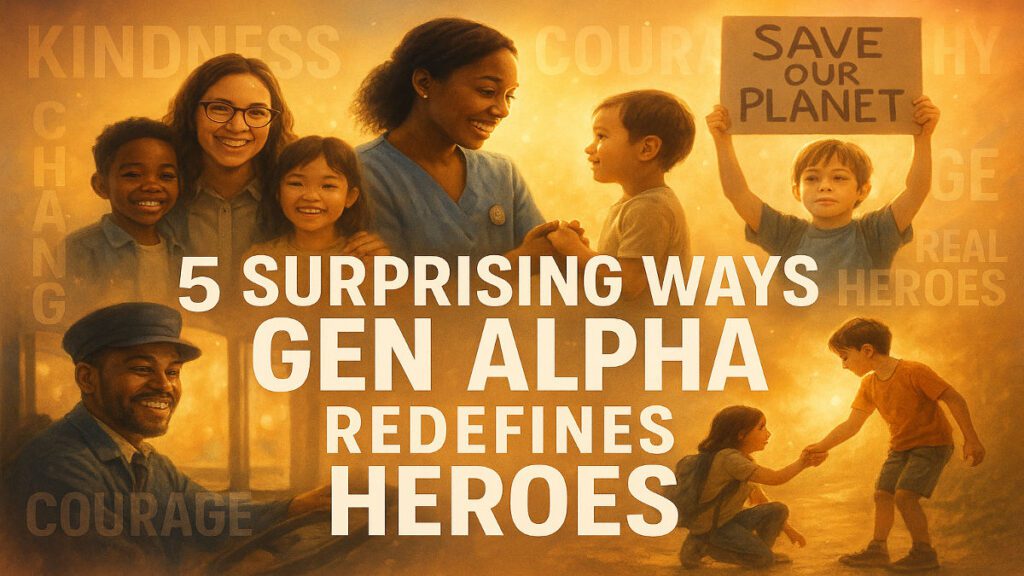
The word hero once brought up images of caped crusaders and mythological warriors with superpowers. But in 2025, ask a child from Generation Alpha who their hero is, and you might hear something different — “My teacher,” “a nurse,” “Greta Thunberg,” or even “my big sister who helps stray animals.”
Do Gen Alpha kids still believe in heroes? Yes. But their definition of heroic has shifted. Their heroes are real, raw, and rooted in kindness.
1. Why is kindness the new superpower?
Gone are the days when flying or invisibility topped the wishlist. Today’s kids are captivated by real people doing good, often without the spotlight.
Gen Alpha values authenticity. They’re drawn to everyday individuals who show courage through kindness. Whether it’s a classmate who comforts a friend or a parent volunteering at an animal shelter, these quiet acts make the biggest impact.
Take my 10-year-old cousin, for example. When asked who her hero is, she replied, “My bus driver — because he waits for me every day when I’m late and always smiles.” To her, that’s what heroism looks like: consistency, patience, and heart.
2. How do digital platforms shape Gen Alpha’s role models?
Growing up with YouTube, TikTok, and Instagram, Gen Alpha has access to a global gallery of role models. They see doctors saving lives in conflict zones, climate warriors planting forests, and kids like them standing up to bullies.
Heroism is no longer abstract. It’s visible and shared in real time.
Research by Common Sense Media (2024) found that 72% of children aged 6–12 admired someone they discovered through digital platforms, not traditional media. That includes educators with uplifting content, young scientists solving local problems, and artists creating inclusive communities.
Heroes today don’t live in fortresses. They live next door, or in your feed.
3. Why does Gen Alpha admire problem-solvers?
Gen Alpha idolises problem-solvers — people who create, fix, and build solutions. To them, engineers who develop clean water systems and scientists working on renewable energy are nothing short of superhuman.
Their admiration extends to creators and innovators, from app developers helping the blind to artists who raise mental health awareness. These changemakers inspire action instead of awe.
Intelligence, creativity, and empathy are today’s real superpowers.
4. Why does purpose beat popularity for Gen Alpha?
This generation craves meaning over fame. It’s not about follower counts. It’s about what someone stands for.
Heroes who remain authentic earn their respect. Whether it’s a pop star who speaks openly about mental health, a YouTuber who gives back to their community, or a student standing up against injustice, purpose is what elevates someone from influencer to inspiration.
According to a 2025 UNICEF youth report, Gen Alpha is more likely than any previous generation to care about climate justice, diversity, and ethical leadership by the age of 10.
5. How are kids becoming heroes to other kids?
Gen Alpha doesn’t just look up. They look beside.
Young activists like Greta Thunberg and Malala Yousafzai have shown that age doesn’t limit impact. Kids today believe that you don’t have to be older to be a hero. You have to care deeply and act bravely.
Even among peers, they find role models: a friend who speaks up against bullying, a classmate who starts a recycling club, a sibling who teaches them how to meditate.
To them, being a hero means being human — and using that humanity to help others.
A new kind of hero for a new kind of world
Gen Alpha is changing the definition of heroism. They don’t need capes or grand rescues. What they admire are people who show up, speak out, and lift others.
“A hero is someone who makes things better — even if it’s just for one person.”
And maybe that’s the most heroic definition of all.
FAQs about Gen Alpha heroes
Who is Gen Alpha?
Gen Alpha is the generation born after 2010. In 2025, they range from newborns to 15-year-olds. They are the first cohort growing up entirely with smartphones, streaming platforms, and AI.
Who are Gen Alpha’s favourite heroes?
Teachers, nurses, climate activists, family members, and young changemakers like Greta Thunberg and Malala Yousafzai top their lists. They also admire peers who stand up against bullying or start community projects.
Why don’t Gen Alpha kids idolise traditional superheroes as much?
They value authenticity, empathy, and visible action. Kindness, creativity, and problem-solving feel more real and more useful than fictional superpowers. Research by Common Sense Media (2024) found 72% of children aged 6–12 admired someone they discovered through digital platforms, not traditional media.
How does social media influence Gen Alpha’s view of heroism?
Platforms like YouTube, TikTok, and Instagram expose them to real-life stories of courage and impact. They see doctors in conflict zones, climate warriors, and kids their own age driving change, which reshapes who they consider inspiring.
What values does Gen Alpha look for in a hero?
Purpose, authenticity, kindness, and action. A 2025 UNICEF youth report found Gen Alpha is more likely than any previous generation to care about climate justice, diversity, and ethical leadership by the age of 10.