
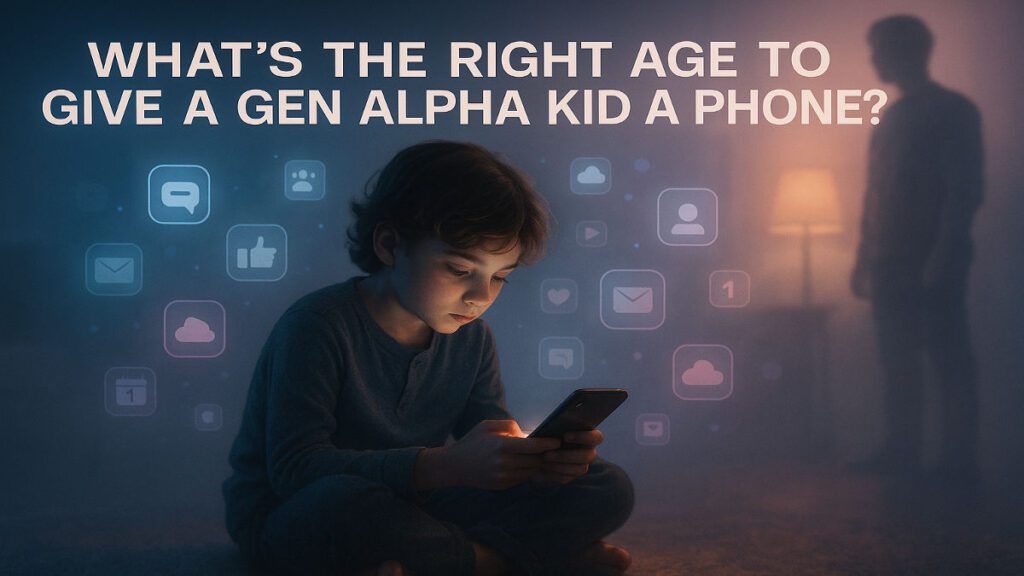
Short answer: For most Gen Alpha kids, the right age to get a smartphone is between 12 and 14, and only with parental controls, gradual exposure, and honest conversations. Maturity, not birthdays, should decide the handover.
Even toddlers swipe on tablets today. For parents, the question is no longer if a child will own a smartphone but when. For Generation Alpha, born between 2010 and the mid-2020s, digital devices are woven into everyday life. Handing over a smartphone is a parenting decision that shapes mental, emotional, and social development.
So what is the right age in 2025 to give your Gen Alpha child a phone? The honest answer is nuanced and personal.
Why developmental readiness matters more than age
Giving a child a smartphone is not only about age. It is about maturity. A 12-year-old might handle digital responsibility with ease. Another might struggle with boundaries, distractions, or digital drama.
Studies show that excessive screen time in younger children can affect attention spans, sleep patterns, and social-emotional development. According to a 2023 report by the American Academy of Pediatrics, early exposure to smartphones may even impact areas of the brain linked to impulse control and empathy.
Before handing over the device, ask: can my child handle the emotional and cognitive load that comes with smartphone ownership?
What age do experts recommend for a first phone?
Ages 6 to 10: not yet, or only with limits
At this stage, a child may benefit from tech in educational or entertainment forms, but a personal smartphone is usually premature. The Canadian Paediatric Society recommends avoiding personal smartphones and limiting screen use to 1 hour per day of quality programming. A tablet or smartwatch with calling features is a safer alternative.
Real-world tip: my friend gave her 9-year-old a smartwatch with GPS and calling. It kept them connected without giving the child full internet access.
Ages 11 to 13: the cautious introduction
This age is often when the conversation becomes serious. Middle school brings more independence through after-school classes, solo commutes, and socialising. Brains are still developing. A basic smartphone with strict parental controls, no social media, and monitored usage is a balanced starting point.
According to Common Sense Media, 43% of kids in the U.S. own a smartphone by age 11. Ownership does not mean unfiltered freedom. The emphasis here should be on co-use, shared responsibility, and digital education.
Ages 14 to 17: more freedom, ongoing guidance
Teens in this range are more cognitively equipped to handle smartphones, but they still need boundaries. With access to social media, texting, and apps, the risks (from cyberbullying to screen addiction) are real.
As one parent told me, “We gave our daughter a phone at 15, but only after she passed a ‘digital responsibility test’ we created together.”
How family dynamics shape the decision
There is no one-size-fits-all answer. Family circumstances, school distance, health issues, or parental work schedules can all influence the call. For some families, a smartphone is a lifeline of safety and coordination. For others, it is a delayed privilege earned through responsibility.
Regardless of age, successful phone use hinges on:
- Clear rules: no phones at dinner or during homework.
- Parental modelling: kids mimic behaviour. If you are glued to your screen, they will be too.
- Open conversations: regular chats about screen time, digital ethics, and online safety are essential.
How do you keep a kid’s first phone safe in 2025?
Smartphones can be a lifeline and a liability. With growing concerns around online predators, mental-health impacts, and social-media toxicity, digital literacy must travel with device ownership.
Tools like Apple’s Screen Time or Google Family Link offer useful monitoring, but nothing replaces trust and conversation. Teaching Gen Alpha how to critically evaluate content, report abuse, and maintain digital balance is more valuable than any app blocker.
Delay is not denial, it is preparation
The ideal time to give a Gen Alpha child a smartphone in 2025 is when they are emotionally and cognitively ready, not when peer pressure or marketing says so. For most, that age falls between 12 and 14, with gradual exposure, consistent boundaries, and active guidance.
This is not about a gadget. It is about shaping how your child interacts with the world, builds relationships, and understands themselves. Smartphones can open doors, but they need the right keys and a trusted guide.
Start slow, stay involved, and raise tech-savvy kids who are also kind, thoughtful, and balanced digital citizens.
FAQs about kids and smartphones
What is the right age to give a Gen Alpha kid a smartphone?
For most children, the right age is between 12 and 14, with parental controls and gradual exposure. Maturity and readiness matter more than the number on the birthday cake.
Is it OK for a 10-year-old to have a smartphone?
Most experts, including the Canadian Paediatric Society, suggest waiting. A smartwatch with GPS or a basic calling device is usually safer for under-10s, with screen time capped around 1 hour a day.
How many 11-year-olds have smartphones?
According to Common Sense Media, 43% of kids in the U.S. own a smartphone by age 11. Ownership is common, but healthy use still needs parental rules and monitoring.
What parental controls should I set on a child’s phone?
Use Apple’s Screen Time or Google Family Link to limit apps, block social media, filter content, and set screen-time windows. Pair those controls with regular conversations about online safety.
What are the risks of giving kids a phone too early?
A 2023 American Academy of Pediatrics report notes that early smartphone exposure can affect brain areas tied to impulse control and empathy. Excessive screen time in young children can also harm sleep, attention, and social-emotional development.