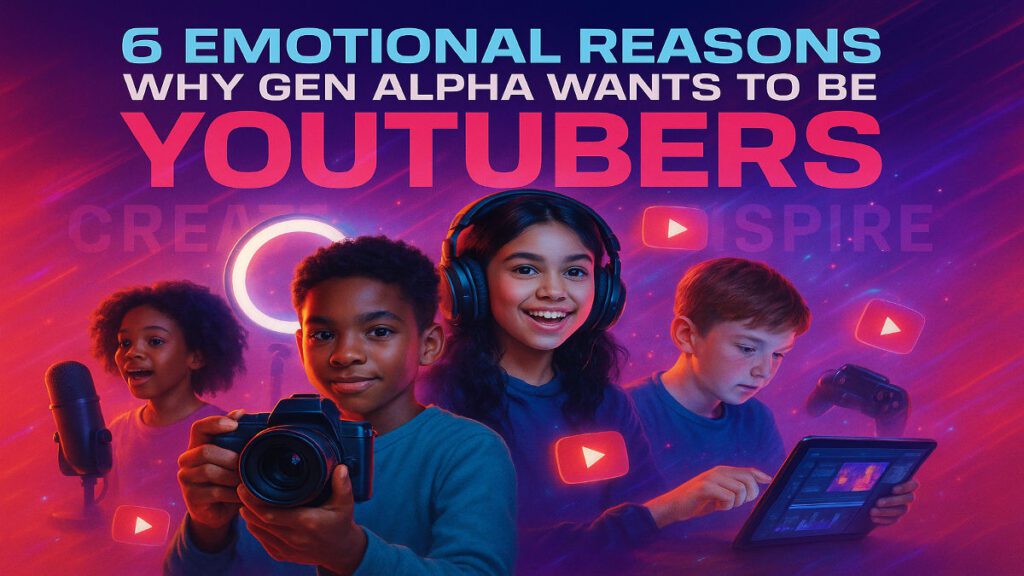
Short answer: Gen Alpha in India wants to be YouTubers because fame feels reachable, content is a creative outlet, monetization is real, and platforms offer community and a chance to make an impact. Indian role models like CarryMinati, Prajakta Koli and Amreen Malhotra, plus global kidfluencers like Ryan Kaji, make the path feel concrete rather than fantasy.
In 2025, ask a group of Indian school kids what they want to be when they grow up, and chances are you will hear a lot of “YouTuber,” “gamer,” or “influencer” before you hear “doctor” or “engineer.” For Generation Alpha, kids born after 2010, the dream job has a camera, a ring light, and a subscriber count.
What is behind this surge of interest in content creation? Why are Indian kids as young as seven dreaming of vlogging their summer holidays or streaming their Minecraft adventures? The answer is layered, emotional, and deeply connected to how this generation sees the world, and themselves.
Why is Gen Alpha growing up inside the internet?
For Gen Alpha, the internet is not a tool. It is a playground, a classroom, and sometimes even a therapist. Unlike millennials or Gen Z, who transitioned from dial-up to smartphones, Gen Alpha has never known a world without YouTube, Instagram Reels, or streaming content.
From Peppa Pig to CarryMinati, they have watched creators grow from their bedrooms to Bollywood, and that transformation feels achievable. “If he can do it, why can’t I?” is more than a question. It is a belief system.
As 11-year-old Shaurya from Pune puts it, “I want to be a YouTuber like Techno Gamerz. He just plays games and talks. I do that with my friends anyway.”
1. Why does fame feel reachable and real?
Unlike traditional celebrities, content creators feel human. They reply to comments, share behind-the-scenes bloopers, and talk about their insecurities on camera. This relatability creates a bridge between audience and creator.
For Gen Alpha, stardom seems less like a dream and more like a project, something you can build with effort, a good smartphone, and the right thumbnail.
2. How does YouTube become a platform for creative expression?
YouTube, Instagram, and TikTok are more than entertainment. They are blank canvases for ideas. Whether it is stop-motion animation, cooking tutorials, or slime-making videos, these platforms let kids experiment with identity and expression.
Ten-year-old Ananya from Delhi has a small channel where she uploads art tutorials using basic watercolours. “Even if only 20 people watch, I feel like a teacher,” she says. That kind of self-worth is hard to replicate in a traditional classroom.
3. Do Gen Alpha kids really understand digital earnings?
Generation Alpha is surprisingly aware of monetization. Thanks to creators who openly talk about brand deals and sponsorships, children today understand that being a YouTuber is not only about likes. It is about income.
Ryan Kaji, the now-famous star of Ryan’s World, reportedly earned ₹160 crore in 2022. Indian kids are watching, learning, and planning.
“My son asked for a GoPro and a mic, not toys,” says Rekha, a parent from Bengaluru. “He said it’s an investment.”
4. How does content creation build community and connection?
Content creation is not only about talking to the world. It is about being heard by the world. For many children, especially those in smaller towns or isolated environments, YouTube and other platforms are a way to find like-minded people.
Gaming streamers, DIY vloggers, pet influencers, each offers a sense of belonging. These creators become more than entertainers. They become part of a child’s extended virtual family.
5. Can Gen Alpha creators make a real impact?
Some Gen Alpha kids do not just want views. They want to change the world. Platforms like YouTube give them a voice and a cause.
Whether it is talking about climate change, sharing DIY ideas that reuse waste, or creating mental health content for teens, many young creators see social media as a platform to spark real-world impact.
An Indian teen YouTuber, Amreen Malhotra, is a rising name among young creators. Her humorous yet meaningful skits around school life, body image, and Indian parenting have earned her millions of views, and inspired countless others to follow her lead.
6. Who are the role models that look like them?
Representation matters. For Indian Gen Alpha, seeing local creators thrive is a confidence booster. From Slayy Point and Prajakta Koli (MostlySane) to GamerFleet and Kabita’s Kitchen, there is an influencer for every interest and background.
Gaming? There is Scout and Mortal. Comedy? Bhuvan Bam. Activism? Licypriya Kangujam. Art? India’s own kid YouTubers are emerging every day, showing that language, age, or geography are no barriers.
Then there are the kidfluencers, children like Ryan Kaji or Like Nastya, who became global icons by being themselves. They are not only creators. They are mirrors.
More than likes and subscribers
To dismiss Gen Alpha’s YouTuber dream as “just screen time” is to miss the bigger picture. This aspiration is rooted in creativity, connection, and confidence. It reflects a world where storytelling is digital, influence is peer-led, and careers begin in your living room.
As parents, educators, and society, the challenge is not to stop them. It is to guide them. Help them build digital skills, understand online ethics, and balance real and virtual life.
Because who knows? The next big creator might be a 9-year-old from Lucknow with a story to tell and a smartphone in hand.
FAQs about Gen Alpha YouTubers
Why do so many Indian Gen Alpha kids want to be YouTubers?
Because fame feels reachable, creators feel human, monetization is visible, and platforms deliver community. Seeing creators like CarryMinati grow from bedrooms to Bollywood makes the path feel achievable rather than fantasy.
How much can kid YouTubers actually earn?
Ryan Kaji, star of Ryan’s World, reportedly earned ₹160 crore in 2022. Most kid creators earn far less, but the visibility of top earners and open talk about brand deals has made Gen Alpha treat content as a real income path.
Which Indian creators inspire Gen Alpha kids?
CarryMinati, Techno Gamerz, Slayy Point, Prajakta Koli (MostlySane), GamerFleet, Kabita’s Kitchen, Scout, Mortal, Bhuvan Bam, activist Licypriya Kangujam and teen creator Amreen Malhotra all feature strongly.
Is it safe and healthy for children to aspire to be YouTubers?
It can be, with guidance. The aspiration is rooted in creativity, connection and confidence, but parents and educators need to help kids build digital skills, understand online ethics, and balance real and virtual life.
What do Gen Alpha creators make content about?
A wide range: gaming, stop-motion animation, cooking, slime, art tutorials, skits on school life and body image, climate change, DIY upcycling and mental health content for teens. The common thread is self-expression and impact.