Short answer: AI in modern design is acting as a creative partner, not a replacement. Designers use tools like DALL·E, Midjourney, Runway, Suno, and Udio to prototype faster and explore ideas, while the human role shifts to curation, storytelling, and emotional direction.
Artificial intelligence has moved from a technical curiosity into a working collaborator for creative people. It designs logos, generates illustrations, composes music, and produces cinematic visuals. Work that once took hours of sketching and brainstorming now takes seconds, and some of it rivals human-made art.
How is AI changing the design process?
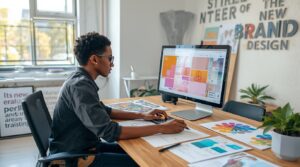
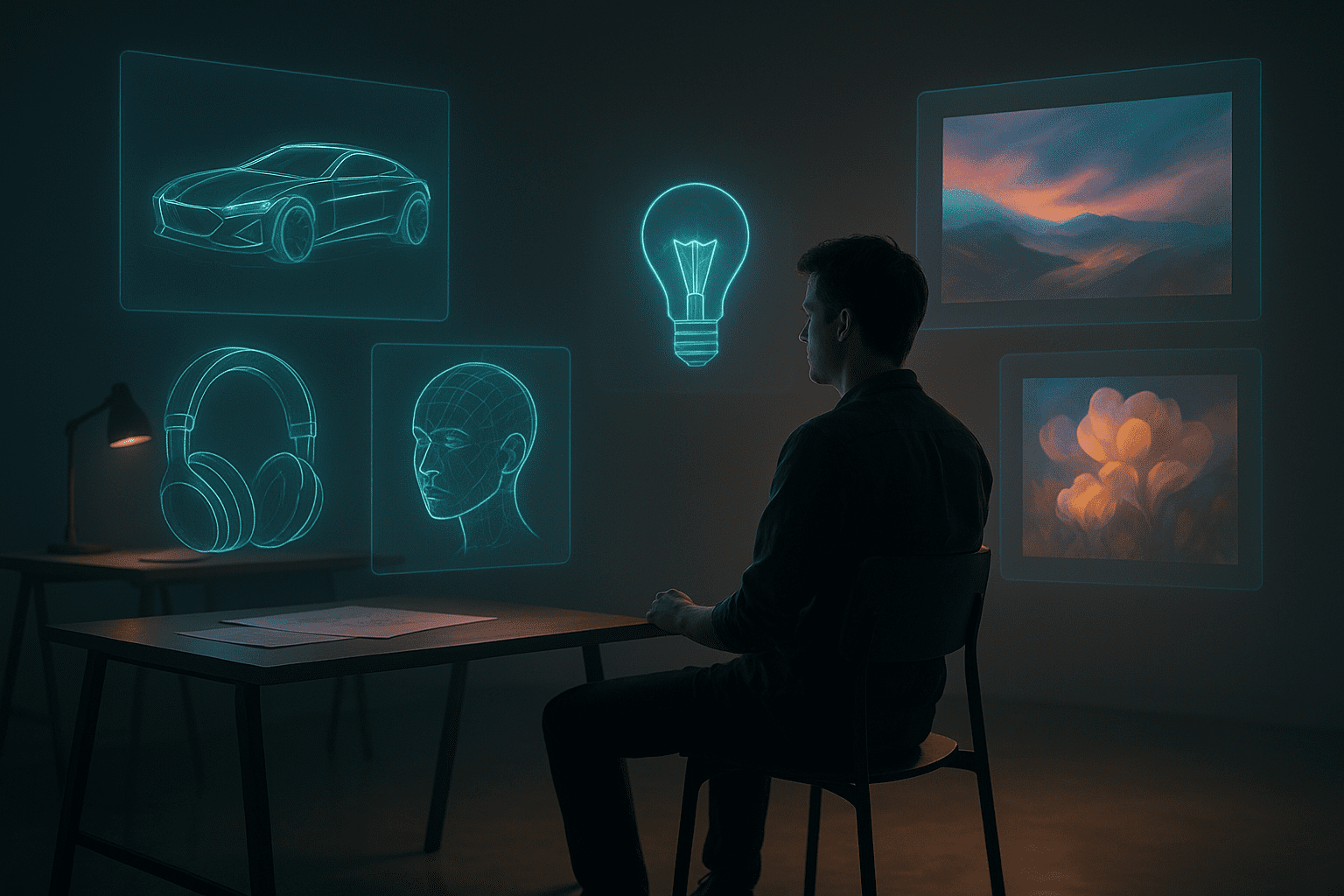
AI tools like DALL·E, Midjourney, and Runway are reshaping how designers approach a brief. Instead of starting from a blank page, artists collaborate with algorithms to explore styles, colours, and compositions they might not have imagined alone. The designer becomes more of a curator, refining and reimagining the machine’s suggestions into something uniquely human.
This shift amplifies human creativity rather than diminishing it. Designers are no longer stuck on repetitive manual work or technical limits. They can focus on storytelling, emotion, and vision. The AI becomes a brush, not the artist.
How is AI changing music production?
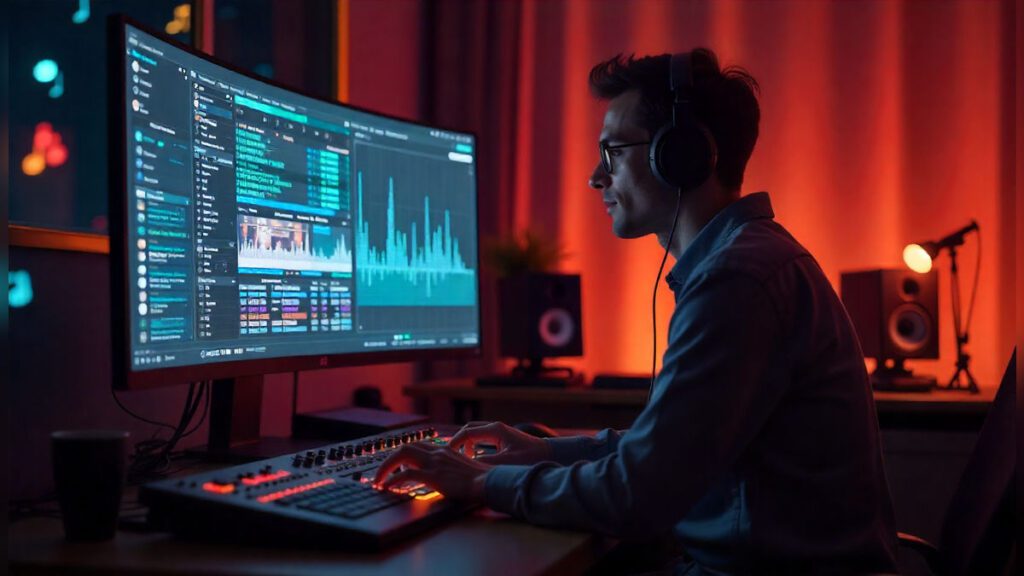
In the music industry, AI helps musicians compose melodies, mix tracks, and generate harmonies in specific genres. Tools like Suno and Udio let anyone craft cinematic or pop-style compositions without deep technical skills. For producers, this opens a new realm of experimentation. For professionals, it is a creative shortcut, a way to test new sounds before finalising a production.
Musicians also face a philosophical question: if AI can produce a catchy tune, what makes human art special? The answer lies in emotional context. AI can imitate but not feel. The human touch, imperfect and spontaneous, remains irreplaceable.
How are brands using AI in design?
For brands, AI-generated content has become a tool for storytelling and trend prediction. Large corporations and indie designers use AI to prototype product designs, create advertising visuals, and simulate user experiences. Coca-Cola’s AI-powered “Create Real Magic” campaign invited people to co-design art pieces using the company’s branding assets, turning audiences into collaborators.
Automation also carries risk. If every brand relies on AI-generated imagery, visual identities start to blend together. Many designers now use AI as a springboard rather than a solution, something to inspire creativity, not replace it.

Will AI replace creative jobs?
Critics argue that AI threatens creative jobs, but the reality is more nuanced. Every major technological leap, from photography to digital art, was met with similar scepticism. Each innovation expanded the creative landscape rather than destroying it.
Today’s artists must adapt. The point is not to compete with AI but to collaborate with it, to understand its strengths and use them as extensions of human vision. The designers, musicians, and creators who embrace this synergy will define the next creative revolution.
What does the future of AI and creativity look like?
AI is not replacing creativity; it is redefining it. The future belongs to people who learn to speak both languages: the emotional intuition of human art and the computational potential of artificial intelligence. Together they can create experiences that are beautiful, functional, and deeply transformative.
FAQs about AI in modern design
Which AI tools are most popular with designers in 2025?
DALL·E, Midjourney, and Runway are widely used for visual design. For music, Suno and Udio are popular for generating melodies, harmonies, and full compositions in various genres.
Can AI replace human designers and musicians?
No. AI can imitate style and speed up production, but it cannot feel. Emotional context, imperfection, and spontaneity remain uniquely human, which is why designers and musicians are shifting into curator and director roles rather than being replaced.
What did Coca-Cola’s “Create Real Magic” campaign do?
Coca-Cola’s “Create Real Magic” campaign let people co-design art pieces using the brand’s assets through AI, turning consumers into collaborators and showing how brands can use AI for participatory storytelling.
What is the risk of brands relying on AI-generated imagery?
If every brand uses the same AI tools, visual identities can blend together and lose distinctiveness. That is why many designers now treat AI as a starting point for ideas rather than a finished solution.
How should young designers learn to use AI?
Treat AI as a collaborator, not a shortcut. Learn its strengths, experiment with prompts, and focus human effort on storytelling, emotion, and vision. The creators who combine both skills will lead the next wave of creative work.