Short answer: On 7-8 March, the International Association for Women’s Mental Health (IAWMH) is hosting Women’s Mental Health in Bloom, a 30-hour non-stop global Webathon with over 100 speakers. TheYouthTalks is powering the technology backbone, coordinating live streams across multiple time zones to put women’s mental health at the centre of global dialogue.
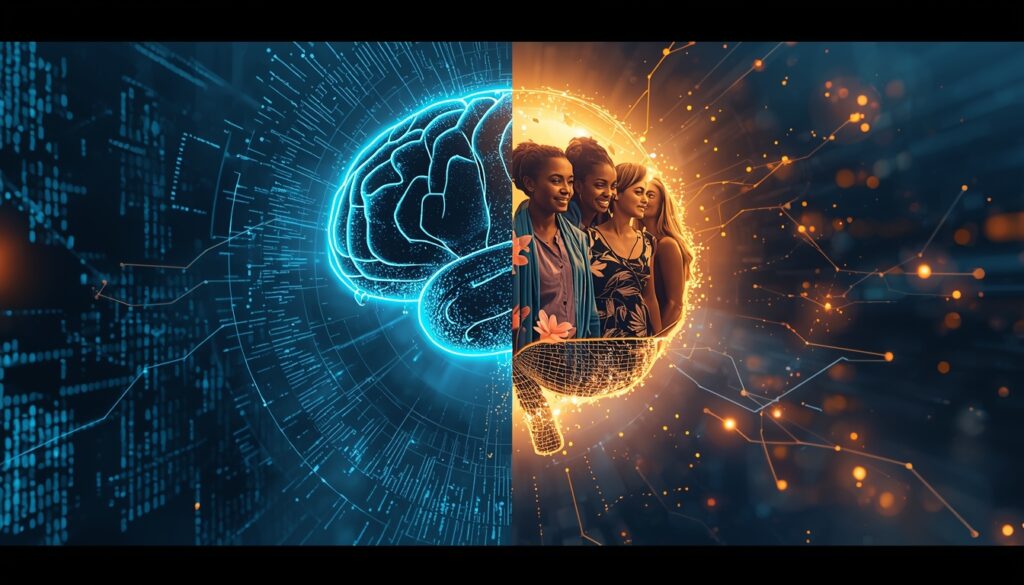
In a week when algorithms, automation, and artificial intelligence dominate headlines, another conversation is quietly unfolding.
It is not about machines. It is about minds.
On 7-8 March, the International Association for Women’s Mental Health (IAWMH) is hosting Women’s Mental Health in Bloom, a 30-hour non-stop global Webathon dedicated to one of the most urgent and under-discussed issues of our time: women’s mental health.
And while the world debates AI breakthroughs, this initiative is a reminder that emotional well-being remains the most fundamental technology of all: the human mind.
Why is the timing so powerful?
The Webathon coincides with International Women’s Day. That alignment is intentional.
Across continents, women continue to shoulder invisible burdens: unpaid care work, workplace bias, societal expectations, reproductive health pressures, and in many regions, systemic violence. According to the World Health Organization (WHO), depression is one of the leading causes of disability worldwide, and women are disproportionately affected. Studies consistently show that women are nearly twice as likely as men to experience depression and anxiety disorders.
These are not abstract numbers. They represent real lives. Real exhaustion. Real resilience.
Despite the scale of the issue, conversations around women’s mental health are often fragmented or confined to clinical spaces. This Webathon seeks to change that.
What is a 30-hour global Webathon?
Unlike traditional conferences bound by geography and logistics, Women’s Mental Health in Bloom has adopted a bold format: 30 hours of continuous programming spanning multiple time zones.

Over 100 speakers from around the world take part: clinicians, researchers, policymakers, mental health advocates, and individuals with lived experiences. They contribute to region-wise curated sessions. Each segment reflects cultural nuance and local realities, while contributing to a larger global dialogue.
It is ambitious. It is complex. And it is necessary.
The goal is not merely to discuss problems, but to share evidence-based interventions, highlight policy gaps, and foster collaboration across borders. Because women’s mental health does not operate in isolation. It is shaped by biology, yes, but also by economics, social norms, access to healthcare, and opportunity.
Why does women’s mental health demand focused attention?
Women navigate layered realities.
Perinatal mental health is a critical area of concern. Research published in The Lancet Psychiatry indicates that approximately 1 in 5 women experience mental health challenges during pregnancy or in the first year after childbirth. Add workplace burnout, caregiving responsibilities, identity transitions, and exposure to gender-based violence, and the psychological load becomes heavier.

Stigma also persists. In many cultures, speaking openly about mental health is still considered taboo. Women are often expected to endure silently, to be caregivers before care-receivers.
I remember speaking to a young professional last year who described burnout as “a badge of honor.” She laughed when she said it, but her eyes told a different story. That normalization of emotional exhaustion is precisely what initiatives like this Webathon are trying to dismantle.
Strength should not mean silence.
How is TheYouthTalks powering the technology behind empathy?
The intellectual and emotional core of the Webathon lies in its speakers and themes. But executing a 30-hour uninterrupted global event requires something equally important: strong digital infrastructure. This is where TheYouthTalks stepped in.
Behind the scenes, our team has been working on the technology backbone of the event: live streaming architecture, backend integrations, multi-region synchronization, and live transitions between speakers.
Coordinating over 100 speakers across time zones is not a simple task. It involves technical rehearsals, redundancy planning, digital moderation systems, contingency backups, and audience access optimization.
There were moments during prep calls when we were managing three continents on one screen. A psychiatrist from Australia logging off as a researcher from Europe logged in. Time zones overlapping. Internet bandwidth fluctuating. Plans being reworked in real time.
It was chaotic at times. It was demanding. But it was deeply meaningful. In those moments, technology stopped being transactional. It became transformational.
In an era where AI is often positioned as a disruptor, this Webathon demonstrates another side of technology: as an enabler of empathy, dialogue, and collective healing.
What does this mean for digital advocacy?
The Webathon format signals something bigger than a single event. It reflects a growing shift toward borderless collaboration. Digital platforms now allow advocacy movements to transcend geography, reduce participation barriers, and democratize access to expertise.
Students can tune in. Early-career professionals can participate. Advocates from underserved communities can engage without the prohibitive costs of travel.
For youth audiences especially, this matters. Mental health conversations today are no longer peripheral. They are central to education, careers, entrepreneurship, and leadership. Gen Z has shown greater willingness to discuss emotional well-being openly. Yet awareness must evolve into structural change. Events like this help bridge that gap.
What needs to happen beyond awareness?
A 30-hour Webathon is powerful. But its true impact lies in what follows.
Will policymakers listen? Will institutions integrate research into practice? Will workplaces redesign systems to reduce burnout? Will families begin more honest conversations at home?
These are harder questions. They require sustained effort beyond a digital stage. Yet every movement begins with a moment. A conversation. A spark. The Women’s Mental Health in Bloom Webathon is one such spark.
Why does compassion matter in an AI age?
We are living in a paradoxical age. Technological advancement is accelerating at unprecedented speed. Artificial intelligence is reshaping industries. Automation is redefining productivity.
But progress cannot be measured solely in processing power. It must also be measured in compassion.
As we marvel at intelligent machines, we cannot neglect the emotional ecosystems that sustain human beings, particularly women, whose mental health remains deeply intertwined with societal expectations and systemic inequities. This Webathon reminds us of something simple yet profound: innovation without empathy is incomplete.
How can you engage with the Webathon?
If you are a student, a professional, a policymaker, or someone who believes in more equitable systems, engage with this conversation. Listen. Learn. Share.
Mental health is not a niche issue. It is foundational to every other conversation we are having: about careers, leadership, productivity, and even artificial intelligence.
Beyond the AI noise lies a more urgent dialogue. And it deserves our full attention.
FAQs on the Women’s Mental Health Webathon
When is the Women’s Mental Health in Bloom Webathon happening?
The Webathon runs for 30 non-stop hours on 7-8 March, coinciding with International Women’s Day.
Who is hosting the Webathon?
The International Association for Women’s Mental Health (IAWMH) is hosting the event, with TheYouthTalks powering the technology backbone.
How many speakers are participating?
Over 100 speakers from around the world, including clinicians, researchers, policymakers, mental health advocates, and individuals with lived experiences, are taking part in region-wise curated sessions.
Why are women disproportionately affected by mental health conditions?
According to the WHO, women are nearly twice as likely as men to experience depression and anxiety disorders. Factors include unpaid care work, workplace bias, reproductive health pressures, and gender-based violence.
What share of women experience perinatal mental health issues?
Research published in The Lancet Psychiatry indicates approximately 1 in 5 women experience mental health challenges during pregnancy or in the first year after childbirth.