Short answer: Brands that roast themselves are winning Gen Z in India because self-deprecating humour signals confidence, cultural fluency, and flattened power dynamics. Zomato, Swiggy, Vijay Sales, Duolingo, Wendy’s, KFC, and McDonald’s have turned perceived flaws into cultural currency. A 2023 Kantar India study found over 65% of Gen Z prefer brands that feel authentic over polished.
The rise of strategic vulnerability in the age of meme culture
Scroll through Instagram or X for ten minutes and you’ll notice something curious.
Brands aren’t flexing anymore. They’re not screaming “India’s No.1.” They’re not projecting flawless perfection.
Instead, they’re making fun of themselves.
From Vijay Sales to Zomato, and globally from McDonald’s to Duolingo, a new playbook is emerging.
In the Gen Z era, the brands that win are the ones confident enough to be the punchline.
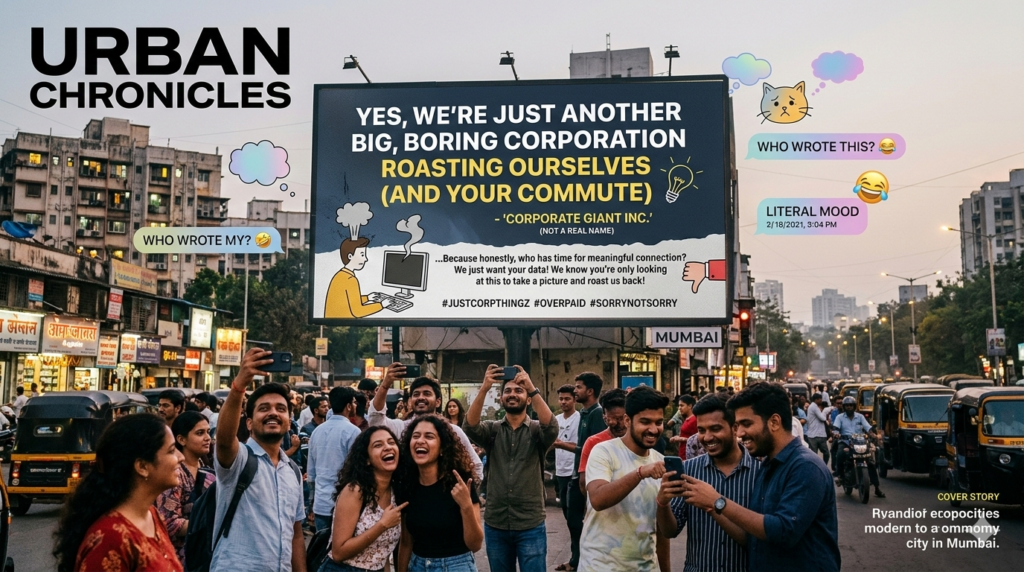
This isn’t random humour or accidental wit. It’s strategic vulnerability, calibrated self-awareness that turns perceived weaknesses into cultural currency. In India, it’s accelerating fast.
Why is the perfect brand dead in India?
For decades, Indian advertising was built on aspiration. Perfect families. Immaculate kitchens. Dramatic voiceovers. Products that never failed.
Brands spoke at consumers. From a pedestal.
Gen Z grew up differently.
They were raised on meme pages, Reddit threads, stand-up clips, YouTube commentary, and Instagram Reels. They don’t consume content passively, they dissect it, remix it, and often mock it.

According to a 2023 Kantar India study, over 65% of Gen Z respondents said they prefer brands that feel “authentic and relatable” over those that appear “polished and aspirational.” Edelman’s Trust Barometer consistently shows declining trust in corporate messaging among younger demographics.
Perfection no longer impresses. It feels suspicious.
When a brand pretends to be flawless, Gen Z’s instinct is to question it. When a brand acknowledges its quirks, or exaggerates them, something changes. It feels human.
How do Zomato, Swiggy, and Vijay Sales lean into the joke?
Take Zomato.
Instead of positioning itself only as a logistics powerhouse, the brand frequently posts content about how customers obsessively track their orders, abandon diets at midnight, or panic when delivery time exceeds expectations.
They aren’t selling efficiency. They’re selling shared behaviour.
As someone who has personally refreshed the Zomato tracking screen at least five times in two minutes, I can say this: when a brand mirrors your own irrational habits, you don’t feel marketed to, you feel understood.
Swiggy embraces foodie chaos with playful commentary about late-night cravings and “salary credited” splurges. The tone doesn’t read like an advertisement. It reads like a friend texting you, “Bro, order kar le.”
Even Vijay Sales has leaned into exaggerated retail tropes, dramatic discounts, loud pricing energy, over-the-top enthusiasm, turning what could be mocked into self-aware theatre.
Instead of resisting perception, these brands amplify it. That’s the shift.
How did global brands set the tone for self-roast marketing?
Internationally, self-roasting has been a masterstroke.
Wendy’s turned its X (formerly Twitter) account into a roast battleground, publicly teasing competitors and customers. It wasn’t humour alone, it was personality. Engagement soared because audiences tuned in for entertainment, not advertising.
Duolingo transformed its green owl into an unhinged meme icon on TikTok. The mascot appears clingy, dramatic, occasionally chaotic. Absurd? Absolutely. Effective? Undeniably. TikTok engagement skyrocketed, and the brand’s cultural relevance expanded far beyond language learners.
Then there’s KFC, which faced a crisis in the UK in 2018 after running out of chicken. Instead of corporate defensiveness, they ran a full-page ad rearranging their logo to read “FCK.” The ad was widely praised for its honesty and humour, turning a potential PR disaster into a branding triumph.
The principle: humour diffuses tension. Self-awareness builds trust.
Why does Gen Z respond so strongly to self-roasting brands?
At a psychological level, self-roasting works because it signals three powerful traits.
Confidence
Only secure brands can laugh at themselves.
When McDonald’s jokes about its perpetually “broken” ice cream machines, a long-running internet meme, it communicates scale and security. It says: we’re big enough to handle this.
That removes defensiveness from the conversation.
Cultural fluency
Gen Z values brands that understand the language of the internet. Not borrowed slang. Not outdated memes. Real fluency.
According to a 2022 Deloitte Digital Media Trends report, Gen Z consumers are 1.6 times more likely to engage with brands that participate in online culture authentically rather than relying on traditional advertising formats.
Self-roasting signals participation, not performance.
Flattened power dynamics
Old marketing was hierarchical: Brand to Consumer.
Now it’s conversational: Brand and Consumer in both directions.
Self-deprecating humour reduces distance. It humanises corporate entities. It dismantles the “we know better” posture that younger audiences instinctively reject.
Why is roast culture mainstream in India?
India’s digital ecosystem is primed for this shift.
Stand-up comedy has exploded over the last decade. Commentary channels dissect advertisements in real time. Meme pages can turn a TVC into satire within hours. Screenshots circulate instantly. Reels amplify everything.

Roasting isn’t fringe anymore. It’s cultural shorthand.
Young Indians joke about exam pressure, job stress, IPL losses, arranged marriage conversations, and startup culture. Irony is default mode.
In such an environment, brands that cling to rigid corporate tones feel disconnected. Brands that join the chaos feel contemporary.
Even youth-centric brands like boAt lean into high-energy, internet-savvy communication rather than stiff product positioning. Tone matters. Personality matters.
In a hyper-competitive market, product parity is common. Cultural resonance is rare.
When does self-roasting tip into cringe?
Self-roasting is not a guaranteed success.
Indian Gen Z can detect inauthenticity instantly. Forced slang. Outdated memes. Corporate attempts at “vibe.”
When humour feels engineered in a boardroom rather than born in culture, backlash is swift. A misfired meme can trend for the wrong reasons.
Self-roasting only works when it is:
- Platform-native
- Timely
- Insight-driven
- Executed by culturally fluent teams
Otherwise, it becomes performative, and performative humour travels faster than brilliance.
Is brand self-roasting strategy or survival?
There’s a deeper reason brands are embracing this tone. Attention is scarce.
India has over 700 million internet users. Instagram and YouTube compete with OTT platforms, gaming apps, and creator content for minutes of engagement. Traditional ad formats struggle to break through.
Humour cuts through noise. More importantly, self-awareness builds long-term affinity.
In my own experience consulting on youth campaigns, engagement spikes when brands step down from authority and step into relatability. Comments multiply. Shares increase. Conversations expand beyond the original post.
It’s not about virality alone. It’s about relevance.
How is brand authority shifting to brand personality?
The larger marketing transformation can be summarised simply:
Brand Authority becomes Brand Personality. Polished Messaging becomes Cultural Participation. Narrative Control becomes Narrative Co-Creation.
Gen Z doesn’t want brands to instruct them. They want brands to interact with them.
Interaction requires humility. It requires accepting that you may be meme material anyway, so you might as well own it.
What does this mean for the future of Indian marketing?
Looking ahead, the brands that dominate Indian youth culture are likely to:
- Hire meme-literate creators
- Embrace imperfections publicly
- Prioritise engagement over ego
- Measure cultural relevance alongside revenue
Self-roasting is not self-sabotage. It’s strategic transparency. It signals that your brand understands how it is perceived, and isn’t afraid of that perception.
In today’s digital India, perception travels faster than press releases.
A final thought
Humour requires humility. Humility requires confidence. Confidence requires clarity about who you are.
The brands that win with Gen Z aren’t the loudest. They aren’t the most polished. They aren’t even necessarily the cheapest or fastest. They are the most self-aware.
They are willing to say, “Yes, we know what you joke about us.”
And instead of correcting the narrative, they join it.
In a world oversaturated with performance, perfection feels artificial. Self-awareness feels real. In the age of memes, real always wins.
FAQs on self-roasting brands and Gen Z in India
Why do Indian Gen Z consumers prefer self-deprecating brands?
A 2023 Kantar India study found over 65% of Gen Z respondents prefer brands that feel “authentic and relatable” over those that appear “polished and aspirational.” Edelman’s Trust Barometer also shows declining trust in corporate messaging among younger audiences, so self-awareness reads as honesty.
How do Zomato and Swiggy roast themselves?
Zomato posts about customers obsessively tracking orders, abandoning diets at midnight, and panicking over delivery times. Swiggy jokes about late-night cravings and “salary credited” splurges. Both mirror real user behaviour rather than pitching efficiency.
What was the KFC “FCK” ad?
After KFC ran out of chicken in the UK in 2018, the chain rearranged its logo to read “FCK” in a full-page newspaper apology. The honest, self-aware response turned a supply chain crisis into a widely praised branding win.
When does self-roast marketing backfire in India?
It backfires when humour feels engineered in a boardroom. Forced slang, outdated memes, and inauthentic vibe attempts get called out fast. Self-roasting only works when it is platform-native, timely, insight-driven, and executed by culturally fluent teams.
How does Duolingo use its mascot on TikTok?
Duolingo turned its green owl into an unhinged meme icon on TikTok, playing it clingy, dramatic, and chaotic. The absurdity drove engagement sharply, expanding the brand’s cultural relevance well beyond language learning.