Short answer: Gen Z and Millennials in India are redefining skincare as a science-backed daily ritual focused on prevention, hydration, and barrier repair rather than quick fixes. Over 70% discover products on social media (Investors Hangout), AI-powered skin diagnostics are rising, and ingredients like niacinamide, ceramides, hyaluronic acid, and daily sunscreen now lead routines over fairness creams.
Skincare in India is no longer just about looking good for an occasion. For Gen Z and Millennials, it has become a daily ritual rooted in science, self-care, and long-term skin health. Scroll through Instagram or walk into any beauty store today, and you’ll notice one thing clearly — young consumers are informed, intentional, and surprisingly disciplined about their routines.
I’ve seen this shift up close. Conversations that once revolved around fairness creams now casually include terms like ceramides, retinol percentages, and skin barrier. This change isn’t accidental. It reflects a deeper transformation in how beauty is understood and practiced.
Why is skincare now prevention, not repair?
Starting early with skin longevity
Unlike previous generations, Gen Z isn’t waiting for wrinkles to appear. Preventive and anti-ageing skincare has entered routines as early as the early 20s. Gentle retinoids, antioxidants, and daily sunscreen are now staples rather than specialist products.
According to the Financial Express, this “skin longevity” mindset focuses on preserving texture, firmness, and glow instead of chasing quick fixes later in life. It’s a subtle but powerful change: skincare is now seen as maintenance, not correction.
Why is hydration the new glow?
The rise of the glass skin obsession

Hydration-led routines dominate vanities across India. Influenced heavily by K-Beauty trends, young consumers are chasing dewy, luminous skin rather than matte perfection.
Gel moisturisers, hyaluronic acid serums, and niacinamide-based products are flying off shelves. HireAdmigos reports that hydration-focused products continue to see consistent growth, driven by this desire for natural, healthy-looking skin rather than heavy makeup coverage.
How is barrier-friendly skincare replacing harsh routines?
Repair over aggression
Another major shift is the move away from overly harsh exfoliation and stripping products. Gen Z and Millennials are prioritising barrier repair — think ceramides, panthenol, centella asiatica, and soothing formulations.
As Clean Beauty India notes, consumers now understand that a damaged skin barrier leads to sensitivity, breakouts, and premature ageing. Healing, it seems, is the new glow-up.
How is technology personalising skincare?
Personalisation through AI

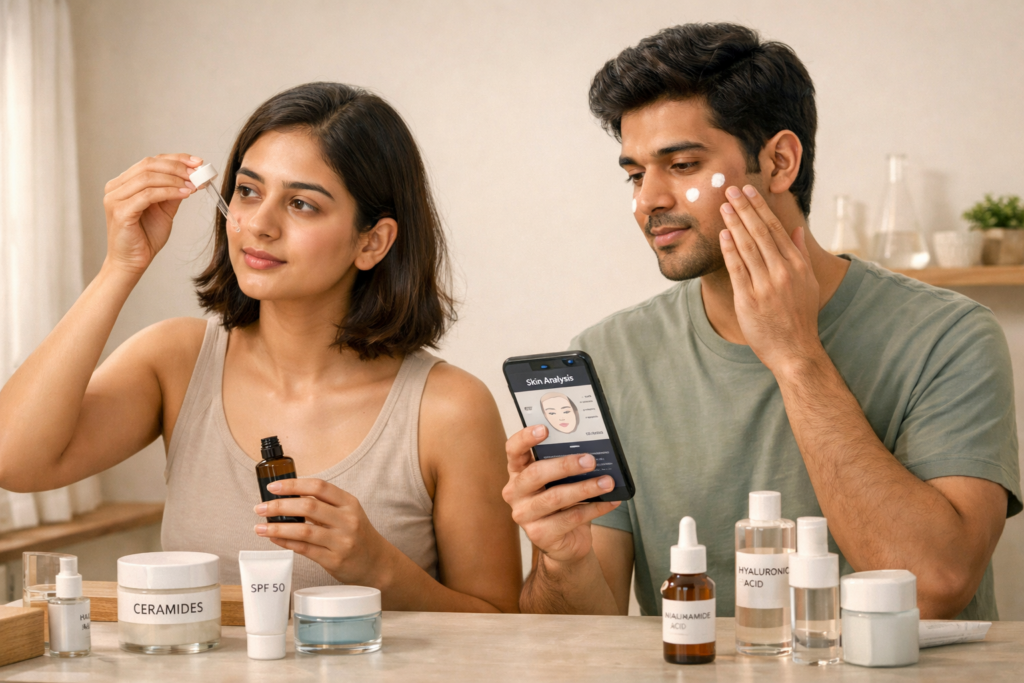
Tech-savvy consumers expect more than generic advice. AI-powered skin diagnostics, personalised routines, and smart product recommendations are gaining popularity.
According to Professional Beauty India, tools that analyse skin type, concerns, and environmental exposure are influencing purchase decisions — especially among urban Gen Z shoppers. Skincare is becoming data-driven, not trial-and-error.
Why does ingredient literacy matter?
Reading labels like a pro
Today’s young buyers read ingredient lists with the same intensity they scroll social media. Transparency matters. Brands that clearly explain what’s inside and why it works earn trust faster.
Clean Beauty India highlights that actives like niacinamide, ceramides, and gentle acids now act as selling points rather than confusing jargon. Knowledge, in this case, truly is power.
Why is sustainability no longer optional?
Ethics as a baseline expectation
Cruelty-free, vegan formulations, refillable packaging, and ethical sourcing are no longer “nice-to-haves.” For many young consumers, they are non-negotiable.
This aligns with broader lifestyle values. Skincare, like fashion and food, is being evaluated through an ethical lens. As Clean Beauty India reports, sustainability has shifted from a differentiator to a baseline expectation.
How does minimalism deliver maximum impact?
Fewer products, smarter routines

While interest in skincare is growing, routines themselves are becoming simpler. Multifunctional products — like moisturisers with SPF or sunscreens that hydrate — are preferred over long, complicated regimens.
Concepts like skin cycling are also gaining traction. Instead of using everything every day, routines alternate between exfoliation, active treatments, and recovery nights. Blackbird Skincare credits this trend to Gen Z’s science-first approach.
How is social media shaping skincare discovery?
Discovery through screens

Over 70% of young consumers discover skincare products through social platforms, according to Investors Hangout. Trends rise fast, go viral faster, and brands must keep up.
This also explains why wellness-infused skincare — products promising calm, stress relief, or sensory comfort — is gaining traction. Beauty is no longer skin-deep; it’s emotional.
Why is healthy skin the new status symbol?
Gen Z and Millennials in India aren’t chasing perfection. They are chasing balance — between science and simplicity, ethics and effectiveness, technology and touch.
The message is clear: skincare is becoming purposeful, personal, and informed. Brands that educate, personalise, and genuinely care will earn loyalty. Those that rely on outdated promises may fade away. In this new era, the glow that truly matters isn’t instant — it’s sustainable.
FAQs about Gen Z skincare trends in India
How is Gen Z’s approach to skincare different from older generations?
Gen Z treats skincare as prevention rather than repair. Preventive and anti-ageing routines now start in the early 20s, using gentle retinoids, antioxidants, and daily sunscreen. The Financial Express calls this “skin longevity” — preserving texture, firmness, and glow instead of chasing quick fixes later.
What is glass skin, and why is it trending in India?
Glass skin is a dewy, luminous, hydrated look inspired by K-Beauty trends. Young Indian consumers use gel moisturisers, hyaluronic acid serums, and niacinamide products to chase it, preferring healthy, natural skin over heavy matte makeup coverage.
Which ingredients matter most to young Indian skincare buyers?
Niacinamide, ceramides, hyaluronic acid, panthenol, centella asiatica, and gentle acids are among the most sought-after ingredients. Clean Beauty India reports that these actives now serve as selling points rather than confusing jargon, and barrier repair formulations are increasingly preferred over harsh exfoliants.
How is AI changing skincare personalisation in India?
AI-powered skin diagnostics analyse skin type, concerns, and environmental exposure to recommend personalised routines. Professional Beauty India notes these tools are influencing purchase decisions among urban Gen Z shoppers, moving skincare from trial-and-error to data-driven.
Where do young Indian consumers discover skincare products?
Social media. Investors Hangout reports that over 70% of young consumers discover skincare products through social platforms. Trends rise fast and go viral faster, which is also why wellness-infused skincare promising calm, stress relief, or sensory comfort is gaining ground.