

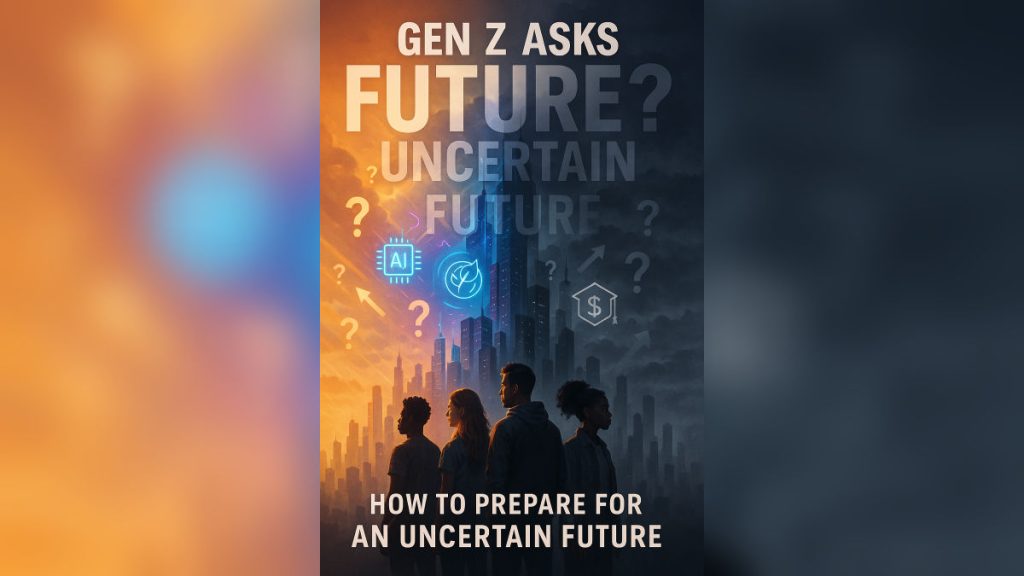
Short answer: Gen Z can prepare for an uncertain future by building adaptable skills, starting small with savings and investments, protecting mental health, and choosing purpose-led work. Pair lifelong learning with a real support network, and the unknown stops feeling so unknown.
The question keeps coming up. It surfaces in college WhatsApp groups, in 2 a.m. journal entries, in awkward dinner-table chats with parents who can’t quite read the room. How do I prepare for a future I can’t even picture? It’s a fair thing to ask. Gen Z has been handed a deck most generations never had to play, careers that didn’t exist a decade ago, financial pressure that compounds before the first pay cheque, and a planet that’s clearly running a fever.
And yet. There’s still room here for clarity, for growth, for something resembling purpose if you know where to look. This is a hopeful, hands-on roadmap for how Gen Z in India and beyond can gear up for the unknown without losing their nerve.
Why does the ground feel so unstable right now?
Growing up digital-first and post-pandemic, Gen Z is no stranger to disruption. Economic downturns, climate stress, sticky inflation, AI-led job displacement, these aren’t distant possibilities anymore, they’re the morning headlines. A 2023 Deloitte Global Gen Z and Millennial Survey found that nearly 46% of Gen Z respondents felt anxious about their long-term financial future. That’s not a vague worry. That’s almost half a generation, stating it out loud.
But the antidote to uncertainty isn’t panic, it’s preparation. Here’s how Gen Z can build the skills, mindset and systems to actually thrive on shifting ground.
How do you build adaptable, future-proof skills?
Become a lifelong learner
Gone are the days when a college degree guaranteed a career. Today’s job market rewards people who can learn, unlearn and relearn. As industries evolve and new roles emerge (hello, AI ethics consultant and virtual event planner), curiosity and continuous upskilling stop being optional. They become the floor.
Take Riya, a 24-year-old computer science graduate in Bengaluru. After finishing her degree, she realised her college curriculum hadn’t really prepared her for real-world product management roles, the gap was awkward and obvious. So she enrolled in a cohort-based online bootcamp, networked aggressively on LinkedIn, and landed a remote startup role inside six months. Her story isn’t unusual. It’s the new baseline.
Don’t undervalue soft skills
Technical know-how matters, of course. But soft skills are the glue. According to Horton International, communication, collaboration, emotional intelligence and creative problem-solving are increasingly prized in the workplace.
Whether you’re pitching ideas, navigating group dynamics, or adapting to remote work culture, these intangible traits often decide long-term success more than hard skills ever do. Hard skills get you in. Soft skills keep you there.
How can Gen Z secure a financial foundation early?
Start saving, even if it’s tiny
Financial literacy isn’t optional anymore, it’s survival. Begin with the basics: budgeting, saving, dodging debt traps, setting up an emergency fund. According to Arta, a financial advisory platform, Gen Z should start thinking about diversified investments early, mutual funds, SIPs, digital gold, even crypto if done responsibly.
Tanya, a marketing executive in Pune, started investing Rs. 2,000 monthly into index funds using a zero-commission app. “It’s not a huge amount,” she says, “but knowing that I’m building something slowly makes me feel more in control of my future.”
Tame the debt monster
Many Gen Zers in India take on student loans or get pulled in by easy credit cards. The numbers are clear, debt creeps up faster than most people expect, especially when every other Instagram ad pushes an aspirational lifestyle. The trick? Set financial boundaries early. Always understand the interest rates, repayment terms and long-term implications before borrowing, not after.
How do you protect mental well-being in chaos?
Don’t let digital define you
Gen Z is arguably the most online generation alive. But while the internet brings opportunity, it also brings comparison culture, information overload and that low-grade digital fatigue that nobody quite names. Mindful consumption, taking social media breaks, muting toxic accounts, going feral with your screen time settings, can preserve mental clarity in ways therapy alone can’t.
Build a mental health toolkit
Meditation. Journaling. Therapy when needed. Nature walks. Building emotional resilience is essential, not a luxury. Normalise asking for help. Talk to someone when overwhelm creeps in. It’s okay not to be okay, but it’s not okay to ignore it.
Aditya, a college student from Delhi, shared that practicing 10 minutes of breathing exercises every morning helped him manage his anxiety during his UPSC prep. Simple steps can lead to profound shifts.
Why ditch fixed plans for flexibility?
The linear career is dead
In a time when AI can code better than most entry-level engineers and climate change may displace whole industries, clinging to a rigid plan is almost a liability. Embrace the zigzag instead.
Work in a startup. Freelance. Take a gap year. Try a side hustle that scares you. Your path doesn’t need to look like your parents’ to be valid, in fact, it probably shouldn’t.
Seek purpose-driven work
Gen Z isn’t just working for paychecks, they’re chasing meaning. According to a McKinsey study, 70% of Gen Z want to work for companies whose values align with their own. Whether it’s climate change, DEI, or mental health advocacy, this generation is weaving personal values into professional choices, and walking away when companies fake the alignment.
What does community actually do for you?
Don’t do it alone
Navigating uncertainty is easier when you’ve got a tribe. Network not just for jobs, but for wisdom. Find mentors, online or offline, who’ve already walked the path you’re sketching out. Platforms like LinkedIn, Growth School and Twitter are full of communities eager to help if you ask the right way.
One small DM can shift a career, ask better questions, be curious, offer value first. Community is currency in the modern age.
You’re not powerless, you’re just beginning
The future is uncertain. That’s not a flaw, it’s the defining feature of our time. But uncertainty doesn’t mean helplessness. It means possibility. Space to create, adapt, evolve.
Gen Z, with its digital fluency, open-mindedness and hunger for change, is uniquely placed not just to survive the future, but to shape it. Preparing for uncertainty isn’t about having all the answers. It’s about asking the right questions, making conscious choices, and trusting your ability to grow through the unknown.
So, to every Gen Zer wondering what’s next, prepare, yes. But also, be bold. The future isn’t waiting. It’s being built. And it’s calling your name.
FAQs about how Gen Z can prepare for an uncertain future
What is the most important skill Gen Z needs to prepare for the future?
Adaptability is the single most important skill, the ability to learn, unlearn and relearn as industries shift. Pair that with strong soft skills like communication, emotional intelligence and creative problem-solving, the traits Horton International flags as increasingly prized in the workplace.
How should a Gen Z student start saving when they barely earn anything?
Start small and stay consistent. Tanya from Pune began with just Rs. 2,000 a month into index funds via a zero-commission app, and the habit, not the amount, is what matters. Build a small emergency fund first, then layer in mutual funds, SIPs and other diversified options as your income grows.
What did the 2023 Deloitte survey reveal about Gen Z financial anxiety?
The 2023 Deloitte Global Gen Z and Millennial Survey found that nearly 46% of Gen Z respondents were anxious about their long-term financial future. That makes financial preparation, not just earning, a clear priority for the generation.
How can Gen Z protect mental health while preparing for an uncertain future?
Build a personal toolkit, meditation, journaling, therapy, nature walks, social media boundaries, and treat self-care as part of the job. Aditya from Delhi managed his UPSC anxiety with just 10 minutes of breathing exercises each morning, proof that small daily practices add up.
Why should Gen Z choose purpose-driven work over high-paying jobs?
Because alignment beats burnout long-term. A McKinsey study found that 70% of Gen Z want to work for companies whose values match their own, and that match is what sustains motivation when industries get shaky and pay packets feel uncertain.