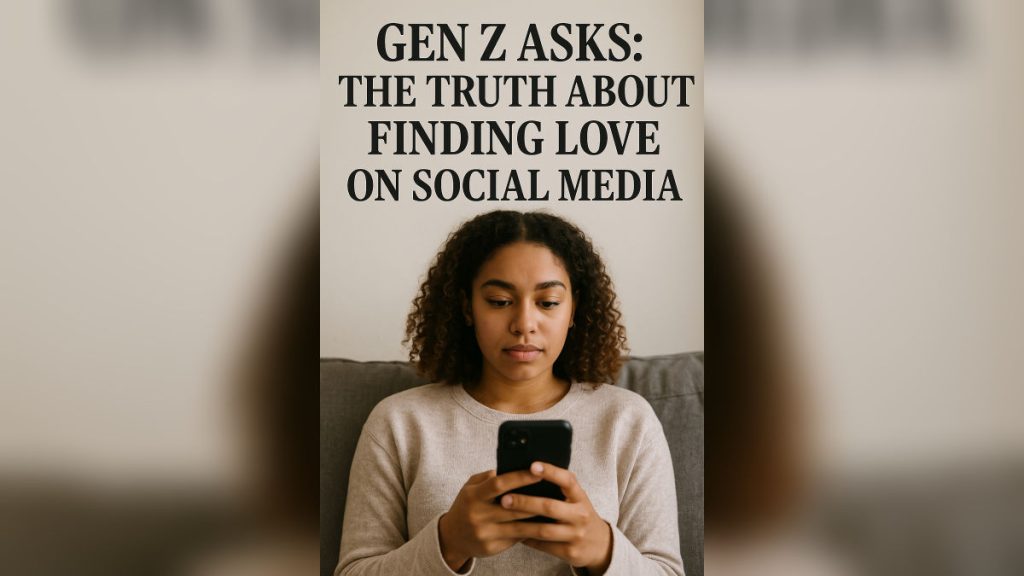
Short answer: Finding love on social media is real, but messy. Gen Z meets partners on Instagram, TikTok, X and Snapchat through DMs, memes and shared content. According to a 2023 Pew Research report, 63% of Gen Z prefer meeting someone online over face-to-face, and a Hinge study found over 60% of Gen Z users report being ghosted, often without explanation.
Once upon a time, relationships started over shared bus rides, handwritten notes, eye contact across a crowded room. Gen Z rewrote the script. For this phone-first generation, romance often begins with a follow, a like, or a DM. But is finding love on social media really all it’s cracked up to be? Or is it a digital illusion in filters and 280-character declarations?
Let’s unpack the truth, beyond the emojis and highlight reels.
How big is the digital dating pool for Gen Z?
Gone are the days when your dating options were limited to classmates, neighbours, or your cousin’s best friend. With platforms like Instagram, TikTok, X (formerly Twitter) and even Snapchat, Gen Z has access to a near-limitless dating universe.
“I met my boyfriend through a meme page,” laughs Tanya, 20. “He responded to a meme I posted, we kept talking, and now it’s been a year.”
Social media isn’t only about discovering love, it’s about discovering someone who gets your humour, your playlists, your politics, and maybe even your obsession with cottagecore aesthetics or indie poetry.
The broader pool lets Gen Z break out of geographic and cultural bubbles. You’re no longer confined to who you happen to bump into. Now you’re swiping across cities, countries, even continents. But with great access comes great confusion.
Are these real conversations, or just reactions?
While dating apps push swipes and bios, many Gen Z users say social platforms allow more natural connections. Commenting on a shared interest, reacting to a story, or exchanging memes feels more genuine than answering a pre-crafted prompt.
In fact, 63% of Gen Z prefer to meet someone online over traditional face-to-face methods, according to a 2023 Pew Research report.
Platforms like Instagram have become modern-day matchmakers, letting users subtly flirt through reactions, stories or shared content. TikTok trends like the “He’s a 10 but…” challenge double as low-pressure compatibility tests. Social media, in many ways, mirrors real life, just with a few filters and curated playlists.
Still, some wonder. Are these connections deep enough? Or are they just digital echoes of something real?
What is the flip side of curated love and comparison culture?
Social media’s shiny exterior hides a darker undercurrent: the pressure to perform your relationship.
We’ve all seen them. Perfect couple photos under cherry blossom trees, cozy cuddles on aesthetic couches, overly elaborate proposal reels. For many in Gen Z, seeing these posts sparks insecurity, not inspiration.
“Sometimes I wonder if I’m missing out,” admits Rohan, 22. “Like, why don’t we do couple photoshoots? Are we even that in love?”
This comparison culture leads to unrealistic expectations and quiet dissatisfaction in perfectly healthy relationships. The result? People trying to mould real love into a Pinterest board instead of appreciating its raw, unfiltered moments.
Why do superficial swipes cause dating burnout?
There’s a paradox at play here. The more people you can meet, the less meaningful each interaction becomes.
The ease of liking, following and messaging dozens of people can create dating fatigue, a state where emotional investment feels exhausting. You’re constantly chatting, but rarely connecting.
And when connection falters, ghosting becomes the norm. According to a study by the dating app Hinge, over 60% of Gen Z users report being ghosted, often without any explanation.
Why? In a world of instant gratification, patience has taken a backseat. If someone doesn’t respond in five hours, it’s on to the next.
How does social media fuel jealousy in relationships?
You know that small pang when you see your partner liking someone else’s photo, or commenting on an ex’s throwback? Social media fuels new-age insecurities that didn’t exist a generation ago.
Even the most stable relationships can spiral over ambiguous DMs or late-night follows. Public validation through likes, comments and “soft launching” your partner has become a weird metric of how “real” a relationship is, adding unnecessary pressure for many Gen Z couples.
Can social media actually build real love?
Despite the pitfalls, social media isn’t the villain. It’s the tool. And like any tool, it depends on how you use it.
Many Gen Zers are learning to draw boundaries, take digital detoxes, and focus on offline connection. They’re also pushing back against the pressure to publicly display affection.
“My partner and I decided to keep our relationship off social,” shares Fatima, 23. “It’s been healthier. We don’t need online validation, we just need each other.”
Social media also lets partners share music, art, memes and life updates in real time, building intimacy across long distances. That part is genuinely useful.
How is Gen Z redefining love itself?
Maybe the most powerful shift isn’t in how Gen Z dates, but why. This generation is increasingly intentional about emotional health and authenticity in relationships. They’re questioning traditional norms (the “you have to get married by 30” or “your relationship needs to be monogamous to be valid” kind) and choosing what works for them.
Love for Gen Z is less about fitting a mould and more about finding alignment, honesty and emotional safety.
“We talk about mental health openly,” says Kunal, 21. “My girlfriend knows when I’m having a low day, and we support each other through it. That’s love, for us.”
In many ways, this generation is turning the spotlight inward, focusing on self-love and personal growth as the foundation of any healthy relationship.
Final thoughts: the DM might be the beginning, not the end
Finding love on social media isn’t a fairytale, and it isn’t a failure. It’s simply different. Multifaceted. Fast-paced. Emotionally complex.
Yes, it comes with pitfalls: jealousy, ghosting, burnout and FOMO. But it also offers broader connection, aligned values and creative intimacy. For Gen Z, love doesn’t have to start with roses and candlelight, it might begin with a meme, a TikTok stitch, or a random like on a sleepy Sunday night.
So if you’re a Gen Z navigating love in the age of social media, here’s the truth. Don’t let the filters fool you. Real love is messy, slow, confusing, beautiful, and it can still bloom from your screen. Just make sure your heart, not the algorithm, is calling the shots.
FAQs about finding love on social media
Can you really find love on social media?
Yes. Many Gen Z couples meet through Instagram DMs, meme pages, TikTok comments, or shared interests on Snapchat. According to a 2023 Pew Research report, 63% of Gen Z prefer meeting someone online over traditional face-to-face methods.
Why does Gen Z prefer dating online over in person?
The dating pool is broader, and digital interactions like commenting on a story or trading memes feel more natural than scripted dating-app prompts. It also breaks geographic and cultural bubbles, opening up cross-city and cross-country connections.
How common is ghosting on social media for Gen Z?
According to a study by the dating app Hinge, over 60% of Gen Z users report being ghosted, often with no explanation. Dating fatigue from too many casual connections is one driver behind the trend.
How does social media affect modern relationships?
It can fuel jealousy through ambiguous DMs and late-night follows, and create comparison pressure with picture-perfect couple posts. But it also helps partners share life updates, art and music in real time, building intimacy across long distances.