
Short answer: Indian Gen Z treats sneakers as identity markers, not just footwear — choosing meaning over prestige and story over scale. Homegrown brand Comet, founded in Bengaluru in 2023 by Utkarsh Gupta and Dishant Daryani, leads this shift by building drops like Mango, Juno, and Ludo around emotion and community instead of celebrity endorsements. Its early drops sold out within hours.
Sneakers are no longer just footwear — they are a cultural language
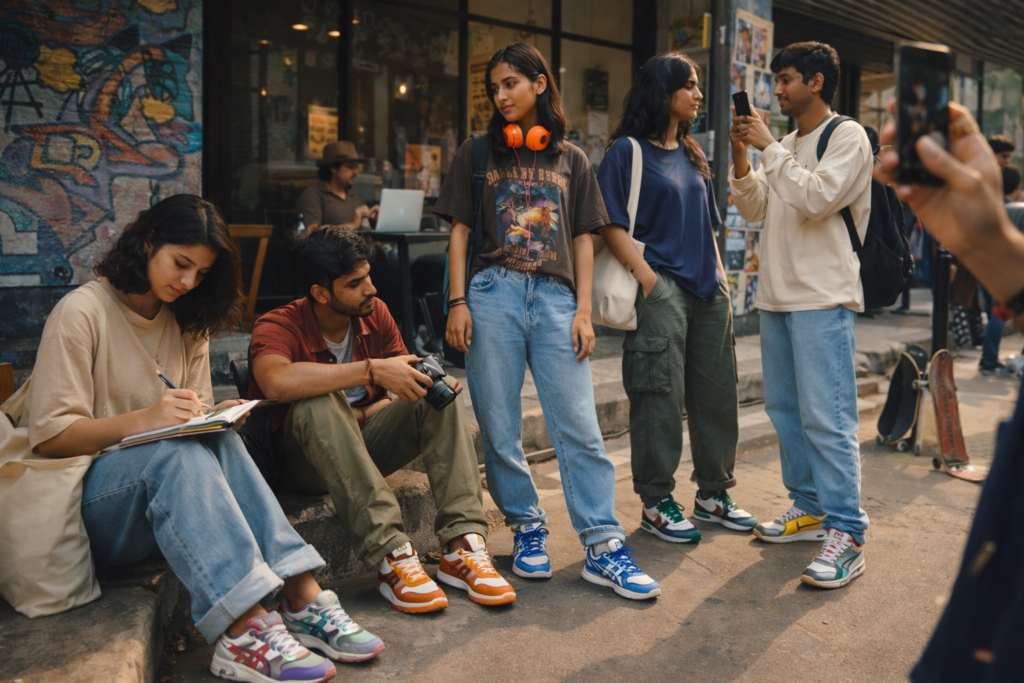
Walk into any college campus, co-working café, indie gig, or streetwear pop-up in India today and one thing is clear: sneakers are everywhere. More importantly, they mean something.
For Gen Z, sneakers are not a utility purchase. They are identity markers, conversation starters, mood boards you can wear. They sit at the intersection of fashion, music, internet culture, nostalgia, and self-expression. Unlike earlier generations who chased global logos as symbols of status, Gen Z is rewriting the rules — choosing meaning over prestige and story over scale.
This cultural shift has opened the door for a new kind of brand-building in India, where homegrown labels like Comet aren’t just selling shoes but actively shaping youth culture. For marketers targeting Gen Z, this isn’t a fashion story. It’s a playbook for relevance.
Why is sneaker culture exploding among Indian Gen Z?
Sneaker culture isn’t new globally, but its Indian evolution is deeply Gen Z-driven. Several cultural forces are converging at once.
Nostalgia meets internet aesthetics
Gen Z has a fascinating relationship with time. They romanticise eras they never lived through. Think 90s silhouettes, early 2000s colour palettes, retro basketball highs, chunky soles, and Y2K styling — all resurfacing through Pinterest boards, Instagram reels, and TikTok trends.
According to The Indian Express, retro fashion has seen a sharp resurgence among urban Indian youth, driven largely by digital discovery rather than lived memory. Sneakers fit perfectly into this nostalgia loop — familiar yet reinterpreted.
Social media is the new sneaker store
For Gen Z, discovery happens online first. Instagram, YouTube Shorts, and creator-led content have replaced physical stores as the primary influence layer. 
Sneakers today are:
- Unboxed on Reels
- Styled in outfit dumps
- Reviewed on YouTube
- Memed on Twitter
- Debated on Reddit
Every drop becomes content. Every sneaker becomes a post. This visibility transforms footwear into cultural currency — something you wear, share, and signal with.
Identity over aspiration

The biggest shift is psychological. Gen Z is less interested in looking “successful” and more interested in looking authentic. They don’t want to wear what everyone else is wearing. They want sneakers that reflect their vibe — quirky, understated, expressive, or experimental.
As highlighted by consumer research platform chnks.in, Gen Z consumers in India increasingly prioritise personal relevance over brand legacy. This is a massive departure from the logo-led buying behaviour of the past.
Why is Gen Z backing homegrown sneaker brands?
This mindset shift explains why Indian sneaker brands are finally having a moment. Gen Z is consciously choosing local — not out of nationalism, but relatability.
They are drawn to brands that offer:
- Cultural familiarity
- Affordable price points
- Design-forward thinking
- Community-led storytelling
- A sense of “this is made for people like me”
Global brands still hold aspiration, but they often feel distant. Homegrown brands feel accessible, conversational, and culturally fluent. This is where Comet enters the picture.
How did Comet build culture, not just shoes?
Founded in Bengaluru in 2023 by Utkarsh Gupta and Dishant Daryani, Comet didn’t position itself as “India’s answer to Nike” — a comparison Gen Z usually rejects. Instead, it positioned itself as a cultural project rooted in Indian youth creativity (FashionNetwork India). That distinction matters.
Storytelling as a product feature
Comet doesn’t just sell sneakers. It sells stories you can wear. 
Each drop — whether it’s Mango, Juno, or Ludo — is inspired by an emotion, a memory, or a cultural moment. This approach transforms sneakers from commodities into collectibles.
Drop culture also plays a role. Limited releases create urgency, community chatter, and that all-important “I was there” feeling Gen Z loves. According to Hello Entrepreneurs, Comet’s early drops sold out within hours, signalling strong demand driven by narrative, not advertising muscle.
Community over celebrity
Instead of celebrity endorsements, Comet leans into creative subcultures — artists, designers, musicians, and creators who already influence Gen Z taste organically.
Their Members Club releases and creator collaborations frame sneakers as badges of belonging, not flex items. This aligns with Gen Z’s preference for community validation over mass approval.
A 22-year-old designer I spoke to at a Bengaluru pop-up put it simply:
“It doesn’t feel like a brand talking at me. It feels like people like me made this.”
That feeling is priceless.
Design that balances aspiration and access
Comet’s silhouettes — Highs, Lows, Aeons, Slides — are clean, contemporary, and versatile. They are designed for daily wear, not glass cabinets.
Importantly, Comet has kept pricing within reach of urban Gen Z without diluting design quality. As noted by Vintage Clothing Guides, affordability without compromise is a key driver of Gen Z brand loyalty.
How does retail become an experience, not a transaction?
One of Comet’s smartest moves has been its approach to physical retail. Its flagship stores in Bengaluru and Delhi are not traditional shoe shops. They are immersive spaces — part gallery, part cultural hub. Architecture, lighting, textures, and layout all contribute to storytelling (Business News Week).
For Gen Z, shopping is entertainment. If a store doesn’t feel Instagrammable, interactive, or emotionally engaging, it’s forgettable. Comet gets that.
Is Comet above criticism? No — and that matters

No Gen Z-facing brand escapes scrutiny. On Reddit and sneaker forums, some users have questioned Comet’s pricing, durability, or long-term value. Others defend the brand’s design language and vision.
This tension is actually healthy. It shows that:
- Gen Z cares deeply
- They hold brands accountable
- Community perception matters as much as marketing
For Comet, the challenge ahead is clear: sustain quality as hype scales. In Gen Z culture, trust is slow to earn and fast to lose.
What does Comet’s rise teach marketers about Gen Z?
Zooming out, Comet’s success offers broader lessons for any brand trying to win Gen Z in India.
1. Culture beats campaigns
Gen Z doesn’t want to be marketed to. They want to be invited in.
2. Story is the new status
A compelling narrative can outperform legacy branding.
3. Community is the growth engine
Belonging drives loyalty more than discounts ever will.
4. Local isn’t a limitation
When done right, local becomes a strength, not a constraint.
5. Products must earn attention
Hype may bring eyeballs, but only substance keeps them.
Sneakers as a mirror of a generation
Sneakers are a lens into how Gen Z thinks, buys, and belongs. They reveal a generation that values meaning over excess, expression over approval, and culture over convention. In India, this shift is creating space for brands like Comet — brands that don’t just sell products, but participate in the cultural conversation.
For marketers, the takeaway is clear: if you want Gen Z’s attention, don’t show up with just a product. Show up with purpose, perspective, and cultural fluency. Because Gen Z didn’t just adopt sneaker culture — they turned it into a language. And brands that learn to speak it will win.
FAQs about Gen Z sneaker culture in India
Who founded Comet sneakers and when?
Comet was founded in Bengaluru in 2023 by Utkarsh Gupta and Dishant Daryani. The brand positions itself as a cultural project rooted in Indian youth creativity rather than an Indian version of a global sneaker label.
What are the main sneaker silhouettes Comet sells?
Comet’s silhouettes include Highs, Lows, Aeons, and Slides. Specific drops like Mango, Juno, and Ludo are inspired by emotions, memories, or cultural moments, and the brand operates flagship stores in Bengaluru and Delhi.
Why does Indian Gen Z prefer homegrown sneaker brands over global ones?
Gen Z in India is drawn to local brands for relatability, cultural familiarity, affordable pricing, design-forward thinking, and community-led storytelling. Global brands still carry aspiration, but homegrown labels feel closer to everyday life and more culturally fluent.
How does Comet market without celebrity endorsements?
Comet leans on creative subcultures — artists, designers, musicians, and creators who already influence Gen Z taste organically. Its Members Club releases, limited drops, and creator collaborations frame sneakers as badges of belonging instead of celebrity-backed flex items.
Are Comet sneakers affordable for students and young professionals?
Comet has kept pricing within reach of urban Gen Z without diluting design quality. Vintage Clothing Guides notes that affordability without compromise is a key driver of Gen Z brand loyalty, and Comet’s early drops sold out within hours.