
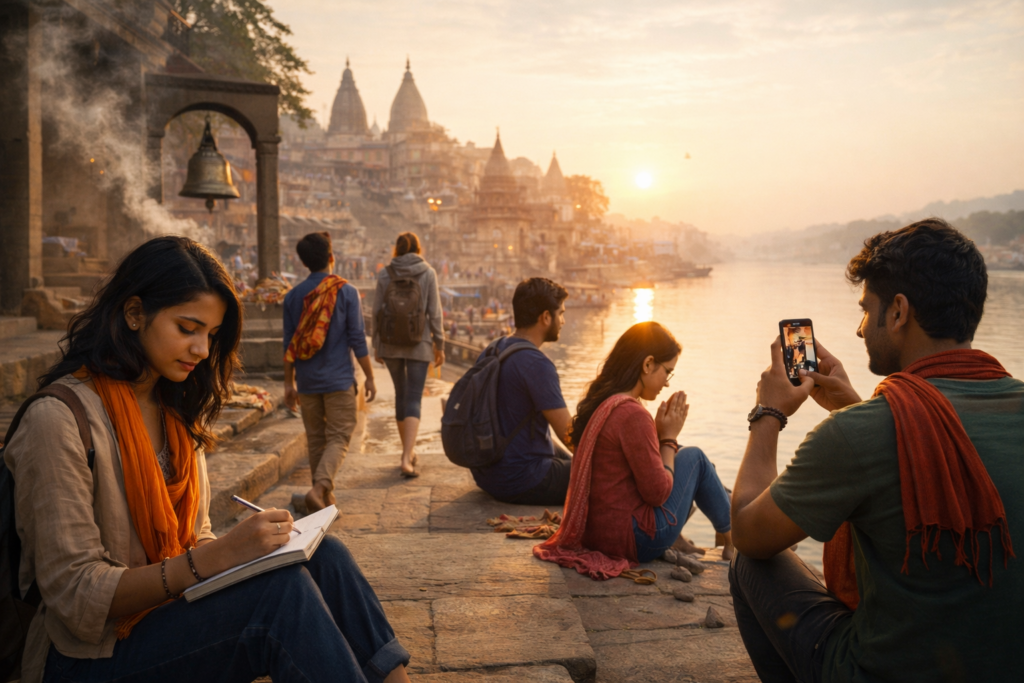
Short answer: Gen Z is driving the growth of religious tourism in India, but on their own terms. Temple towns like Varanasi, Rishikesh, Haridwar, Ujjain, Tirupati, Amritsar, Bodh Gaya, and Kedarnath are seeing younger crowds who blend pilgrimage with wellness, cafés, cultural exploration, and social media storytelling — a hybrid trend many now call shrinecations.
For a long time, religious tourism in India carried a specific image. It was seen as deeply traditional, slow-paced, and tied to parents, grandparents, and extended family trips planned months in advance. Temple visits, pilgrimages, and holy dips were framed as duties rather than desires — important, yes, but rarely exciting.
That image is quietly fading.
Over the past few years, a noticeable shift has been unfolding across India’s spiritual landscape. Temple towns are buzzing with younger crowds, backpackers are lining up for early-morning aartis, and Instagram feeds are filled with sunrises over ghats and mountain shrines. At the heart of this change is Gen Z — a generation redefining not only how Indians travel, but why they travel.
So, is Gen Z driving the growth of religious tourism in India? The evidence suggests they are. They are reshaping pilgrimage into something far more experiential, personal, and culturally relevant.
How has Gen Z’s travel mindset shifted?
To understand Gen Z’s role, look at how differently they approach travel itself. Earlier generations often viewed travel as a luxury or a rare break from routine. Gen Z sees it as a form of self-expression and self-care.
This generation grew up amid economic uncertainty, constant digital stimulation, and rising conversations around mental health. As a result, they tend to prioritise meaning over material indulgence. Travel is not about ticking destinations off a list; it is about emotional grounding, reflection, and growth.
Religious and spiritual destinations fit naturally into this mindset. Places like Varanasi, Rishikesh, Haridwar, Ujjain, Tirupati, Amritsar, Bodh Gaya, and Kedarnath offer something beach parties and shopping trips often don’t — a sense of stillness and perspective.
Many Gen Z travellers are choosing these destinations independently. These are not always family-enforced pilgrimages. They are conscious choices driven by curiosity, stress relief, or a desire to reconnect with something deeper.
What is a shrinecation, and why is it trending?
One of the most interesting developments driven by Gen Z is the rise of what many now call “shrinecations.” This concept blends religious travel with leisure, wellness, and cultural exploration.
For Gen Z, a spiritual trip does not end with darshan or prayer. It often includes: 
- Long walks along the Ganga at sunrise
- Cafés, bookshops, and slow living in Rishikesh
- Yoga sessions and meditation retreats
- Local food exploration and street photography
- Journaling, vlogging, or simply sitting in silence
This hybrid style of travel has expanded the appeal of religious destinations beyond strictly devout audiences. It has also increased the length of stays and spending patterns, benefiting local economies. Homestays, boutique hostels, cafés, yoga centres, and local guides are seeing a younger, more diverse crowd than ever before.
I noticed this shift during a visit to Varanasi a couple of years ago. Sitting at Assi Ghat before dawn, I was surrounded not by elderly pilgrims alone, but by students, solo travellers, and small groups of friends — some praying, others sketching, some quietly filming the river. The atmosphere felt ancient yet surprisingly contemporary.
How is social media shaping spiritual discovery?
If there is one undeniable catalyst behind Gen Z’s engagement with religious tourism, it is social media.
Spirituality, once considered deeply private, has found a new public language online. Instagram reels of Ganga aartis, YouTube vlogs documenting treks to Kedarnath, and aesthetic photographs of temple architecture have transformed sacred spaces into sources of inspiration and aspiration. 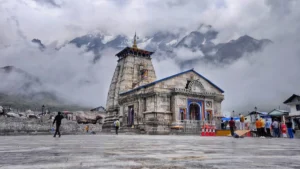
Travel vloggers, spiritual influencers, yoga practitioners, and photographers have reframed religious destinations as:
- Calm rather than rigid
- Experiential rather than instructional
- Inclusive rather than intimidating
This digital storytelling has normalised spiritual travel among peers. When a Gen Z traveller sees someone their own age exploring an ashram or attending a midnight aarti, it feels accessible rather than alien. Curiosity replaces hesitation, and interest quickly turns into action.
Why is spirituality a response to mental health challenges?
Another powerful driver behind this trend is mental health awareness. Gen Z is more open than any previous generation about anxiety, burnout, and emotional fatigue. Constant connectivity, academic pressure, and career uncertainty have made the search for inner balance a priority rather than a luxury.
Religious and spiritual spaces offer something uniquely powerful here. They provide: 
- Silence in a noisy world
- Rituals that create structure
- Spaces where slowing down is encouraged
- A sense of continuity and belonging
For many young travellers, visiting a temple or monastery is not about strict religious belief. It is about finding peace without performance. Unlike commercial wellness spaces, these destinations carry centuries of collective meaning, which adds depth to the experience.
How does religious travel rebuild cultural identity?
Global exposure has shaped Gen Z in unprecedented ways. Paradoxically, it has also sparked a renewed desire to reconnect with cultural roots.
Religious tourism becomes a gateway for young Indians to explore:
- Family traditions and inherited stories
- Regional histories and mythologies
- Indigenous philosophies and symbolism
- Languages, rituals, and local customs
This is particularly evident among urban Gen Z, many of whom feel culturally detached despite being hyper-connected globally. Visiting a temple town or pilgrimage site becomes an act of cultural learning rather than blind devotion. It’s less about following tradition unquestioningly and more about understanding why those traditions exist.
How does infrastructure support the trend?
Gen Z’s interest alone would not drive large-scale growth without structural support. India has made significant investments in religious tourism infrastructure over the past decade.
These include:
- Improved road and rail connectivity
- Expanded and modernised airports near pilgrimage hubs
- Digital systems for darshan bookings and accommodations
- Better sanitation, lighting, and public facilities
These upgrades align well with Gen Z’s travel habits, which often involve short, spontaneous trips planned online. Convenience removes friction, making spiritual travel more appealing and less intimidating.
How is Gen Z reshaping the religious tourism economy?
The influence of Gen Z extends far beyond footfall numbers. They are reshaping the ecosystem around religious tourism. 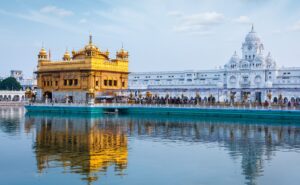
Key changes include:
- Rising demand for affordable yet aesthetic accommodations
- Growth of cafés, co-living spaces, and community hostels
- Expansion of wellness tourism, yoga retreats, and mindfulness programs
- Increased reliance on digital discovery and booking platforms
- Content-led destination marketing rather than traditional advertising
Religious destinations are gradually evolving into multi-layered cultural hubs, offering spirituality alongside lifestyle experiences. This transformation is largely driven by the expectations of younger travellers.
Is Gen Z less religious, or differently religious?
A common misconception is that Gen Z is less religious than previous generations. The reality is more nuanced.
Gen Z tends to value:
- Personal exploration over rigid instruction
- Experience over blind adherence
- Meaning over obligation
They may not practise faith the way their parents did, but their engagement is often more intentional. Many want to understand the philosophy behind rituals rather than simply perform them. This curiosity-led approach leads to deeper, more sustained engagement with spiritual spaces — and often, repeat visits.
A new era for religious tourism in India
Religious tourism in India has always been vast. What is changing now is who is shaping its future. Gen Z is transforming religious travel from:
- Obligation into choice
- Ritual into experience
- Silence into storytelling
- Tradition into a living lifestyle
By blending spirituality with wellness, culture, digital expression, and community, Gen Z is not merely participating in religious tourism — they are redefining it.
As this generation gains greater economic power and influence, their impact on how India travels, reflects, and reconnects with its roots will only grow stronger. Religious tourism is no longer just about faith alone. For Gen Z, it is about finding meaning while moving forward — and in doing so, they are writing an entirely new chapter in India’s spiritual journey.
FAQs about Gen Z religious tourism in India
Is Gen Z actually driving religious tourism growth in India?
Yes. Temple towns across India are seeing younger crowds and independent travellers rather than only family-enforced pilgrimages. Gen Z is reshaping destinations like Varanasi, Rishikesh, Haridwar, Ujjain, Tirupati, Amritsar, Bodh Gaya, and Kedarnath into experiential, personal, and culturally relevant trips.
What is a shrinecation?
A shrinecation is a hybrid trip that blends religious travel with leisure, wellness, and cultural exploration. It goes beyond darshan or prayer to include yoga sessions, sunrise walks along the Ganga, café culture in Rishikesh, local food exploration, journaling, vlogging, and quiet reflection.
Why are young Indians drawn to spiritual destinations?
Gen Z is more open about anxiety, burnout, and emotional fatigue, so they value silence, rituals that create structure, and a sense of belonging. Spiritual spaces offer peace without performance and carry centuries of collective meaning, which adds depth that commercial wellness spaces often lack.
How is social media influencing spiritual tourism?
Instagram reels of Ganga aartis, YouTube vlogs of Kedarnath treks, and temple architecture photos have reframed religious destinations as calm, experiential, and inclusive. Creators normalise spiritual travel among peers, turning curiosity into action when Gen Z sees someone their own age at an ashram or midnight aarti.
Are Gen Z travellers less religious than earlier generations?
Not exactly. They value personal exploration over rigid instruction and experience over blind adherence. Many want to understand the philosophy behind rituals rather than simply perform them, which leads to deeper and more sustained engagement with spiritual spaces, and often repeat visits.