
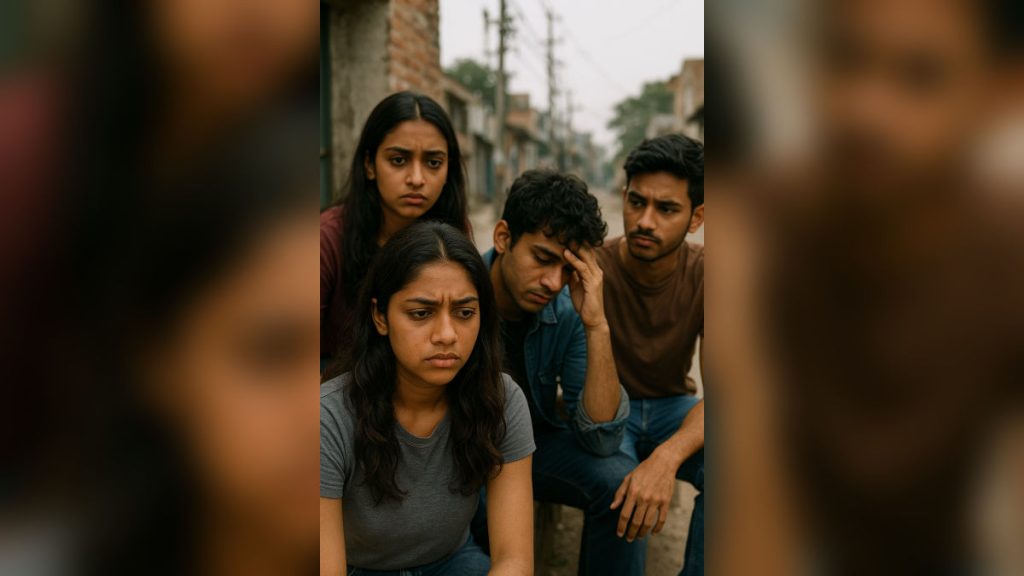
Short answer: India’s Gen Z is more open about mental health than any generation before, but the support systems are uneven. A survey of over 1,050 respondents found 75.9% rate their wellbeing as good or excellent, yet 70.9% have never tried therapy. Meditation has wider cultural acceptance (59.5%) than therapy. Social media has helped normalise the conversation, with 76% saying it’s helped at least somewhat.
Mental health used to be the conversation we didn’t have. For Gen Z in India, that script has been quietly torn up.
The survey shows it. Over 1,050 Gen Z respondents opened up about their wellbeing and where the support actually is (or isn’t). The findings paint a layered portrait, optimism laced with strain, traditional practices doing the heavy lifting, social media playing both helper and antagonist.
How is Gen Z mental wellbeing in India holding up?

Reasonably well, on the face of it. Nearly half of respondents (45.6%) rated their wellbeing as “Good”, and 30.4% considered it “Excellent.” Resilient. But surfaces only tell you so much.
Around 19% rated their wellbeing as just “Okay,” and 5.1% said it was “Not great.” Small numbers, sizeable group.
The most common challenges? Low mood or sadness (21.7%), trouble sleeping (19.3%) and loneliness (19.3%). Burnout (14.9%) and anxiety (13.7%) follow. A 20-year-old student we spoke with framed it well: “It’s not that my life is falling apart, but there are days when I just feel empty, and that emptiness is exhausting.”
Who can Gen Z talk to about mental health?

The trust circle is narrow. 41.8% said they’re comfortable discussing mental health, but only with people they trust deeply. Another 25.3% are “very comfortable” with friends or family, and an equal share (25.3%) feel only “somewhat comfortable.” 7.6% aren’t comfortable at all. Stigma still lingers.
One respondent put it bluntly: “I can talk to my best friend about my panic attacks, but I would never tell my parents. They wouldn’t understand.” Friends in, family often out.
Why is therapy still a hard sell for Indian Gen Z?

Therapy is the great unmet opportunity. An overwhelming 70.9% have never sought professional help. 12.7% considered it but never took the leap. Only 11.4% tried therapy once or twice, and a tiny 5.1% attend regularly.
Reasons matter. Almost half (47.8%) feel they don’t need it. 30.4% prefer to “deal with it on their own.” Cost (8.7%), stigma (6.5%) and lack of awareness about where to seek help (6.5%) round it out. Awareness has grown. Access and acceptance lag behind. For many, therapy still reads as a last resort rather than a preventive tool.
Why does meditation work where therapy doesn’t?

Mindfulness has the home-court advantage. About 44.3% practise meditation occasionally, and 24.1% regularly. Only 8.9% have never tried.
The motivators are practical, not spiritual: improving focus (37.4%) and reducing stress or anxiety (25.2%). The cultural endorsement is striking. 59.5% believe meditation is more culturally acceptable than therapy in India, while only 5.1% say therapy has wider acceptance. That gap explains why young people reach for a yoga mat before they book a counsellor.
Is social media helping or hurting Gen Z mental health?

Both. 38% believe social media has “helped a lot” in normalising therapy, and another 38% say it has helped “somewhat.” Three in four crediting platforms for the shift.
But not everyone agrees. 17.7% say social media has “not really” helped, and 6.3% feel it actually adds pressure. Both readings are valid, often inside the same person on different days.
Scroll Instagram or YouTube for an hour and you’ll see why. Open conversations about therapy and burnout. Plus an avalanche of self-care content that can feel performative. As one respondent put it:
“It’s nice to see people talk about depression online, but sometimes I feel guilty for not being as productive or zen as them.”
How is Gen Z different from older generations on this?
The survey asked whether Gen Z is more open to mental health conversations than older generations. 41.8% said “definitely.” 35.4% said “somewhat.” Decisive.
Where Millennials and Boomers often treated mental struggles as private (shameful, even) Gen Z treats openness as a strength. They’re nudging the rest of society toward more empathy, one Instagram caption at a time.
What does Gen Z actually want? Safe spaces, not just services

The preferred forms of support break down clearly:
- In-person therapy (28%) remains the top choice.
- Anonymous chat/text lines (22.7%) nearly match it, signalling demand for discreet, accessible help.
- Group support circles (19.7%) and guided meditation sessions (15.9%) also resonate.
But beyond services, what Gen Z asks for most are safe spaces. 31.6% identified this as the most crucial need, followed by less societal judgment (25%) and better awareness in schools and colleges (19.1%).
The therapist matters. The room around the therapist (the friends, the parents, the college, the boss) matters more.
Toward a more compassionate future
The survey paints a generation at a crossroads. More open and self-aware than any before, yet still navigating stigma, cultural barriers and access issues. Gen Z embraces meditation while staying hesitant about therapy. They use social media to normalise vulnerability, even as it sometimes amplifies pressure.
The challenge sits with the institutions. Schools, workplaces and policymakers have to act as active enablers of mental wellbeing, not just gatekeepers of resources. As one respondent put it: “I don’t want to hide my struggles anymore. I just want a world that listens without labeling me.”
FAQs about Gen Z mental health in India
How does Gen Z in India rate their own mental wellbeing?
Most rate it positively: 45.6% say their wellbeing is “Good” and 30.4% say “Excellent.” Around 19% rate it as just “Okay” and 5.1% as “Not great,” which still represents a sizeable group struggling without support.
What are the most common mental health challenges Indian Gen Z face?
The top challenges are low mood or sadness (21.7%), trouble sleeping (19.3%), loneliness (19.3%), burnout (14.9%), and anxiety (13.7%). These often overlap rather than appearing in isolation.
Why do most Indian Gen Z avoid therapy?
70.9% have never tried therapy. The main reasons are not feeling they need it (47.8%), preferring to handle problems alone (30.4%), cost (8.7%), stigma (6.5%), and unawareness of where to find help (6.5%). Therapy is still framed as a last resort rather than a preventive tool.
Is meditation more accepted than therapy in India?
Yes, by a wide margin. 59.5% of Gen Z respondents believe meditation is more culturally acceptable than therapy, while only 5.1% feel therapy has wider acceptance. Meditation aligns with traditional Indian practices and is used for focus and stress reduction.
Has social media helped Gen Z talk about mental health?
Mostly yes. 38% say social media has “helped a lot” and another 38% say it has helped “somewhat” in normalising mental health conversations. But 17.7% say it hasn’t really helped and 6.3% feel it adds pressure through performative self-care content.