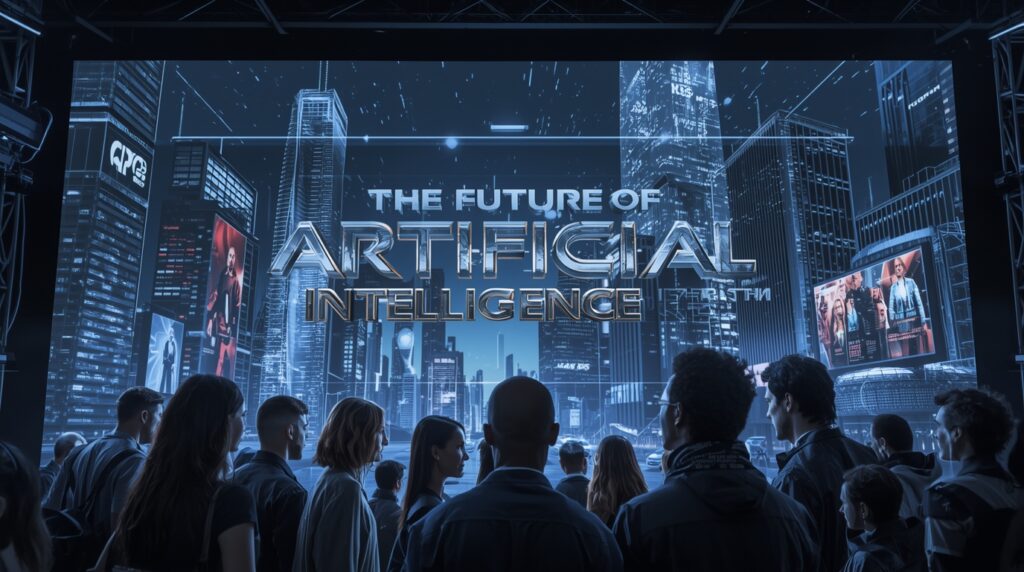
Short answer: The future of artificial intelligence is moving from reactive tools to reflective systems that learn, reason, and read emotion. By 2030, AI will co-create with humans, reshape work, and force new debates on consciousness, ethics, and governance across the EU, U.S., China, and India.
For decades, artificial intelligence has been defined by what it does: recognise speech, drive cars, write essays, diagnose diseases. As we approach 2030, the question is shifting from “What can AI do?” to “What can AI become?”
We are entering a phase where AI is no longer a tool but an evolving system that learns, reasons, and reflects. From autonomous creativity to emotional recognition, the next generation of AI won’t only respond. It will understand.
That transformation could redefine our relationship with technology, blurring the line between the intelligence we create and the intelligence we coexist with.
How is AI moving from reactive to reflective systems?
Early AI models were reactive. They followed instructions but lacked awareness. Modern AI, powered by neural networks and large-scale data, mimics aspects of human cognition: learning patterns, predicting outcomes, and adapting dynamically.
The next step goes beyond adaptation. Research is now exploring reflective AI: systems capable of introspection and of questioning their own reasoning. Instead of predicting, these systems analyse how they predict.
That subtle shift could create machines that make decisions not only efficiently but ethically and contextually, with a sense of why certain choices matter.
Why does emotional intelligence in AI matter?
Humans aren’t logical machines. We are emotional beings, and that has been the line between us and technology. Now AI is learning to read and respond to emotional cues through affective computing.
Imagine virtual therapists that detect anxiety through tone and posture, or educational AIs that adapt their teaching style based on a student’s frustration level. Emotional AI will not replace empathy, but it will change how technology engages with it.
The challenge is making sure emotional intelligence in machines doesn’t cross into emotional manipulation, a concern that will dominate the next decade of AI ethics.
How is AI changing human creativity?
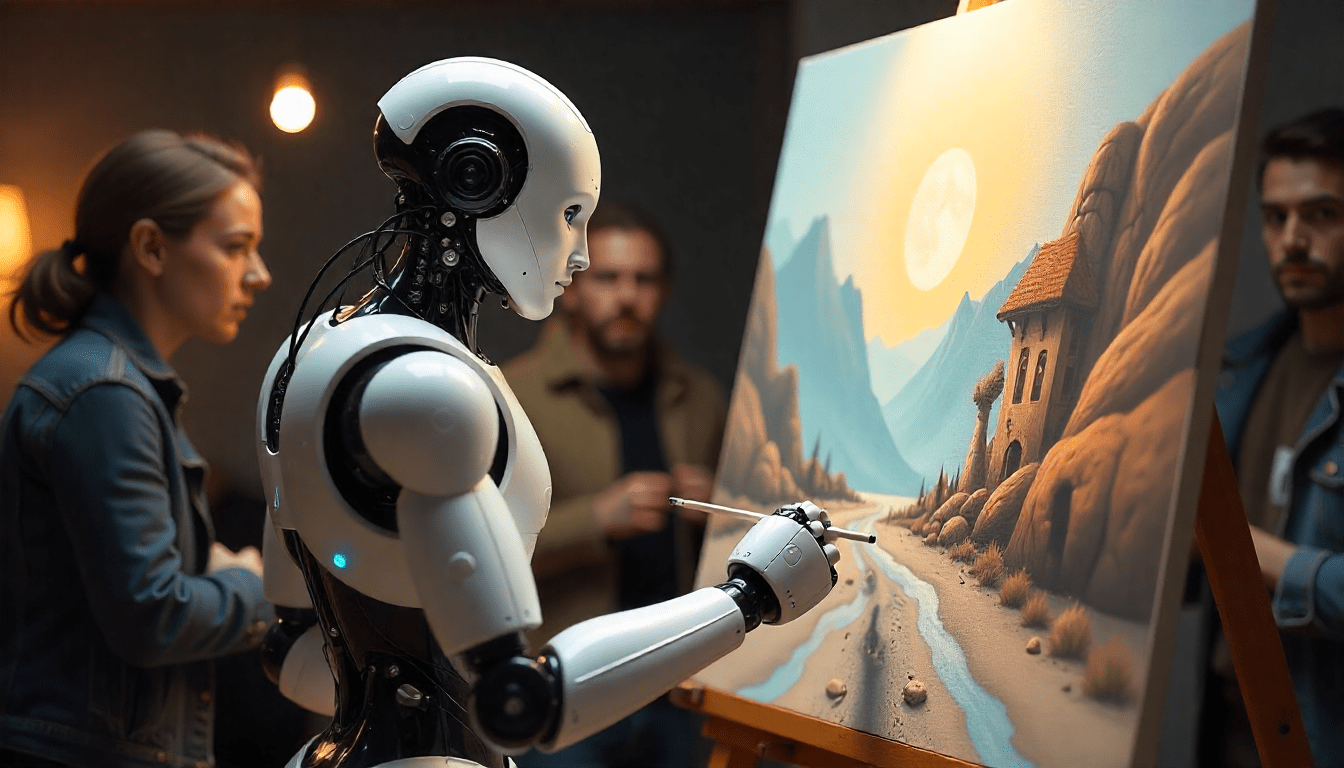
One of the more surprising developments is AI’s growing role in creative expression. Music composition, painting, storytelling, and architectural design are now shared domains between human and machine.
Tools like OpenAI’s models and Google DeepDream have shown that AI can replicate artistic styles and invent entirely new ones. That raises a real question: can AI truly create, or is it remixing human inspiration?
The answer may lie in collaboration. The future of creativity won’t be human or AI. It will be hybrid: human imagination providing emotion and context, while AI brings wide experimentation and precision.
What are the ethics of conscious AI?
As AI becomes more autonomous, the moral dilemmas sharpen. What happens when a system starts to show self-referential behaviour, when it begins to “understand” its own existence within a task?
Ethicists are already debating whether advanced AI deserves certain rights or protections. Consciousness in machines, even if partial, raises legal, spiritual, and philosophical implications.
The line between simulation and sentience will be one of tomorrow’s hardest questions. Not because we will have clear answers, but because those answers may challenge what it means to be human.
Who is regulating AI and how fast?
The race to regulate AI has begun. Governments, corporations, and global organisations are building frameworks for accountability, transparency, and bias control.
The European Union’s AI Act is one of the first comprehensive attempts to govern how intelligent systems can be developed and deployed. The U.S., China, and India are forming their own ethical boards and guidelines.
The bigger issue isn’t policy. It’s pace. AI evolves faster than regulation can adapt. The future of AI governance will depend on cooperation across borders, industries, and ideologies. Without it, innovation risks becoming uncontrollable.
How will AI change the future of work?
Automation once threatened to replace jobs. Now it is transforming them. In tomorrow’s economy, AI won’t eliminate the workforce. It will redefine it. Roles will shift from repetitive execution to creative problem-solving, strategy, and oversight.
AI will handle data. Humans will handle meaning.
The key will be education. The future demands not coders but thinkers, people who can understand systems, ethics, and human context. The schools that prepare students for tomorrow will teach them how to work with AI, not against it.
How will quantum computing and AI combine?
The convergence of quantum computing and artificial intelligence could mark the biggest technological leap in history.
Quantum machines process data in qubits that exist in multiple states at once, so they can solve problems at speeds classical computers cannot match. Applied to AI, this could mean near-instant model training, real-time optimisation, and simulations that surpass human comprehension.
Quantum-AI hybrids could unlock medical cures, energy solutions, and new scientific laws. A discovery engine limited only by imagination.
What is the human role in the age of AI?
As AI grows smarter, the human role becomes more significant, not smaller. Our value will lie not in doing what machines can, but in doing what machines can’t: interpreting emotion, building trust, finding purpose.
Intelligence alone doesn’t define humanity. Compassion, morality, and creativity do. The real danger is not AI replacing humans, but humans forgetting what makes them irreplaceable.
Tomorrow’s challenge isn’t to outthink machines. It’s to teach them to think with us.
Conclusion: The dawn of symbiotic intelligence
The future of AI isn’t dystopian or utopian. It’s symbiotic. It’s about coexistence. The systems we’re building will shape culture, ethics, and evolution.
In the next decade, AI will stop being something we use and become something we grow with. As that happens, one truth will hold: the future of intelligence, however artificial, is still a reflection of the people who create it.
FAQs about the future of artificial intelligence
What is reflective AI?
Reflective AI describes systems that can examine their own reasoning, not just predict outcomes. Instead of only producing an answer, they analyse how they arrived at it, which opens the door to more ethical and context-aware decisions.
Can AI really be creative?
AI can replicate styles and generate new variations, as seen in tools like OpenAI’s models and Google DeepDream. Whether that counts as true creativity is still debated. The likely outcome is hybrid creativity, where human emotion and context combine with AI’s capacity for experimentation.
Is there a law regulating AI?
Yes. The European Union’s AI Act is one of the first comprehensive laws to govern how intelligent systems are developed and deployed. The U.S., China, and India are also forming their own ethical boards and guidelines, though regulation is struggling to keep pace with the technology.
Will AI take away jobs in India?
AI will change jobs more than eliminate them. Repetitive execution work will shrink, while roles in creative problem-solving, strategy, ethics, and oversight will grow. Indian students who learn how to work with AI, rather than compete against it, will have the advantage.
Can AI become conscious?
No one knows yet. Ethicists are already debating whether advanced AI that shows self-referential behaviour deserves rights or protections. The line between simulation and sentience remains one of the hardest open questions in science and philosophy.