

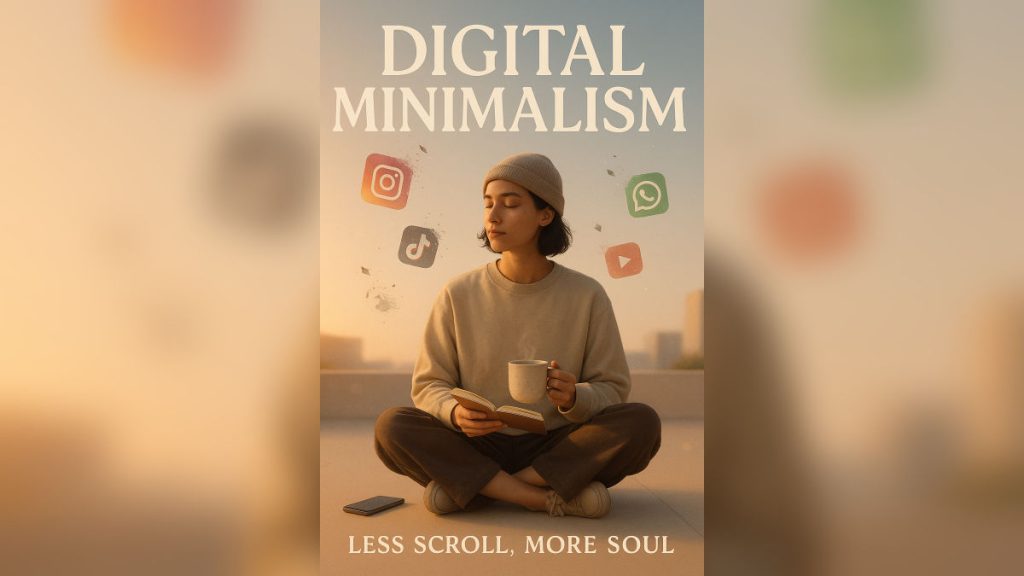
Short answer: Digital minimalism for Gen Z isn’t about deleting every app. It’s about being deliberate, picking 1-2 platforms that actually add value, curating your feed, switching off non-essential notifications, and building screen-free zones in your day. Cal Newport’s framing applies: “Clutter is costly. What we spend our time on is what we give our life to.”
Notifications never sleep. Screen time often outpaces face time. And digital minimalism is quietly becoming a Gen Z rebellion, one that doesn’t require throwing your phone in a river.
This isn’t a call to retreat to the mountains. It’s a call to use tech in ways that serve your life instead of shaping it. As digital natives, Gen Z grew up with the internet in their pockets. But even this hyper-connected generation is starting to ask the harder question, what’s all this digital noise actually doing to my mind, my mood, and my moments?
Let’s get into how Gen Z can lean into digital minimalism, not as a trend, but as something you can actually keep up.
What is digital minimalism?
Digital minimalism isn’t deleting every app or logging off forever. It’s being deliberate. It’s asking, does this platform, this app, this scroll-session truly add value to my life?
As Cal Newport, author of Digital Minimalism: Choosing a Focused Life in a Noisy World, puts it:
“Clutter is costly. What we spend our time on is what we give our life to.”
For Gen Z, this hits hard. You’re juggling school or work, social media expectations, endless content, and the subtle pressure to be everywhere at once. Digital minimalism says: you don’t have to.
Mindful tech use: reclaiming your attention
Pick your platforms wisely
You don’t need to be active on five social platforms to stay connected. Pick one or two that line up with who you are and what you care about. Maybe Instagram fuels your creativity. Maybe LinkedIn is for the career stuff. Whatever you pick, make sure it adds meaning, not just minutes.
Take Ananya, a 21-year-old design student from Mumbai. She deleted Snapchat and Twitter after realising she was using them mostly out of FOMO. “Now I spend more time on Behance and Pinterest, it’s way more inspiring,” she says.
Curate your feed like your room
Follow accounts that nourish your mind. Unfollow the ones that make you feel anxious, insecure, or distracted. A 2022 study by the American Psychological Association found that curated social media feeds can reduce symptoms of anxiety and depression, especially in young adults.
Ask yourself: is this content helping me grow, smile, or learn? If not, mute it, unfollow it, or let it go.
Practice purposeful consumption
Before you unlock your phone, ask: why am I picking this up right now? Boredom? Habit? Or actually intentional?
One trick that works: rename app folders with verbs like “Create,” “Connect,” or “Consume” to remind yourself of your goals. You’ll catch yourself in the act, and that tiny pause makes a bigger difference than you’d think.
Set boundaries, your brain will thank you
Create screen-free zones
Your bedroom? Keep it sacred. Your dinner table? Make it a place for actual conversation, not mindless scrolling.
Psychologists say tech-free zones boost sleep, relationships and attention spans. A 2023 Sleep Foundation survey found that people who kept devices out of their bedrooms slept an average of 45 minutes longer per night. That’s nearly an hour, every night, for free.
Mute the noise
Turn off non-essential notifications. Yes, even Instagram likes. Notifications are engineered to hijack your focus. Let you decide when to check apps, not the other way around. Use Focus Mode, Do Not Disturb, or third-party apps like Forest or Freedom to keep distractions out.
Schedule offline time
Plan daily or weekly screen breaks. A morning walk. A book. Painting just for fun. Anything that lets you unplug and recharge. Start small. Even 30 tech-free minutes a day improves mental clarity and lowers stress.
Prioritise real-life connections
Make time for people, not just profiles
Texting is easy. But nothing replaces voice, tone, eye contact. Call your friends. Visit your grandparents. Have a face-to-face conversation without a screen between you. The memories you make in real life tend to outlast the ones in your camera roll, by a long way.
Practice the joy of missing out (JOMO)
We’ve all felt FOMO. But have you tried JOMO, the Joy of Missing Out?
There’s something genuinely freeing about not knowing the latest meme, skipping a viral video, or choosing an evening with friends over a livestream. You aren’t missing out, you’re tuning in to your actual life.
Reflect, reset, repeat
Audit your digital habits regularly
Check your screen time stats weekly. Ask: which apps are stealing my time? Am I using this tool, or is it using me? Treat your digital life like your closet, every few months, declutter. Delete unused apps. Unsubscribe from junk emails. Clean up your camera roll. You’ll feel lighter, surprisingly fast.
Evolve your minimalism
Digital minimalism isn’t a fixed formula, it shifts with your needs. Maybe you go fully off social media for a month. Or maybe you just set a two-hour daily cap. The point is staying self-aware and tweaking as you go.
Less screen, more substance
For Gen Z, digital minimalism isn’t a rejection of technology. It’s a celebration of control, clarity, and calm. Choosing presence over pressure. Intention over impulse. And the best part? You don’t have to do it perfectly. Even small shifts, one less app, five minutes of silence, a mindful morning, can ground you in an overwhelming digital world.
So, what will you let go of today? And what will you choose to make room for?
FAQs about digital minimalism for Gen Z
What is digital minimalism in simple terms?
Digital minimalism is the practice of being intentional with your tech use. Instead of using every platform and app available, you pick the ones that genuinely add value to your life and cut the rest. It’s about quality over quantity in your digital life.
How do I start practising digital minimalism as a Gen Z?
Start small. Audit your apps, delete the ones you barely use, switch off non-essential notifications, and pick 1-2 platforms to be active on. Add screen-free zones (bedroom, dinner table) and a 30-minute daily tech break. Build from there.
Does digital minimalism improve mental health?
Yes. A 2022 American Psychological Association study found curated social media feeds reduce symptoms of anxiety and depression in young adults. A 2023 Sleep Foundation survey found people without devices in their bedrooms sleep about 45 minutes longer per night.
What is JOMO and how is it different from FOMO?
JOMO stands for the Joy of Missing Out, the opposite of FOMO. It’s the deliberate, freeing feeling of choosing real life over digital noise, like skipping a livestream to spend time with friends, or not knowing the latest meme and being fine with it.
What apps help with digital minimalism?
Built-in tools like Focus Mode and Do Not Disturb work well. Third-party apps like Forest (gamified focus) and Freedom (blocks distracting sites and apps) help you build healthier limits. Most phones also have screen-time dashboards to track your usage weekly.