Short answer: Gen Z wants media brands to offer context over content, authenticity proven over time, and participation instead of passive consumption. Values must be lived, not marketed. Creators are the interface, and media companies that ignore this will keep publishing while Gen Z scrolls past.
For decades, media companies held the cultural microphone. They decided which stories mattered, when they were released and how audiences should consume them. Power sat at the top. Audiences listened.
Gen Z has flipped that equation.
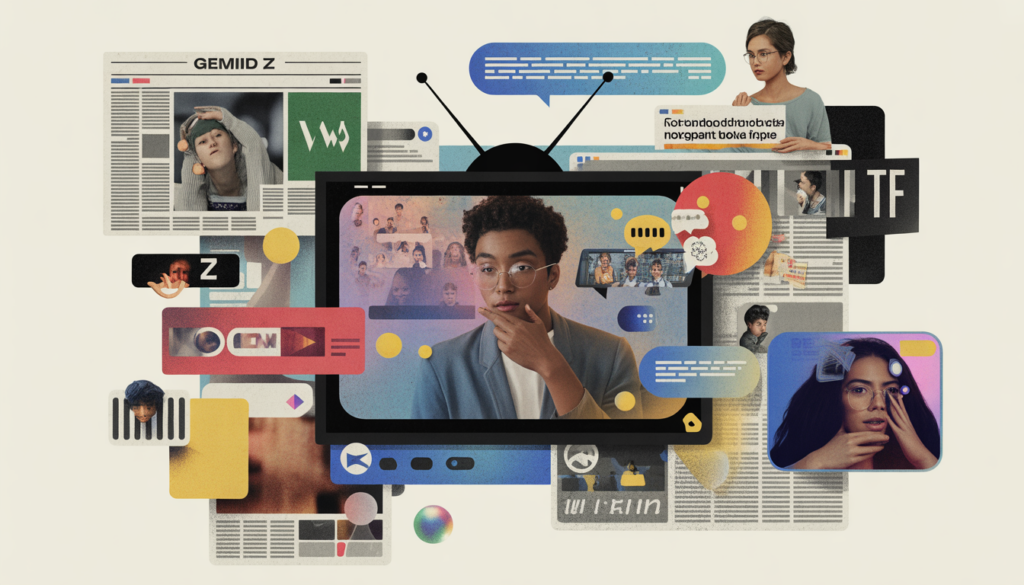
Born into algorithms, creators, comment sections and infinite choice, Gen Z does not see media as something to consume passively. They see it as something to interact with, respond to, remix, question and reshape. Media is not a product. It is a conversation.
For marketers and media leaders, the shift is structural. Gen Z is not a new segment to crack. They represent a change in how influence, trust and relevance get built. Understanding what Gen Z wants from media companies is foundational to surviving the next decade.
Why does Gen Z want context, not more content?
One big misconception is that Gen Z is hungry for more content. They are not. They are overwhelmed.
Gen Z discovers stories through:
- Algorithmic feeds
- Creator commentary
- Group chats
- Memes
- Screenshots and stitched clips
Rarely do they meet a piece of media in its pure form. Stories arrive layered with opinions, reactions and cultural framing. Raw information no longer cuts through.
What Gen Z wants is context:
- Why does this matter right now?
- How does this affect people like me?
- What is the subtext everyone is talking about?
Media brands that only publish headlines are losing ground. Those that explain, decode and situate stories within bigger cultural conversations earn attention.
For marketers: relevance today is less about breaking news and more about making sense of it.
Is authenticity a tone or a track record?
Gen Z has grown up online. They have watched brands try and fail to sound relatable. They are sensitive to anything performative.

They can spot:
- Corporate polish disguised as casual
- Forced slang
- Trend-hopping without understanding
- One-off youth campaigns with no follow-through
They respond to consistency and honesty. Media companies that resonate with Gen Z tend to admit mistakes publicly, let journalists and creators show personality, hold a clear point of view and speak plainly without posturing.
Authenticity for Gen Z is not aesthetics. It is behaviour over time.
For marketers: Gen Z does not trust brands that claim authenticity. They trust brands that practise it.
How does Gen Z define loyalty?
Subscriptions, notifications and downloads do not automatically translate into Gen Z loyalty. Emotional investment does.
This generation defines loyalty through interaction, recognition, contribution and belonging.
Media brands winning Gen Z are building participatory ecosystems:
- Discord servers instead of only comment sections
- Polls that influence editorial direction
- User-generated stories and perspectives
- Live discussions, AMAs and creator-led formats
When Gen Z participates, they do not merely consume. They advocate, share and defend.
For marketers: the strongest Gen Z communities are built through involvement, not exclusivity.
Why is Gen Z context-first, not platform-first?
Media strategies often start with: “Should this go on Instagram, YouTube or TikTok?”
Gen Z does not think in platforms. They think in moments: late-night scrolling, study breaks, commutes, emotional states, group chat debates.
The same story might need a 20-second hook for Reels, a deeper explainer on YouTube, a meme for discoverability, and a discussion prompt for community spaces. Successful media brands do not repurpose content mechanically. They reimagine stories natively, based on how and when Gen Z will meet them.
For marketers: distribution strategy must follow behaviour, not channel hierarchy.
Are values negotiable for Gen Z?
Gen Z is values-conscious. They care about representation, mental health, equity, climate impact and social justice. They are also sceptical of brands that treat these issues as marketing themes.

They expect media companies to reflect diversity consistently, platform underrepresented voices meaningfully, and take clear stances even when uncomfortable. Silence, neutrality or fence-sitting during key moments reads as avoidance rather than objectivity.
For marketers: Gen Z treats values as a credibility filter, not a branding opportunity.
Does speed matter more than cultural accuracy?
Gen Z lives in real-time digital culture. They expect media to be timely, responsive and aware of what is trending. Speed without understanding backfires quickly.
They forgive being late. They do not forgive being clueless. Media that rushes memes, slang or internet references without context gets called out. Gen Z rewards cultural fluency, not trend awareness.
For marketers: it is better to arrive late with insight than early with embarrassment.
Is personalisation expected or impressive?
Growing up with Spotify, Netflix and YouTube has shaped Gen Z’s baseline. They are used to platforms adapting to their interests.

From media they expect interest-driven discovery, topic-based journeys, modular storytelling and the option to go deep or stay light.
Treating Gen Z as a single monolithic audience is a fast track to irrelevance. They expect media to meet them where they are, not where the brand is comfortable.
For marketers: the future is not mass messaging. It is adaptive storytelling.
Does Gen Z want education or preaching?
Gen Z is curious and self-directed. They seek content that helps them understand politics, money, careers, technology and culture.

What they resist is being talked down to. The most effective media brands educate by asking questions instead of delivering verdicts, presenting multiple perspectives and empowering audiences to form opinions. Gen Z does not want media to tell them what to think. They want help thinking better.
For marketers: authority today comes from facilitation, not instruction.
Why are creators the new interface?
Gen Z trusts individuals more than institutions. Creators feel accessible, accountable and human. Smart media companies are no longer fighting this reality. They are embracing it.

This shows up as creator-led formats, journalist-creator hybrids, co-created IP and flexible brand voices. Media brands that cling to rigid hierarchies risk becoming invisible in creator-driven feeds.
For marketers: in the Gen Z era, influence flows through people, not logos.
The real Gen Z media contract
Gen Z is not asking media companies to abandon journalism, scale or credibility. They are asking for something deeper:
- Respect their intelligence
- Acknowledge their agency
- Invite participation
- Reflect real, lived experiences
- Earn trust continuously
Media brands that get this will not only capture Gen Z’s attention. They will shape how culture is made, debated and shared in the next decade. Those that do not will keep publishing. And Gen Z will keep scrolling past.
FAQs about Gen Z and media brands
What do Gen Z audiences expect from media brands?
Gen Z expects context over raw content, authenticity proven over time, participation instead of passive consumption, lived values rather than marketed ones, and cultural fluency on every platform they use.
How do media companies build loyalty with Gen Z?
Loyalty comes from interaction, recognition, contribution and belonging. Winning brands build participatory ecosystems like Discord servers, polls that shape editorial direction, user-generated stories and creator-led live formats.
Why does Gen Z trust creators more than institutions?
Creators feel accessible, accountable and human. They show personality, admit mistakes and maintain a clear point of view, which institutional voices often lack. Creator-led formats and journalist-creator hybrids increasingly anchor Gen Z media consumption.
Does Gen Z care about brand values?
Yes, but only if the values are lived. Gen Z expects consistent representation, meaningful platforming of underrepresented voices, and clear stances during key moments. Silence reads as avoidance, not objectivity.
Is personalisation important to Gen Z in media?
Personalisation is a baseline expectation, not a bonus. Gen Z grew up with Spotify, Netflix and YouTube adapting to their tastes and expect interest-driven discovery, modular storytelling and the option to go deep or stay light.