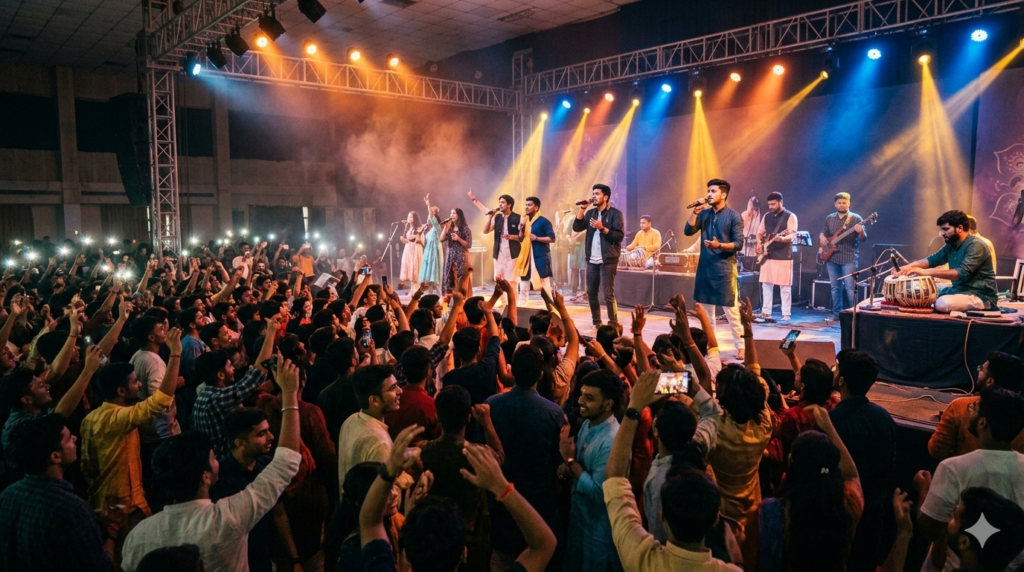
Short answer: The Bhajan Clubbing Tour by Saaz & Prakhar, produced by Rashi Entertainment and presented in association with Delhi Tourism, is India’s first organized devotional-clubbing circuit. It blends traditional bhajans with immersive sound design and modern staging, reflecting how Gen Z in India is reclaiming spirituality on its own terms.
India’s cultural landscape is shifting. Quietly at first, and now quite visibly.
The same generation that grew up on viral trends, streaming platforms, and festival culture is increasingly turning toward spirituality. Temple visits are documented on Instagram Stories. Mantras echo through lo-fi playlists. Young professionals book meditation retreats with the enthusiasm once reserved for music festivals.
And now, devotional music is entering club-style spaces.
At the heart of this cultural crossover are Saaz & Prakhar, the artist duo leading India’s first organized Bhajan Clubbing Tour, a live spiritual experience produced by Rashi Entertainment and presented in association with Delhi Tourism.
What they are building isn’t a concert series. It feels like a generational marker.
Why is Gen Z in India turning spiritual?
To understand the rise of bhajan jamming, we need to understand Gen Z. 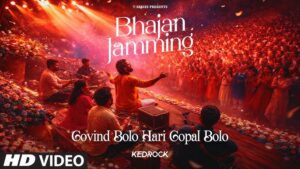
Born into hyperconnectivity, this generation has lived its entire life online. According to a 2023 Deloitte Global Gen Z and Millennial Survey, over 46% of Gen Z respondents worldwide report feeling stressed or anxious most of the time. Indian youth mirror similar patterns: academic pressure, economic uncertainty, digital fatigue.
When life feels fragmented, the search for grounding intensifies. Spirituality, particularly non-dogmatic and experience-driven, has emerged as that anchor.
Unlike earlier generations, Gen Z does not approach faith purely as inheritance. They personalize it. They reinterpret it. They remix it.
I remember attending a college fest two years ago where, between EDM sets, a student group began chanting the Hanuman Chalisa spontaneously. No announcement. No formality. Just collective rhythm. What surprised me wasn’t the chant. It was the enthusiasm. The same students who danced to techno beats moments earlier were now swaying in devotional unison.
That duality defines this generation.
What is Bhajan Clubbing?
The Bhajan Clubbing Tour led by Saaz & Prakhar positions itself as India’s first large-scale devotional-clubbing circuit.
The premise is bold but simple. Traditional bhajans, elevated through immersive sound design, modern arrangements, and high-energy staging.
This is not about turning devotion into a nightclub gimmick. It’s about creating a space where chanting feels dynamic, collective, and emotionally charged.
What to expect:
- Soulful vocal renditions of devotional classics
- Layered percussion and ambient builds
- Audience-led chant-alongs
- Lighting and production that heighten spiritual intensity
The messaging captures it: where devotion meets energy. And where faith meets familiarity for a younger crowd.
Who are Saaz & Prakhar?
Saaz & Prakhar are not traditional temple musicians stepping tentatively into youth culture. They are artists who understand performance psychology, digital culture, and the power of immersive storytelling.

Over the years, they have built recognition through devotional releases and live appearances that reinterpret bhakti for contemporary listeners. Tracks such as Ram Aayenge have circulated widely across streaming platforms, particularly during festive seasons, resonating with younger audiences who prefer cinematic devotional soundscapes over classical rigidity.
Their earlier performances blended structured devotional singing with emotive stagecraft: controlled crescendos, participatory chorus sections, and narrative introductions that contextualize the bhajan’s meaning. It’s not singing. It’s spiritual dramaturgy.
What distinguishes them is intentionality. They treat bhajans not as background music, but as immersive experiences.
Why does bhajan jamming work in 2026?
1. Experience over ritual
Gen Z favors participation over passive consumption.
Traditional temple bhajans can feel observational. Bhajan clubbing flips that script. The crowd becomes the choir. The event becomes a shared ritual.
Research from Eventbrite’s “Experience Economy” report notes that 78% of millennials and Gen Z prefer spending money on experiences rather than physical goods. Spiritual concerts align with that trend.
2. Community as cultural currency
Loneliness is often described as a silent epidemic among digital natives. Collective chanting creates instant belonging.
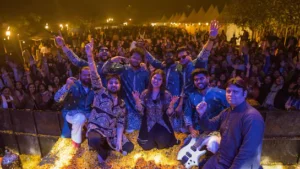
When hundreds of voices repeat a mantra in rhythm, something shifts. The boundaries between performer and audience dissolve. It feels less like entertainment and more like collective meditation, albeit one powered by sound engineering and light rigs.
3. Cultural pride in a globalized era

Indian Gen Z is globally exposed yet culturally rooted. They stream Korean pop and attend Garba nights. They discuss Silicon Valley trends and celebrate Janmashtami with fervor.
Bhajan jamming becomes a way of expressing pride without appearing regressive. It reframes tradition as cool, not outdated.
Are mainstream artists paying attention?
The music industry is observant. When audience behavior shifts, artists respond.
Devotional undertones are increasingly visible in mainstream spaces:
- Film composers weaving sacred chants into cinematic scores
- Indie artists sampling shlokas into experimental tracks
- Festival DJs integrating mantra loops into sunrise sets
Why the pivot? Because spiritual emotion is powerful. It’s immersive. It sells tickets.
As bhajan clubbing demonstrates commercial viability, established playback singers, electronic producers, and independent bands may explore devotional crossovers more deliberately.
The opportunity is vast:
- Niche festival circuits
- Brand partnerships centered on culture
- Streaming playlists curated around modern bhakti
The lines between sacred and stage are softening.
Why does Delhi Tourism’s backing matter?
The association with Delhi Tourism adds an interesting dimension.
Tourism boards today recognize that culture-driven experiences attract younger travelers. Spirituality, when presented dynamically, becomes a draw not just for pilgrims but for culturally curious urban youth.
By aligning with such initiatives, Bhajan Clubbing transitions from experimental format to recognized cultural event. It’s no longer fringe. It’s sanctioned.
Is this commercializing faith?
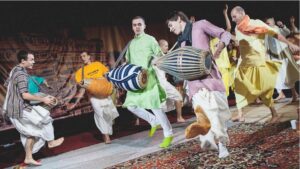
Critics may argue that turning bhajans into club-style performances risks trivializing devotion.
Yet history suggests otherwise.
From temple fairs to kirtan sammelans, devotional music has always existed in communal, often celebratory settings. Commercial recordings of bhajans date back decades. Spiritual concerts filled stadiums long before social media existed.
The difference now is aesthetic, not intention. If the sanctity of lyrics remains intact and the performance centers reverence, format evolution does not equal dilution. It may ensure continuity.
What does a generational reframing of bhakti look like?
For many young Indians, spirituality today is not about rigid orthodoxy. It’s about resonance.
They seek:
- Emotional release
- Identity affirmation
- Cultural rootedness
- Mental grounding
Bhajan jams deliver all four. They create a space where surrender does not feel solemn. It feels celebratory. Where chanting is not confined to temple walls but expands into auditoriums with synchronized lights and amplified sound.
I recently spoke to a 22-year-old attendee at a devotional event who described it as “therapy, but louder.” That phrase lingers.
Perhaps that’s the appeal. Structured catharsis.
What does this mean for the future of live music?
If Bhajan Clubbing sustains momentum, it could redefine segments within India’s live entertainment economy:
- Devotional festivals targeting youth demographics
- Spiritual-lifestyle brand collaborations
- College circuits hosting curated bhakti nights
- Hybrid sacred-electronic musical genres
Streaming platforms may introduce dedicated “modern bhakti” categories. Independent producers might specialize in devotional-electronic fusion. Artists who once avoided overt spirituality may reconsider. When audiences evolve, art follows.
More than a tour — a cultural pulse
Saaz & Prakhar’s initiative is not occurring in isolation. It reflects a deeper cultural recalibration.
Gen Z is not abandoning modernity. Nor are they retreating into rigid tradition. They are synthesizing. They want the bass drop and the mantra. The rave and the ritual. The vibe and the values.
Bhajan jamming stands at that intersection.
Whether this becomes a long-term movement or a defining moment in youth culture remains to be seen. But one thing is certain: the appetite exists.
When hundreds gather to chant in rhythm, lights flickering, voices rising, not in rebellion but in reverence, it signals something profound. India’s devotional tradition isn’t fading. It’s finding new frequency.
Perhaps the real question is not whether bhakti belongs in modern spaces. Perhaps it’s whether modern spaces were always waiting for bhakti to arrive.
Faith, like music, evolves. And sometimes, it goes electric.
FAQs about the Bhajan Clubbing Tour
What is the Bhajan Clubbing Tour?
It is India’s first organized devotional-clubbing circuit, led by Saaz & Prakhar, produced by Rashi Entertainment, and presented in association with Delhi Tourism. The format blends traditional bhajans with immersive sound design, modern arrangements, and high-energy staging.
Who are Saaz & Prakhar?
Saaz & Prakhar are an Indian artist duo known for devotional releases that reinterpret bhakti for contemporary listeners. Their track Ram Aayenge has circulated widely across streaming platforms, especially during festive seasons.
Why are Gen Z Indians attending bhajan concerts?
Gen Z in India is drawn to bhajan clubbing because it combines cultural rootedness with participatory experience. Deloitte’s 2023 Global Gen Z survey found 46% of Gen Z feel stressed or anxious most of the time, making collective, grounding experiences appealing.
Is bhajan clubbing disrespectful to tradition?
Devotional music in India has long existed in communal, celebratory settings like kirtan sammelans and temple fairs. Bhajan clubbing updates the aesthetic while preserving the sanctity of the lyrics, which the organizers argue helps continuity rather than dilution.
Where can I watch or attend bhajan clubbing events?
The Bhajan Clubbing Tour runs as a live circuit across Indian cities in association with Delhi Tourism. Fans typically find tour dates through Rashi Entertainment’s announcements and Saaz & Prakhar’s social channels.