
Short answer: India’s 370 million Gen Z don’t just buy brands, they live with them. Theyouthtalks.com is launching the Top 100 Indian Brands Adored by Gen Z, an index built on 10,000+ youth voices that ranks names like Zudio, boAt, Amul and Maggi by emotional connection, cool factor and cultural fit, not just revenue.
Why does Gen Z run India’s cultural agenda?
If you’re in advertising today, one truth is impossible to ignore: Gen Z sets the cultural agenda. With more than 370 million young Indians aged 13–26, this lot doesn’t just consume, they influence and remix trends that ripple across families and entire industries.
Whether it’s a Zudio outfit on Instagram, a boAt playlist at college fests, or a Maggi meme that floods Twitter overnight, Gen Z is the country’s cultural barometer. The feedback loop has flipped. Parents hear about brands from their kids now, not the reverse.
And yet, India lacks a credible, youth-first index that captures which brands truly resonate. That’s the gap Theyouthtalks.com aims to fill with the Top 100 Indian Brands Adored by Gen Z.
Why does India need a new kind of brand ranking?
Traditional rankings obsess over reach, revenue or visibility. They miss the emotional pulse of young India almost entirely.
Gen Z doesn’t “buy” brands the way earlier generations did, they live with them, meme them, co-create with them. A Deloitte study found that 65% of Gen Z consumers prefer brands that reflect their values, while McKinsey points to authenticity and purpose as the real drivers of loyalty.
So this index goes beyond numbers:
- Which brands do young Indians love, not just recognise?
- Who’s setting the cool quotient on campuses and Instagram?
- Which legacy names have reinvented themselves?
- Which D2C upstarts are winning in Tier 2 and 3 towns?
How is the Top 100 list built?
The list rests on a multi-layered methodology built to capture sentiment, not just sales:
- Survey-Based Insights – Over 10,000 Gen Z voices across metros, Tier 2 and Tier 3 towns.
- Weighted Dimensions – Emotional connection, cool factor, values alignment, digital engagement, accessibility, peer buzz.
- Qualitative Inputs – Focus groups, student juries and influencer panels validating trends.
Think of it as a cultural audit, the kind that flags who’s genuinely shaping youth identity.
What award categories tell the story of now?
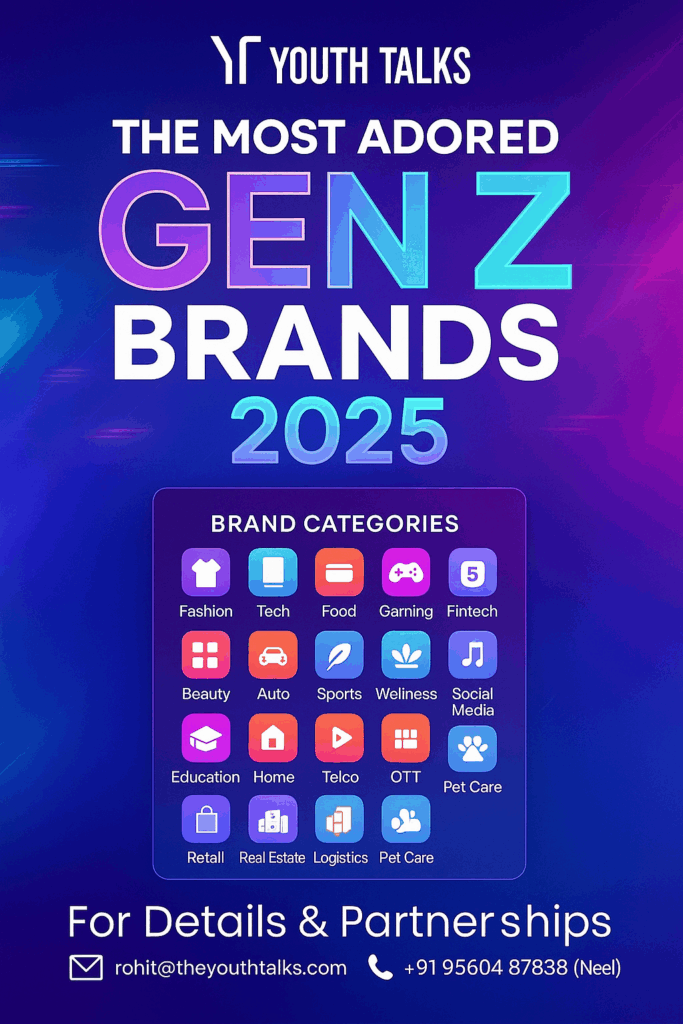
The rankings won’t be a flat list. Each category highlights a different relationship between Gen Z and the brands they pick:
- Most Loved Brand of the Year – The ultimate winner across all dimensions.
- Campus Cool Icon – The brand buzzing most on school and college grounds.
- Pop Culture Hero – Driving memes, fandoms and creator collaborations.
- Purpose-Driven Favorite – Aligning with inclusivity, mental health and sustainability.
- Nostalgia Reboot – Legacy names like Amul or Maggi rediscovered by Gen Z.
- D2C Darling – Fast-growing direct-to-consumer challenger brands.
For advertisers, each category is a tell. What’s trending, why it matters, how to tap in without sounding like a try-hard.
Why does this matter for advertisers?
Advertising has always been about relevance. But in an era of ad-blockers and fragmented attention, relevance alone isn’t enough. Cultural fit is the new currency. Brands featured on this list gain credibility, cultural validation, deep insight into what drives Gen Z loyalty, and a platform to co-create with the audience shaping the future. For agencies, it’s a ready-made playbook of Gen Z cues.
How does India compare to global youth-brand benchmarks?

Globally, initiatives like Ypulse’s Top Youth Brands (US) or Dazed 100 (UK) have proven invaluable for advertisers chasing cultural alignment. India has lacked a youth-first benchmark that goes beyond market share to measure brand love. The Top 100 Adored Brands aims to be exactly that. And it’s overdue.
What’s the real call here?
If there’s one message for advertisers, it’s this. Gen Z doesn’t want to be marketed to, they want to be understood.
As one college student in a Delhi focus group put it: “I don’t just buy a brand. I vibe with it. If it gets me, I’ll stick with it forever.”
That single line is the brief. The Top 100 Indian Brands Adored by Gen Z isn’t just a ranking, it’s a mirror of cultural resonance, the roadmap to staying relevant in India’s fastest-evolving market.
FAQs about Gen Z’s most loved brands in India
How many Gen Z Indians do these rankings represent?
The list is built on responses from over 10,000 young Indians aged 13–26, drawn from metros, Tier 2 and Tier 3 towns. The wider Gen Z population in India is more than 370 million.
What metrics decide whether a brand makes the Top 100 list?
Brands are scored across emotional connection, cool factor, values alignment, digital engagement, accessibility and peer buzz. The methodology also draws on focus groups, student juries and influencer panels.
Which legacy Indian brands still resonate with Gen Z?
Amul and Maggi keep showing up through the Nostalgia Reboot category. Younger consumers rediscover them through memes and reinvented marketing, alongside D2C upstarts and picks like Zudio and boAt.
Why do D2C brands punch above their weight with Gen Z?
Direct-to-consumer brands speak Gen Z’s native language online and launch with values like sustainability or mental health baked in. The D2C Darling category tracks these challengers gaining ground in Tier 2 and 3 towns.
How can advertisers use the Top 100 Adored Brands list?
Treat it as a Gen Z playbook: which categories are hot, which aesthetics work, which values matter. Featured brands gain credibility, cultural validation and insight into what drives youth loyalty in India.