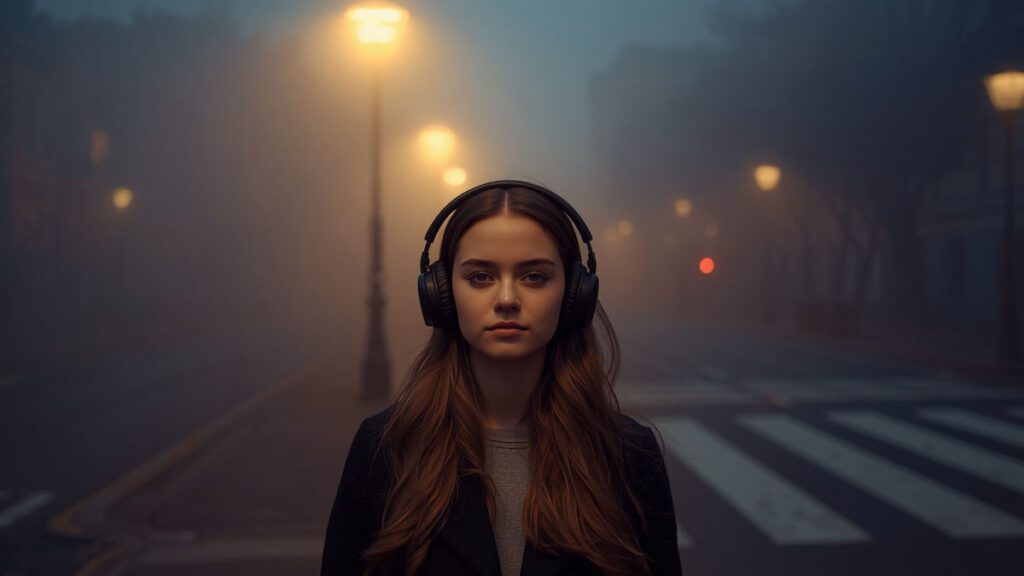
Short answer: Night walks are becoming Gen Z’s quiet form of therapy. The low sensory load of late hours, paired with music and solitude, calms anxiety, processes emotion through movement, and offers a reset from screens, hustle, and social pressure.
In a world that never stops buzzing, Gen Z is learning the power of slowing down, one night walk at a time. Long after the city lights have dimmed and the noise of the day fades, streets take on a quieter rhythm. For many young people, these late-night strolls have become more than casual walks. They’re a ritual of healing, reflection, and reconnection with themselves.
This isn’t about fitness or step counts. It’s about presence. In an age where mental health conversations are louder than ever, the simple act of walking through stillness has quietly become one of Gen Z’s favourite coping mechanisms.
Who are the midnight wanderers?
There’s something sacred about the hours between 10 PM and 2 AM, when the world feels suspended. For Gen Z, who grew up online and overstimulated, these hours offer a strange kind of peace. Social media is quieter. Notifications slow down. In that rare silence, many find what daytime rarely offers: mental clarity.
TikTok trends like Night Walk Diaries and Silence Walk POV have turned into visual journals of emotion. Creators record themselves walking through empty streets, soft music in the background, while they talk about heartbreak, burnout, or rediscovering joy. The comments are full of people saying, “This feels like peace,” or “I didn’t know others did this too.”
Walking at night, once seen as lonely, has become a collective form of solitude, one that doesn’t feel isolating.
Why does the night feel different?
Psychologists suggest that walking during quieter hours activates a meditative state. Without the usual sensory overload of traffic, screens, and chatter, your brain shifts from reacting to reflecting. The night encourages introspection. It slows down your internal clock.
For a generation struggling with anxiety, hustle culture, and social pressure, the nighttime world offers a gentler alternative. The soft hum of distant cars, the glow of streetlights, and the occasional breeze together create a sensory environment that feels both cinematic and calming.
There’s also safety in anonymity. No one’s watching. No one’s judging. You can be anyone, or no one at all. It’s an emotional reset disguised as a simple walk.
How do night walks fight digital burnout?
Gen Z is often accused of being addicted to screens, but they’re also the first to recognise when enough is enough. Night walks have become a small rebellion against the constant scroll. They’re a way to disconnect from digital overstimulation and reconnect with reality: the smell of rain, the sound of sneakers on pavement, the reflection of lights in puddles.
It’s also a time for reflection without pressure to perform it online. Unlike wellness routines marketed on social media, night walks don’t need to be aesthetic. You don’t need the perfect playlist, outfit, or destination. Just space and silence.
Many young people describe it as therapy without talking. The act of walking helps process emotions physically, giving movement to mental clutter. Step by step, thought by thought, the chaos slowly untangles.
How do different cities feel on a night walk?
Urban life can be overwhelming, especially for young adults balancing study, work, and identity. The beauty of night walks lies in their universality. Quiet suburb or neon-lit downtown, every place transforms after dark.
In cities like Mumbai, Tokyo, or New York, the streets take on a dreamlike quality. Cafés glow like beacons for the few still awake. Street vendors, security guards, and late-night drivers share an unspoken camaraderie: the night people.
For smaller towns or campuses, the night walk becomes even more personal, a ritual route of familiar corners and empty benches. The air feels different. The pace slows. The noise of ambition fades, replaced by simple awareness: you’re here, and you’re okay.

What music do Gen Z listen to on night walks?
What’s a walk without music? Playlists titled Night Drive, Healing in the Dark, or Moonlit Thoughts have exploded on Spotify and YouTube. The tracks are usually ambient, lo-fi, or melancholic: songs that don’t demand attention but invite emotion.
Music adds narrative to the silence. A song by Cigarettes After Sex or Novo Amor turns a 20-minute walk into something cinematic. Podcasts are joining the movement too, with hosts creating night talk episodes designed to accompany quiet walks.
It’s not about escapism. It’s about immersion, letting sound and surroundings merge until you feel weightless, like part of the night itself.
Why is stillness so powerful?
In an era that glorifies speed (fast growth, fast fame, fast everything), night walks represent something radical: stillness. To simply exist without expectation feels almost rebellious.
For Gen Z, stillness doesn’t mean doing nothing. It means being enough. Many describe feeling “real” during these walks, away from filters, likes, and noise. It’s where creative ideas surface, where tough emotions make sense, where clarity quietly returns.
Sometimes the best moments aren’t even profound. They’re human. Watching stray cats roam, hearing the wind rustle trees, catching the distant laugh of strangers. Life reduced to its simplest form: alive and uncurated.
Why night walks are a ritual worth keeping
As life continues to speed up with AI, constant content, and digital noise, the night walk stands as a timeless reminder: you can still slow down. You can still breathe. You can still feel.
It doesn’t need to be romanticised or aestheticised. It needs to be done. Grab your hoodie, put on a playlist, and step outside. Let the night hold you for a while.
Sometimes healing doesn’t look like grand therapy sessions or weekend retreats. Sometimes, it’s you, the streetlights, and the sound of your own footsteps echoing softly into peace.
FAQs about night walks and Gen Z mental health
Are night walks safe?
Pick familiar, well-lit routes, tell a friend your plan, and share your live location. Many Gen Z night walkers stick to the 10 PM to 2 AM window in known neighbourhoods where foot traffic and streetlights still exist.
Why are night walks good for mental health?
Quieter hours reduce sensory overload, letting the brain shift from reacting to reflecting. Movement also helps process emotions physically, which is why many young people describe night walks as therapy without talking.
What should I listen to on a night walk?
Ambient, lo-fi, or melancholic music works well. Gen Z favourites include Cigarettes After Sex and Novo Amor, alongside Spotify and YouTube playlists like Night Drive, Healing in the Dark, and Moonlit Thoughts.
Do night walks help with anxiety and burnout?
Yes. Low stimulation, rhythmic movement, and solitude calm the nervous system and give space to process hustle-culture pressure, social comparison, and digital burnout.
How long should a night walk be?
There’s no fixed rule. Around 20 minutes is common (roughly one song-heavy loop), but the aim is presence, not pace or distance.