

Short answer: Sports technology in 2025 pairs wearables like WHOOP, Oura and FORM with AI coaching, cryo-recovery, precision nutrition and motion tracking to squeeze more performance out of every athlete. Premier League clubs and NBA teams already use predictive AI to manage fatigue and injury risk, and stars like LeBron James and Cristiano Ronaldo run personalised recovery ecosystems.
How has sports science changed in 2025?
Sports in 2025 aren’t about talent alone. They’re about data. From sprinting spikes that track micro-movements to AI coaches predicting injury risk, technology has changed how athletes train, recover, and compete.
The fusion of sports and science isn’t new, but the precision we’ve reached is unprecedented. Milliseconds are measured, calories are optimised by algorithms, and every heartbeat is a data point. Science is the new coach.
What wearables do modern athletes use?
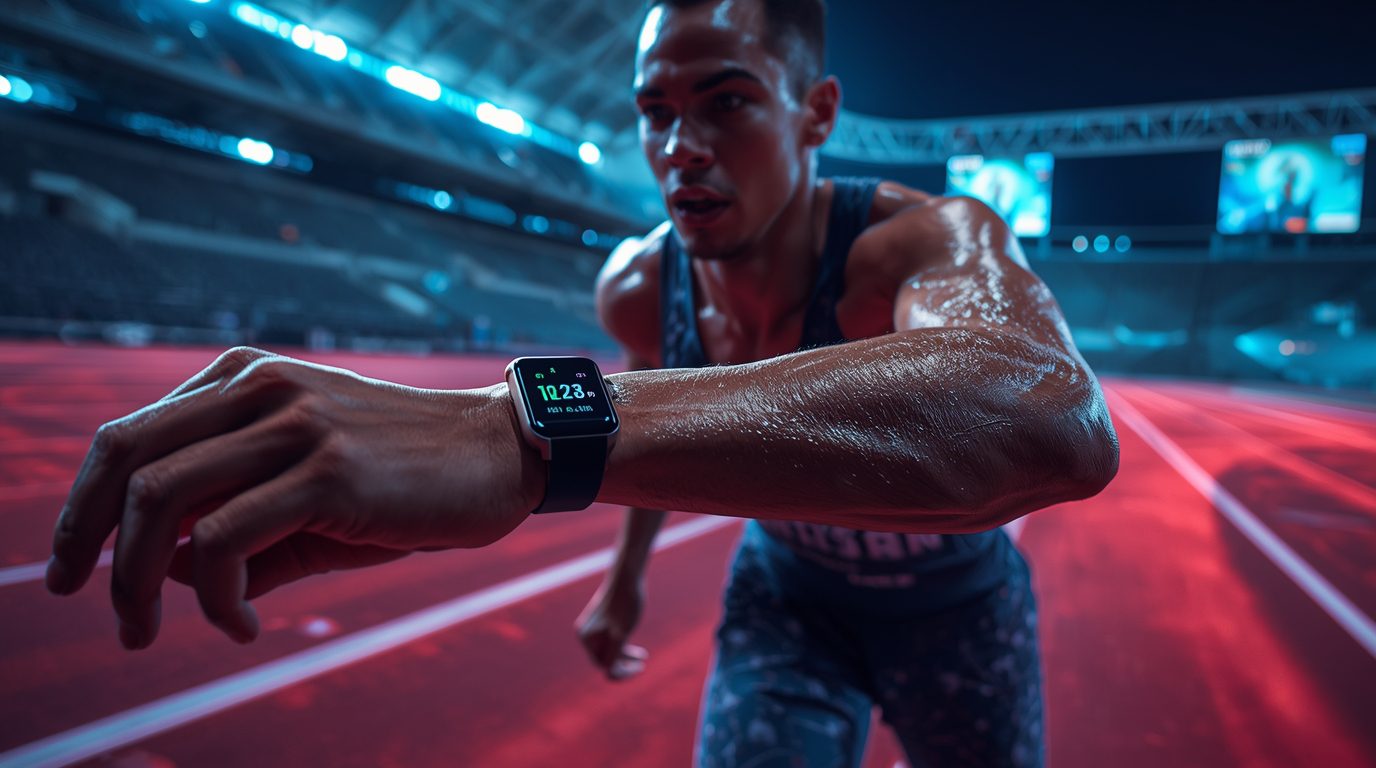
Forget basic fitness trackers. We’ve entered the age of smart fabrics and embedded analytics. Modern athletes wear suits that measure heart rate variability, sweat composition, and muscle fatigue in real time.
Companies like WHOOP, Oura, and FORM are redefining what performance wear means. Their devices don’t only track data; they interpret it, giving athletes personalised recommendations on rest, recovery, and intensity.
In team sports, wearable sensors help coaches optimise formations, manage workloads, and prevent overtraining. The line between sports science and software engineering is getting thinner by the day.

How does AI coaching work in pro sports?
Artificial intelligence is becoming the most trusted assistant in modern sport. AI systems analyse years of game footage to predict patterns: which opponent a striker struggles against, when a pitcher’s velocity dips, or which player is at injury risk before symptoms appear.
Premier League clubs use predictive AI to tailor weekly training based on fatigue data and match context. NBA teams rely on motion-tracking cameras to optimise defensive schemes in real time. The edge that once belonged to instinct now belongs to insight.
This isn’t about replacing human coaches. It’s about giving them smarter, faster tools.
What does modern athlete recovery look like?
Post-match recovery is no longer ice baths and massages. Cryo-chambers, red light therapy, and AI-based muscle stimulation reduce inflammation, accelerate repair, and monitor micro-recovery cycles through the day.
Athletes like LeBron James and Cristiano Ronaldo have invested millions in personalised recovery ecosystems. They’re not training harder; they’re recovering smarter.
With wearables tracking everything from REM sleep to cortisol levels, the line between athletic performance and biohacking has blurred.
How is sports nutrition becoming data-driven?
Nutrition has moved from calorie counting to precision fueling. AI nutritionists analyse genetic markers and gut microbiome data to suggest exact meals for performance.
From cricket players using glucose monitors to marathon runners micro-dosing electrolytes, data-driven diets are becoming the norm. This isn’t about food anymore; it’s chemistry.
Companies like Fuelin and InsideTracker sit at the intersection of biology and sport, turning breakfast into a biometric strategy.
How is sports tech changing the fan experience?
Sports technology isn’t only transforming athletes; it’s changing how fans experience the game.
AR overlays display live player stats during matches, VR headsets let fans “stand” courtside from home, and social media integrates with real-time analytics to create interactive sports narratives.
Fans aren’t watching; they’re participating. Every stat, angle, and replay is data-driven storytelling.
What are the ethical concerns with sports tech?
As performance tech advances, ethical concerns grow louder. How much data is too much? Who owns an athlete’s biometrics?
In elite sport, privacy battles are emerging between players and organisations. Data breaches could expose health vulnerabilities or strategic advantages. The future of sport may depend on new data rights laws that protect athletes as much as they empower teams.
Technology can make the game faster and safer, but the spirit of sport (effort, emotion, and unpredictability) must not be lost in the code.

What is the next frontier for sports tech?
The next frontier is neurotech and cognitive optimisation. Companies are experimenting with brainwave training to improve focus and reaction time. Athletes may soon warm up both body and mind before competition.
As innovation accelerates, one truth remains. Talent still matters, but preparation has become a science. The champions of the future will balance human intuition with technological precision.
The edge of evolution
Sport has always been about pushing limits. With AI, biomechanics, and real-time data leading the charge, those limits are being rewritten every season.
We’re entering an age where every heartbeat counts, every stat tells a story, and every athlete is part human, part machine, chasing perfection, powered by data.
FAQs about sports technology in 2025
What is the best wearable for athletes in 2025?
WHOOP, Oura and FORM lead the elite wearables market. WHOOP focuses on strain and recovery scoring, Oura tracks sleep and heart rate variability via a ring, and FORM makes smart swim goggles with embedded analytics. The best choice depends on the sport and the data an athlete wants to prioritise.
Do Premier League and NBA teams really use AI?
Yes. Premier League clubs use predictive AI to tailor weekly training based on fatigue data and match context. NBA teams use motion-tracking cameras to optimise defensive schemes in real time and flag injury risk from movement patterns.
How do athletes like LeBron James and Cristiano Ronaldo recover?
Both have invested millions in personalised recovery ecosystems that combine cryo-chambers, red light therapy, AI-based muscle stimulation, and detailed sleep and cortisol tracking. The focus is on recovering smarter rather than training harder.
What is precision fueling in sports nutrition?
Precision fueling uses genetic markers, gut microbiome data and real-time biometrics (like glucose readings) to plan exact meals for training and competition. Companies such as Fuelin and InsideTracker build nutrition plans from this data.
Will neurotech replace physical training in sport?
No. Neurotech and brainwave training are designed to complement physical work by improving focus, reaction time and mental recovery. The expected shift is athletes warming up both body and mind before competition, not swapping one for the other.