

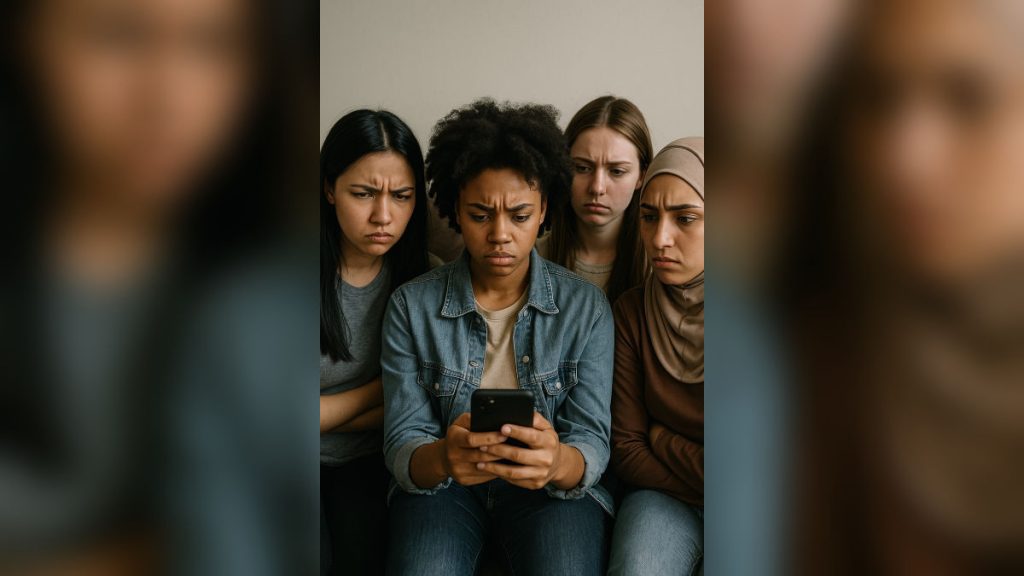
Short answer: Over 75% of Indian Gen Z women in our 1,000+ respondent survey received unsolicited messages by age 18, and more than half said the harassment hurt their mental health. Most don’t report it because reporting rarely leads to action. The fix isn’t on them, it’s on platforms, schools and brands that need proactive moderation, transparent reporting and embedded mental health support.
For millions of Gen Z women in India, the smartphone isn’t a device. It’s a diary, a classroom, a stage, and a social lifeline. They grow up navigating memes, reels, chats and hashtags, stitching identities in pixels. But behind the carefully curated feeds sits a quieter, darker truth, one few talk about openly: the relentless, often traumatic experience of online harassment.
This article explores that reality. Not as a distant statistic, but as lived experience. A digital undercurrent simmering beneath the selfies and stories. Drawing from a powerful youth insights report based on over 1,000 voices, we look at how Gen Z girls and young women in India aren’t just scrolling, they’re surviving.
Where does the harassment usually begin?
“I was just 16 when I got my first creepy message,” shares Arpita, a college freshman in Delhi. “It started out like any DM, a compliment, a smile emoji. But then came the questions. ‘Why aren’t you replying?’ ‘Don’t you like compliments?'” She blocked him, thinking it was a one-off. It wasn’t.
Across metros and small towns alike, the story echoes. Over 75% of Gen Z women surveyed said they received unsolicited messages by the time they turned 18. Most spent 1-3 hours a day on social media, often for harmless engagement, sharing ideas, creativity, or just staying connected with friends. But the line between attention and aggression blurred far too quickly.
The messages ranged from flirty to threatening. Sometimes relentless romantic overtures, other times outright sexual content or pressure to share personal pictures. What united all these experiences was how normal they became. Which is the part that should worry everyone.
What’s the emotional cost of being a Gen Z woman online?
The digital world might feel intangible. Its emotional toll is not.
Some, like Sneha from Bengaluru, built emotional armour. “I ignore it now,” she said. “I don’t let it bother me. Blocking is faster than responding.” Others, like Meghul, felt invaded. “It made me anxious. I didn’t want to open my phone some days.”
Then there are those like Priyanka, who chose defiance. “I started reporting them. It felt empowering, even if nothing came of it. At least I did something.”
But the damage lingers. Over half of the respondents admitted that online harassment impacted their mental health. Some reduced their time online. Others switched to private profiles, muted stories or deleted accounts altogether, not for detox, but for safety.
One girl’s response captured the dilemma best: “It’s my space, but it doesn’t feel like mine anymore.”
Why don’t more young women report what happens?
Why don’t more girls report what happens to them?
The reasons are as complex as the problem. Some don’t think it’ll help. Others feel ashamed, judged, or simply tired of explaining something people don’t take seriously.
While a few confided in friends or parents, the majority stayed quiet. “My mom wouldn’t understand,” one respondent said. “She’d just ask me to delete Instagram.” Others feared victim-blaming, being told to dress differently, post less, or “be careful” as if the harassment was their fault.
Support, when it came, was inconsistent. A close friend might listen. A school counsellor might offer advice. But more often than not, girls handled it alone, a lonely, silent resilience stitched through every scroll.
How well do Instagram, Facebook and Snapchat handle reports?
Instagram. Facebook. Snapchat. These platforms promise safety, the reality is disheartening.
Among those who reported harassment, most said no meaningful action was taken. Messages remained. Profiles stayed active. In a few cases, the harasser simply made a new account and resumed the cycle.
The broader ecosystem, schools, colleges, even law enforcement, fared no better. “I’ve heard you can report cyberbullying,” one respondent shrugged. “But what’s the point? They won’t take it seriously.”
This lack of accountability fuels a dangerous message: You’re on your own.
And yet, these platforms continue to grow, profiting off engagement while sidestepping responsibility for protecting the people who drive it.
What do the numbers reveal?
Behind the anecdotes lies an uncomfortable truth backed by data:
- Most Gen Z women face online harassment before they turn 18.
- Blocking and ignoring are the most common coping mechanisms.
- Reporting rarely leads to consequences for the harasser.
- The emotional impact ranges from mild irritation to deep psychological distress.
- Support systems are patchy and inconsistent.
- There is overwhelming interest in digital safety education, especially via influencers, creators or schools.
The message is clear. These young women aren’t helpless, they’re just unsupported.
What must brands and platforms actually do?
If brands and tech platforms want to be allies, they must move from passive observers to active protectors. Here’s how.
1. Proactive moderation
AI can detect nudity. It can surely detect harassment. Platforms need to invest in faster, smarter moderation that stops abuse before it hits the inbox.
2. Transparent reporting systems
Don’t just let users “report.” Let them know what happens next. Provide timelines, updates and clear actions taken.
3. Collaborate with influencers
Creators wield enormous power. Partner with youth influencers to run safety campaigns, share real stories, and educate audiences on reporting tools.
4. Embed mental health support
Why can’t Instagram offer an in-app helpline for harassment victims? Why not integrate resources from mental health NGOs within the platform experience?
5. Launch school campaigns
Digital literacy should start early. Partner with schools and colleges to conduct workshops on online boundaries, consent and cyber-ethics, not just for girls, but boys too.
6. Build community safe spaces
Platforms must encourage peer-led communities, anonymous forums, moderated groups, or helpline bots, where users can speak freely without fear of being judged.
Is there hope on the other side of the silence?
Despite all the silence and suffering, Gen Z women aren’t giving up. They’re adapting, speaking out, and slowly reclaiming their space.
Some now write about their experiences. Others create videos exposing harassment. A few are building apps and starting campaigns on online safety. As one girl put it: “We might be quiet, but we’re not powerless.”
In the long scroll of their lives, harassment is a bitter thread. With the right tools, allies and awareness, it can be unpicked, and replaced with courage, community and control.
Time to listen, time to act
Online harassment isn’t a glitch in the system. It’s a design failure. It reflects who the digital world was built for, and who it forgot.
For Gen Z women in India, the journey online is equal parts joy and jeopardy. They deserve better. Not empty promises from platforms, but action. Not campaigns, but commitment.
If you’re a platform designer, policy maker, educator or influencer, the question isn’t whether this matters. The question is: What are you doing about it?
Let the next scroll be safer. Let silence stop being the only shield. And let every girl know: the problem isn’t her presence, it’s the platform’s absence of protection.
“We don’t want to leave the internet. We just want to be safe in it.” A 17-year-old respondent from Mumbai.
Let that be the last word. Or better yet, the first step.
FAQs about Gen Z women and online harassment in India
How many Gen Z women in India face online harassment?
Over 75% of Gen Z women in a 1,000+ respondent survey said they received unsolicited messages by the time they turned 18. The harassment ranged from persistent romantic overtures to outright sexual content and pressure to share personal pictures.
Why don’t most young women report online harassment?
Most don’t report because reporting rarely leads to action, and many fear victim-blaming or being told to delete Instagram. Some feel ashamed, judged, or just tired of explaining something people refuse to take seriously.
How does online harassment affect Gen Z women’s mental health?
More than half of respondents said online harassment impacted their mental health, with effects ranging from mild irritation to deep psychological distress. Many switched to private profiles, muted stories or deleted accounts entirely for safety, not detox.
What can social media platforms do to protect young women?
Platforms should invest in proactive AI moderation that catches harassment before it lands, build transparent reporting with timelines and updates, and embed mental health helplines in-app. Partnering with creators on safety campaigns and running school workshops on consent and digital boundaries also helps.
Are Indian Gen Z women giving up on social media?
No. Despite the silence and suffering, they’re adapting, speaking out, and reclaiming space, writing essays, creating videos exposing harassment, and even building apps for online safety. As one respondent put it, “We don’t want to leave the internet. We just want to be safe in it.”