

Short answer: An Indian agritech company is shifting its HQ from Chennai to Bengaluru, citing climate stress (heat, erratic rains, infrastructure strain) as the reason. The move is an early signal that Indian startups now factor climate risk into location strategy alongside talent, cost, and ESG-linked investor confidence.
Why is an agritech startup moving from Chennai to Bengaluru?
Imagine building your dream startup in Chennai, with access to talent, lower costs, and coastal advantages, only to find that the climate around you has become a liability. That is what one agritech company recently faced. The team said continuing operations from Chennai has become “increasingly challenging” due to climate stress (heat, erratic rains, infrastructure strain) and is shifting HQ to Bengaluru.
For many, that sounds dramatic. For climate-aware generations, it is a warning shot. The business world is starting to treat climate like rent, not only risk.
Why would a company relocate because of the climate?
Several pressures are pushing such decisions:
Operational disruption: Flooding, extreme heat, or erratic rainfall can damage supply chains, make manufacturing or fieldwork harder, and raise maintenance costs (cooling, water damage, backup systems).
Talent and livability: Employees don’t want to face blackout days, intense heat, or floods. For tech and innovation companies, the ability to attract and retain talent matters as much as infrastructure.
Infrastructure strain: Roads, power, drainage, and connectivity all expose weak spots under climate stress. When a city’s infrastructure can’t handle extremes, business continuity turns into a gamble.
Perception and funding: Climate awareness and ESG (Environmental, Social, Governance) are increasingly part of investor decisions. A company based in a climate-vulnerable zone may attract scrutiny or less confidence.
So the decision to move is not a defeat. It is a strategic adaptation.
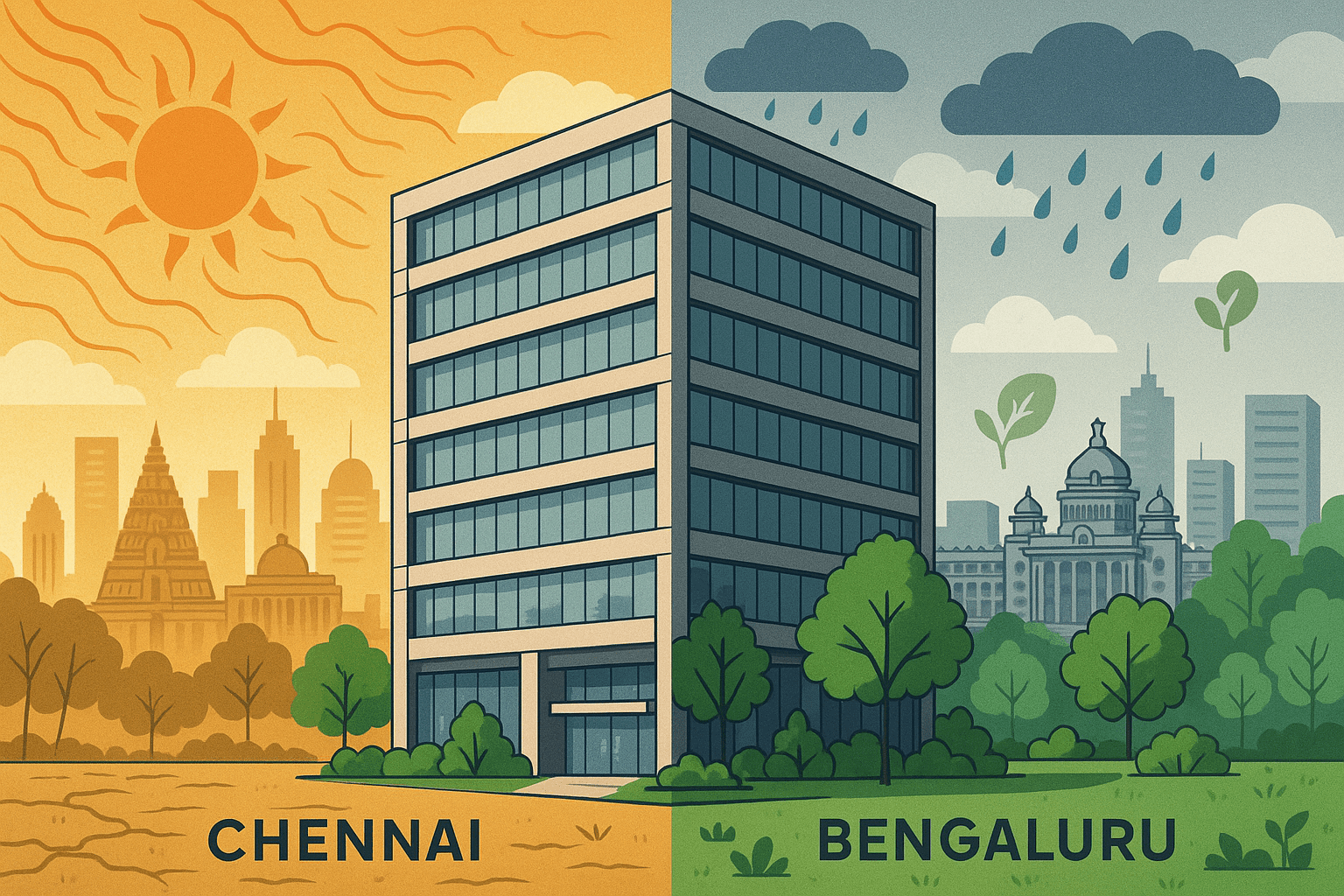
How does Bengaluru compare to Chennai on climate?
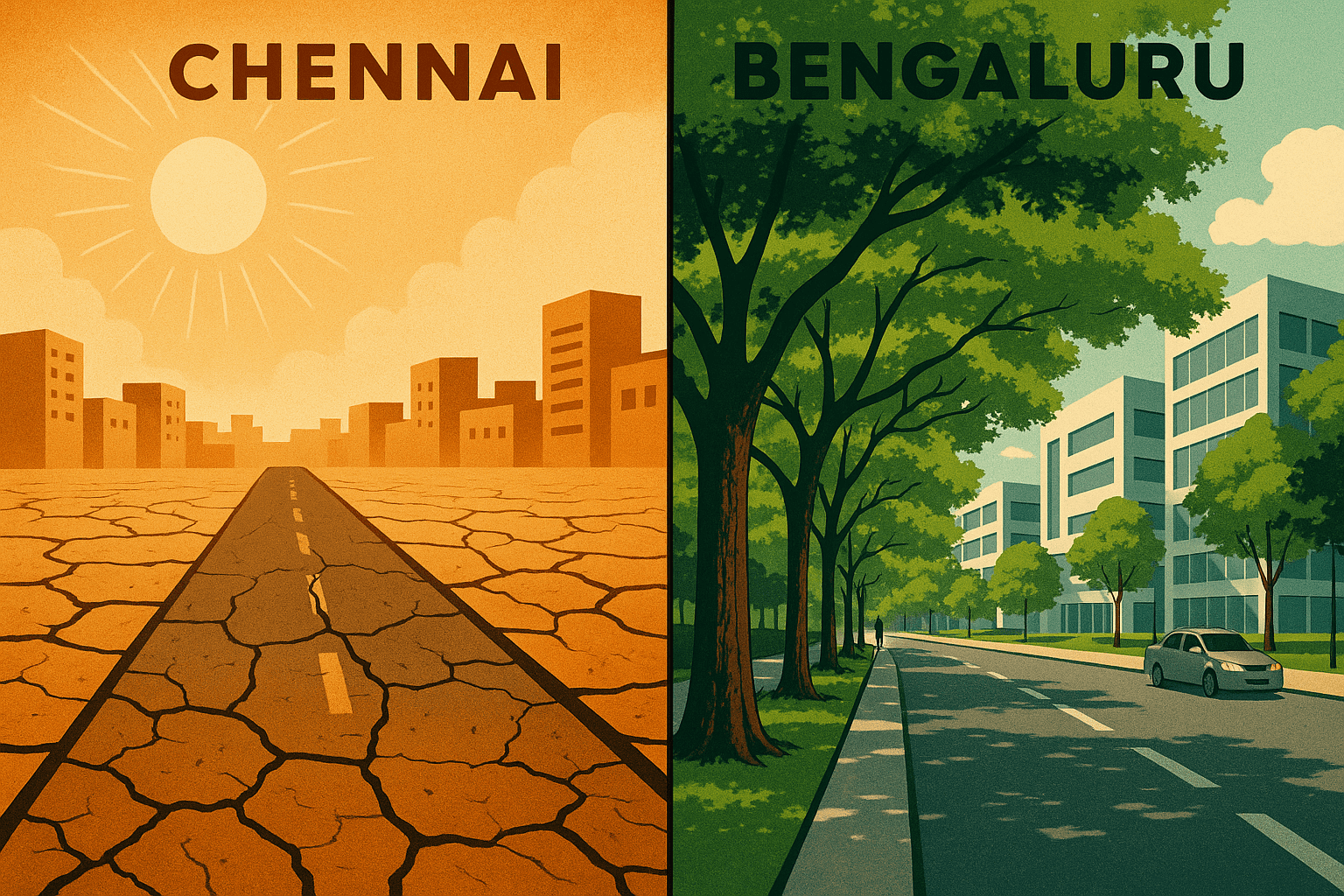
Bengaluru is not climate-proof either, but it offers some comparative advantages for now:
Better infrastructure, a deeper tech ecosystem, and support networks for innovation.
Cooler weather in many parts, rainwater systems, and more resilient city planning.
A stronger reputation as a hub for climate-tech, green startups, and sustainable projects.
This relocation also means climate change can shape the geography of innovation. Cities that adapt faster or have more resilient infrastructure could become new magnets for startups, talent, and investment.
What are the ripple effects of climate-driven relocation?
A move like this has implications beyond one business:
Talent migration: Engineers, agritech workers, and data and climate scientists may gravitate to climate-safer cities.
Real estate and cost shifts: As demand shifts, real estate prices, office space, and infrastructure investments will follow.
City competitiveness: Cities will compete not only on tax breaks or policy but on climate resilience, livability, and future security.
Innovation hubs: New clusters will emerge around climate tech, resilient infrastructure, water management, and adaptation.
Inequality and exclusion: Cities and regions that cannot compete may be left behind, amplifying regional divides.
What does this shift mean for the young generation?
For young professionals, early entrepreneurs, and climate-conscious youth, the shift matters in several ways:
Choose where you build: When you start your career or business, location decisions now include climate risk as a factor.
Be climate-first in business models: Startups that are climate-adapted by design have an edge. Build resilience in from day one.
Push for resilient cities: Demand investment in drainage, green cover, heat mitigation, and backup infrastructure.
Innovate where gaps lie: Adaptation tech, microclimate solutions, and local resilience are wide-open startup spaces.
Narrate the shift: Document these moves, spotlight resilience pioneers, and hold cities and governments accountable.
Challenges and caveats
Moving is costly. Relocation involves expense, loss of local relationships, regulatory differences, and adjustment time.
No safe haven is permanent. Bengaluru itself faces heat and water stress and must keep evolving.
Equity matters: who gets to move, who stays behind? Smaller firms, low-resource entrepreneurs, or communities may be left out.
Gentrification and exclusion: new climate-upward zones may push out poor residents or small businesses.

Climate as an urban strategy: the bigger picture
This isn’t an isolated event. Around the world, companies are factoring climate risk into location strategy. The startup map will slowly redraw itself based on which cities can survive climate volatility. The shift is as much economic as environmental.
For youth and new-generation leaders, this is your moment. The cities you choose, the values your company adopts, and the resilience you build will define not only success but survival and legacy.
FAQs on climate-driven startup relocation
Why are Indian startups moving out of Chennai?
Some founders cite rising heat, erratic rainfall, flooding, and infrastructure strain that disrupt operations, hurt employee livability, and raise costs. A recent agritech company shifted its HQ to Bengaluru for these reasons.
Is Bengaluru actually climate-safe for startups?
Not entirely. Bengaluru faces heat spikes and water stress of its own, but it currently offers better infrastructure, a stronger tech ecosystem, and a reputation as a hub for climate-tech and green startups.
How does ESG affect startup location decisions?
Investors are increasingly weighing Environmental, Social, and Governance factors. Companies based in climate-vulnerable zones may face more scrutiny or lose confidence from climate-aware funds.
What kind of startup ideas fit a climate-stressed India?
Adaptation tech, microclimate solutions, water management, resilient infrastructure, and local resilience services are all open spaces where young founders can build.
How can young professionals respond to climate-driven city shifts?
Factor climate risk into where you live and build, design business models with resilience in mind, demand better urban infrastructure, and document the shift so cities and governments stay accountable.