Short answer: In-person friendships matter for Gen Z in 2025 because face-to-face bonds build emotional intelligence, ease loneliness, and pull people out of digital burnout. A 2023 Cigna study found nearly 60% of young adults often feel left out, and Harvard Health (2024) links offline friendships to lower stress and longer lives.
Friendship Day in 2025 isn’t only about Instagram tags and WhatsApp wishes. In an age where most relationships are filtered through screens, there’s something powerfully underrated about face-to-face friendships. Especially for Gen Z, who’ve grown up hyper-connected, real-world bonds offer what digital can’t: depth, emotion, grounding presence.
Sure, online friendships are convenient. But convenience can’t compete with connection. Here’s why in-person friendships deserve a comeback.
1. You learn to read the room, literally
Ever wondered why some chats feel off over text? Because more than half of communication is non-verbal. In person, you naturally pick up on eye rolls, awkward pauses, playful smirks, the subtle cues that tell you how someone’s actually feeling.
“Over 70% of communication is non-verbal,” says body language expert Dr. Albert Mehrabian.
No emoji can replace a raised eyebrow or a hand on your shoulder. These cues sharpen your emotional instincts, something even the best GIF can’t teach.
2. You build real emotional intelligence
In-person friendships make you pay attention. When your friend goes quiet mid-conversation or fidgets, you notice. These moments build empathy and teach you how to show up, not just with words but with presence.
Think about that one time you sat beside a friend going through something hard. No texts. No deep talks. Just being there meant everything.
3. They’re a buffer against loneliness
Even though we’re constantly connected, Gen Z is among the loneliest generations today. A 2023 study by Cigna found nearly 60% of young adults often feel left out or isolated.
Why? Because likes and DMs aren’t the same as real presence. Hanging out in person, laughing over snacks, going for spontaneous walks, or just sitting in silence, creates a sense of belonging social media can’t deliver.
“Physical presence is what often anchors emotional safety,” says youth psychologist Dr. Rujuta Khopkar.
4. They promote healthier habits
Let’s be real, your offline friends are way more likely to drag you out for a workout or a late-night drive than your online ones. According to Harvard Health (2024), strong in-person friendships are linked to lower stress, better mental health, and even longer lifespans.
And in real life, people notice when you’re not okay. They pick up on those off days and offer comfort that doesn’t need a reaction time or a double-tap.
5. They pull you out of the digital spiral
Online relationships can feel performative. There’s pressure to reply instantly, maintain an aesthetic, and constantly be “on.” That pressure leads to digital burnout, emotional fatigue, and anxiety knotted to screen time.
“Digital validation dependency is real,” says Delhi-based clinical psychologist Dr. Tanya Saxena.
In-person friendships cut through that noise. You’re not performing. You’re just being. And that’s freeing.
How can Gen Z reconnect with offline friendships in 2025?
Feeling inspired? Simple ways to start:
- Plan a tech-free hangout – Walks, coffee, park picnics.
- Call instead of texting – Hearing someone’s voice builds deeper connection.
- Be present – When you’re with friends, really be with them.
- Make the first move – Show up with a handwritten note, a surprise visit, or a genuine “how are you really?”
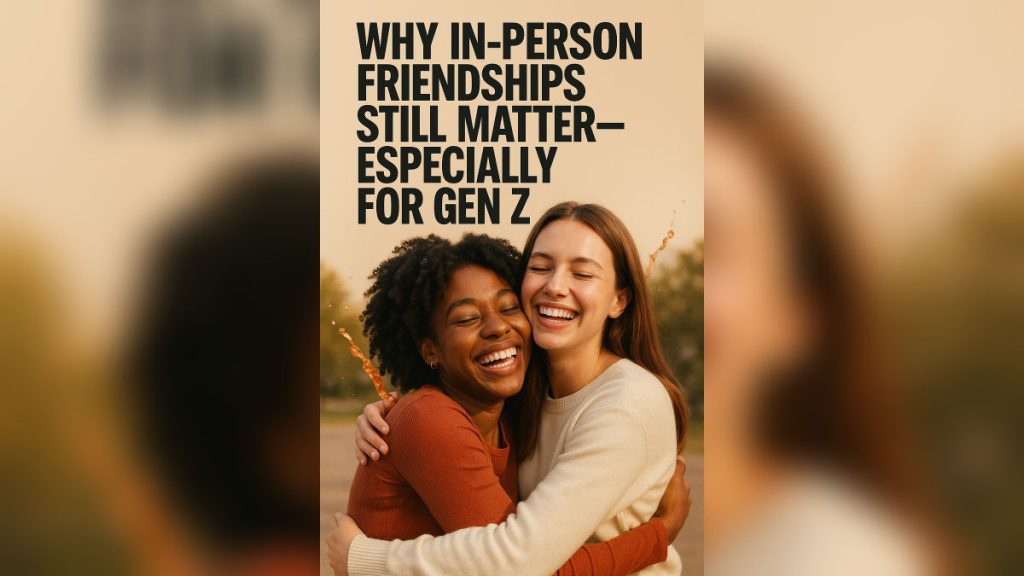
Final thought: a hug > a heart emoji
At the end of the day, no amount of likes or views can replace a real friend sitting next to you, no filter needed. Friendship in 2025 doesn’t mean abandoning the digital. It does mean reconnecting with the emotional reality offline.
This Friendship Day, skip the fancy edits. Show up. Laugh loud. Share fries. Give a real hug.
Because in a world full of screens, being present is the most underrated superpower.
FAQs about in-person friendships and Gen Z
Why are in-person friendships important for Gen Z mental health?
They build empathy, ease loneliness, and reduce stress. They give Gen Z what digital chats can’t: physical presence, non-verbal cues, and grounded support that calms anxiety.
Is Gen Z really the loneliest generation?
Research suggests yes. A 2023 Cigna study found nearly 60% of young adults often feel left out or isolated, despite being constantly online.
How much of communication is non-verbal?
According to Dr. Albert Mehrabian, over 70% of communication is non-verbal, facial expressions, body posture, and tone. None of which translate well over text.
Do in-person friendships actually affect physical health?
Yes. Harvard Health (2024) links strong in-person friendships to lower stress, better mental health, and even longer lifespans.