
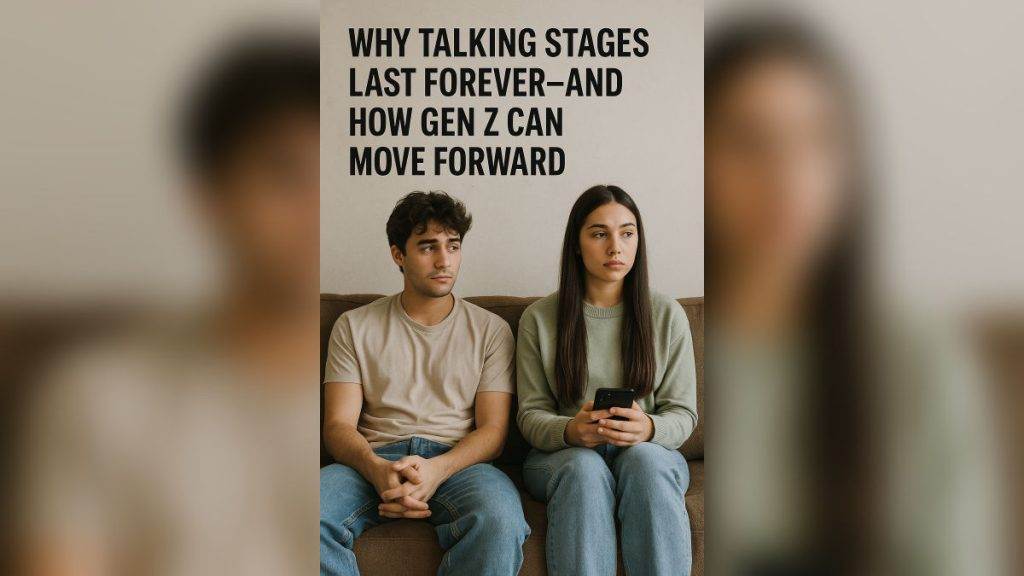
Short answer: Gen Z talking stages drag on because dating apps reward optionality, ghosting feels safer than commitment, and digital chats stall emotional depth. The way out is awkward but simple: ask the question, set the boundary, and walk if the answer’s vague.
In modern dating, the infamous “talking stage” has become a cultural cornerstone for Gen Z. It’s the grey area before a relationship begins, full of flirting, late-night texts, shared memes, and a low hum of uncertainty. For many it feels like an endless loop, emotionally invested but undefined, connected but not committed. So why do these stages drag on, and how can Gen Z actually move forward?
Let’s get into the reasons, and the steps to take if you’re tired of staying stuck in the “we’re just talking” limbo.
Why Does the Talking Stage Last So Long?
Fear of Commitment in a Swipe Culture
Commitment used to be a milestone, something to look forward to. But for many Gen Z daters, it’s become a source of anxiety. Breakups and failed relationships are constantly visible on social media, and there’s a growing skepticism about whether love really lasts. On top of that, the culture of dating apps like Tinder, Bumble and Hinge sells the idea that someone better might be just one swipe away.
So rather than defining the relationship, many people choose to float in the “talking” phase. It feels safer. You get the emotional closeness without the pressure, or the risk of heartbreak.
“It’s like window shopping for a relationship, without ever stepping into the store,” said 21-year-old Shruti, a college student from Mumbai.
The Burden of Too Many Choices
Paradoxically, the abundance of dating options has made it harder to pick just one. With access to thousands of profiles and constant social media interactions, Gen Z is more connected than ever. Also more indecisive.
Psychologist Barry Schwartz coined this dilemma the “paradox of choice.” Too many options often lead to analysis paralysis, fear of missing out, and dissatisfaction with the choices we eventually make. In dating, this looks like lingering in the talking stage while you silently weigh whether your crush is “the one,” or whether someone better might come along next Tuesday.
Digital Communication and Emotional Ambiguity
Texting is the main form of communication for most young people. It’s quick and convenient, and it can also lead to major misunderstandings. Without tone, facial expressions, or body language, texts get misread. Emojis can only carry so much.
Then there’s ghosting, the ultimate conversation killer. One minute you’re planning to hang out, the next you’re staring at your phone wondering what went wrong. These habits make it tough to build emotional depth, let alone progress toward exclusivity.
The Illusion of Safety
Being in the talking stage gives you a layer of emotional insulation. You’re not officially dating, so if things fizzle, the perceived loss is smaller. That detachment is comforting. It’s also limiting, because it blocks the vulnerability that real intimacy actually needs.
Individual Goals Over Shared Growth
Gen Z is ambitious. Many young people prioritise personal development, education, careers, and creative pursuits, and that’s a great thing. But sometimes relationships get pushed to the back burner, especially if they’re seen as distractions. Balancing self-growth and romance demands intentionality, something the talking stage rarely asks for.
How Do You Break Free from the Limbo?
So how do you move from endless texting and vague vibes to something meaningful? It starts with clarity, communication and courage.
1. Communicate Openly and Honestly
Yes, it’s scary. But if you want clarity, you have to say what you’re looking for. Ask the hard questions: Where do we stand? Are we on the same page?
Don’t wait for the “perfect moment.” Vulnerability invites authenticity, and even if the answer isn’t what you hoped for, you’ll be free from ambiguity. According to a study by the American Psychological Association, couples who regularly engage in open and honest communication report greater relationship satisfaction and emotional intimacy.
2. Define the Relationship, Even If It’s Awkward
Forget the old idea that labelling something makes it “too serious.” Labels aren’t pressure. They’re understanding. Whether it’s exclusivity, casual dating or just friendship, defining the relationship helps manage expectations and avoid miscommunication.
If someone resists labelling things altogether, that’s a red flag, not a romantic mystery.
3. Set Boundaries and Stick to Them
If your conversations stay surface-level or feel like emotional roller coasters, it might be time to reevaluate. Set boundaries around your time, your emotional investment and how often you check your phone. If you’re giving relationship energy without relationship commitment, take a step back and ask yourself: Is this serving me?
4. Invest in a Real Connection, Not Just a Digital One
Move beyond texting. Schedule actual meetups, whether it’s coffee, an event, or just spending time together offline. Real-life interaction deepens intimacy and reveals compatibility in ways that screens never can. Shared experiences (laughing at the same show, navigating awkward silences, getting lost on a walk) build connection better than perfectly crafted texts.
5. Know When to Walk Away
If the talking stage drags on without progress and your emotional needs aren’t being met, it’s okay to walk away. Staying in limbo because you hope someone might commit wastes your energy. You deserve clarity. You deserve effort. You deserve someone who actually chooses you.
6. Reflect and Learn
Use every talking stage as a learning experience. Was there a pattern in how you communicated, or didn’t? Did you ignore red flags? Were you afraid to ask for what you needed? Journalling, therapy, or even conversations with close friends can help unpack the experience and prep you for healthier relationships down the line.
7. Prioritise Yourself First
You are not half of a whole. You are whole already. When you focus on your passions, your purpose, and your personal growth, the right people are more likely to be drawn to your energy. Don’t wait to be chosen, choose yourself.
Final Thoughts: Gen Z Can Redefine Love on Their Terms
The talking stage isn’t inherently bad. It’s a space to explore, connect, test compatibility. But when it stretches indefinitely, it creates emotional confusion and stagnation, and Gen Z has the power to change that narrative. By embracing honest communication, setting clear boundaries, and prioritising self-worth, we can shift from passive participants to intentional creators of our relationships.
The next time you find yourself stuck in an endless talking stage, ask yourself: Am I waiting to be chosen, or am I choosing the love I deserve?
FAQs about the Gen Z Talking Stage
What is the talking stage in Gen Z dating?
The talking stage is the undefined period before a relationship begins, when two people text, flirt and hang out without labels or commitment. It’s emotional investment without official status, and for Gen Z it often replaces traditional courtship.
Why do Gen Z talking stages last so long?
They drag on because dating apps reward optionality, ghosting feels lower-risk than confrontation, and digital chats stall emotional depth. The paradox of choice (per psychologist Barry Schwartz) makes commitment feel like closing doors, so people stay in limbo instead.
How do you move past the talking stage?
Have the awkward conversation. Ask directly where things stand, propose a label that fits, and watch how the other person responds. If they dodge or deflect repeatedly, that’s your answer, and walking away is the move.
Is it normal to feel anxious during the talking stage?
Yes. The ambiguity of an undefined relationship triggers real anxiety, especially when you’re emotionally invested. Setting boundaries on how often you text, and checking in with friends or a therapist, helps you tell genuine connection from anxious attachment.
When should you walk away from a talking stage?
When your needs aren’t being met, when the other person consistently avoids defining things, or when you feel more drained than excited. Staying in limbo hoping someone will eventually commit costs you energy you could spend on someone who actually shows up.