
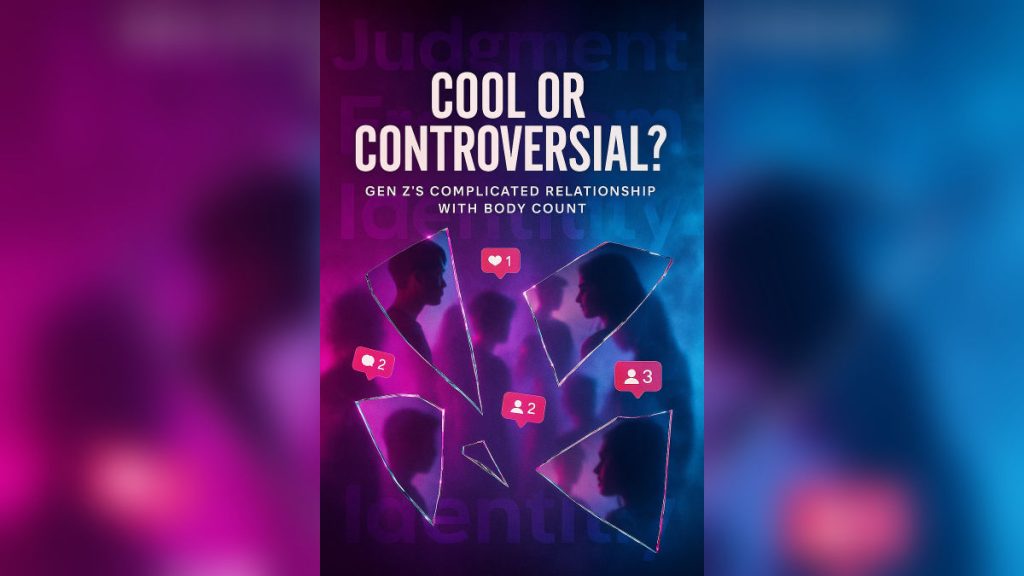
Short answer: Gen Z’s relationship with body count is split. Some treat the number as a badge of sexual liberation, others see it as a toxic metric weaponised by online double standards. Social media performance, hookup culture, and the rise of “puriteens” all stretch the conversation in opposite directions at once.
When numbers become identity

Among Generation Z, few slang terms stir as much debate as “body count.” Stripped of its grim wartime origins, the phrase now refers to the number of sexual partners a person has had. For some, it’s a badge of honour — a casual declaration of experience, confidence, even desirability. For others, it’s a toxic label that flattens intimacy into statistics and recycles the oldest gendered double standards in the book.
The phenomenon doesn’t sit alone. It’s embedded in Gen Z’s wider culture of online visibility, performance and the relentless pursuit of “coolness.” Celebrated, mocked, critiqued — body count has become a cultural flashpoint in the digital age.
Why is body count being reclaimed as liberation?

Historically, sexual history has been used as a weapon, especially against women. A “high body count” was stigmatised, framed as promiscuity or lack of self-control. Gen Z is challenging those narratives. For many, openly sharing their body count is an act of sexual liberation — confidence, autonomy and a refusal to play by outdated taboos.
On platforms like TikTok and Instagram, users casually disclose their numbers, often with humour and bravado. A viral TikTok trend asked people to reveal their “body count” in seconds or less, turning an intimate detail into a playful performance. For some, this reclamation has flipped what was once a source of shame into a marker of empowerment.
And yet the transformation isn’t universal. While some view body count as liberating, others feel pressure to conform to an unspoken expectation: higher numbers equal higher social capital.
How does social media turn body count into a flex?

Gen Z lives inside an ecosystem where identity is curated, shared and validated online. “Coolness” isn’t just style, music or taste anymore — it’s performance. Body count slid right into that digital performance, doubling up as both punchline and social flex.
The Role of Platforms
TikTok, X (formerly Twitter) and Instagram thrive on oversharing. Personal anecdotes, intimate details, even sexual histories get repackaged into content. A viral video might pull likes not because of the number but because of the boldness of disclosure.
As one 19-year-old student put it: “It’s not even about the number anymore. It’s about showing you’re comfortable enough to say it out loud.”
The Paradox of Authenticity
Ironically, Gen Z is often called the most authenticity-driven generation. But online, authenticity becomes its own performance. A casual, unbothered attitude about body count can read as the ultimate display of effortlessness. In reality, it’s a carefully constructed coolness that thrives on contradiction — appearing genuine while curating an image.
How does body count tie into hookup culture?

Body count discourse plugs neatly into the evolution of hookup culture. For many young people, sex has been decoupled from long-term relationships and reframed as casual, exploratory, immediate. In that frame, body count isn’t an intimate truth — it’s a tally of experiences.
Surveys complicate the picture though. Research from the Guardian (2025) points out that despite hookup culture’s visibility, Gen Z is overall having less sex than previous generations. But when they do engage, behaviours can be riskier, with safe sex practices sometimes overlooked in the rush of spontaneity.
What’s the darker side of body count culture?

While some celebrate body count as empowerment, the concept is riddled with contradictions and consequences.
The Gender Divide
The double standard is glaring. Men with high body counts get praised, admired, called “players.” Women, however, are routinely subjected to judgment and misogyny. Online “manosphere” communities even use women’s body count as a metric of worthiness for relationships, smuggling age-old stereotypes into a fresh digital wrapper.
Emotional and Psychological Strain
Social comparison can be brutal. A young person who hasn’t had many sexual experiences may feel inadequate, anxious, or just left out. Flip side: those with higher numbers may feel dehumanised, reduced to digits rather than seen for who they are. Over time that pattern feeds emotional detachment, making intimacy feel transactional instead of meaningful.
A 21-year-old I spoke with recalled: “I felt like I was collecting experiences just to keep up with everyone else. It stopped being about me and became about not falling behind.”
The Erosion of Safety
As the race for “coolness” picks up, safe sex slips. Condoms, STI testing, real conversations about consent, sometimes the lot gets overshadowed by the rush to maintain an image of casual confidence. That raises public health concerns, especially in places where misinformation about sexual health is still doing rounds.
Are puriteens pushing back against the casualness?

Not all of Gen Z is buying the body count hype. A counter-movement is gaining momentum. Sometimes called “puriteens,” these young people reject hookup culture altogether. For them, abstinence, intentional dating, or delaying sex is a deliberate form of rebellion against the commodification of intimacy.
That creates a fascinating split inside the same generation. On one end, hyper-visibility and casualness dominate; on the other, restraint and intentionality rise as equally valid forms of self-expression. Both, in their own ways, push back on traditional expectations of sexuality.
Why does this debate matter beyond the numbers?
The debate around body count reveals deeper truths about Gen Z’s relationship with identity, intimacy and authenticity. On the surface, it’s about numbers and bragging rights. Underneath, it reflects the pressures of growing up in a hyper-connected, unstable world.
For some, body count represents freedom. For others, it represents pressure. For all of them, it’s a reminder of how much social media now shapes the way we see ourselves — and each other.
Redefining intimacy in the digital age

The obsession with body count shows that even in an era of supposed openness, intimacy is still a performance — measured, judged, broadcast. But numbers can’t capture the complexity of human connection.
As Gen Z navigates this terrain, the real challenge isn’t whether someone has a “high” or “low” body count. It’s whether they can define intimacy on their own terms, free from imposed metrics of coolness. In the end, perhaps the real rebellion isn’t disclosing a number, it’s refusing to be reduced to one.
FAQs about Gen Z and body count culture
What does body count mean for Gen Z?
For Gen Z, body count refers to the number of sexual partners someone has had — stripped of its older wartime meaning. The term gets used as casual slang on TikTok and Instagram and sits at the centre of debates about sexual liberation, judgment, and how openly young people should discuss their sexual histories online.
Is sharing body count empowering or harmful?
It depends entirely on who’s doing the sharing and why. Some Gen Zs frame disclosure as sexual liberation and a rejection of old taboos, while others find the practice pressuring and tied to misogynist double standards online. Both readings are happening at once inside the same generation.
Is Gen Z actually having more sex than previous generations?
No. Research from the Guardian (2025) found that despite the visibility of hookup culture, Gen Z is overall having less sex than previous generations. The performance of casual sex on social media exceeds the lived reality, which is part of why body count discourse can feel so distorted.
What are puriteens and why are they pushing back?
Puriteens are Gen Z young people who reject hookup culture and treat abstinence, intentional dating or delaying sex as a deliberate form of rebellion. They view the commodification of intimacy in body count culture as something to resist, framing restraint as its own act of self-expression.
Why do men and women face different scrutiny over body count?
The double standard is glaring. Men with high body counts are often praised or labelled “players,” while women face judgment and online misogyny for the same behaviour. “Manosphere” communities even use women’s body count as a metric of relationship worthiness, recycling old stereotypes through a new digital filter.