

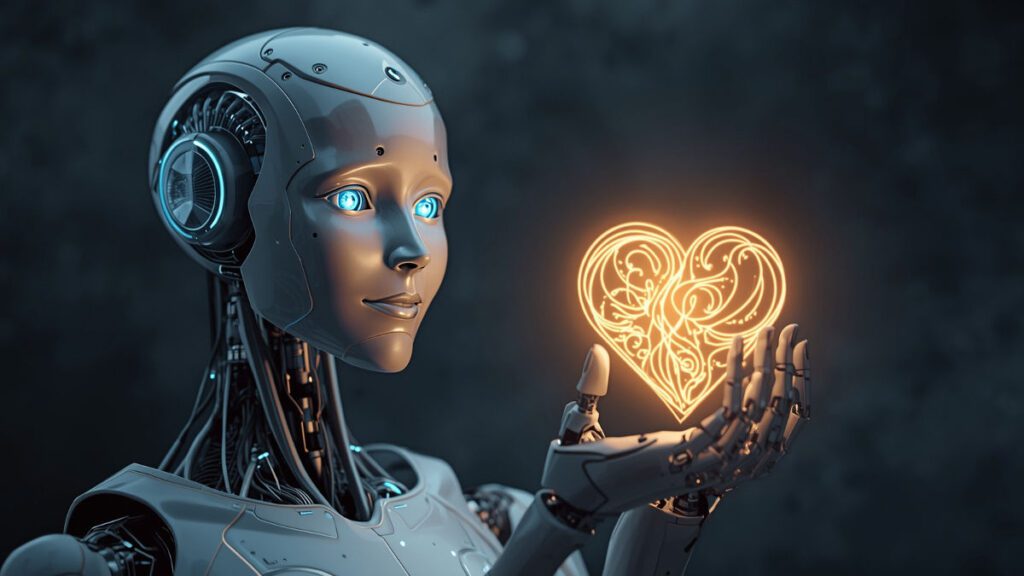
Short answer: Emotionally intelligent AI is technology designed to perceive, interpret, and respond to human emotions through voice, facial expressions, and micro-cues. Companies like Affectiva, Hume AI, and Replika are leading the space. The goal isn’t to replace human empathy but to scale it, powering mental health chatbots, adaptive learning, and more natural human-computer interaction.
In a world obsessed with speed, precision, and optimisation, artificial intelligence has mastered logic but not empathy. The next big leap in tech isn’t smarter algorithms or faster chips. It’s machines that understand how we feel.
Welcome to the age of emotionally intelligent AI, a frontier where technology learns not only to predict behaviour but to connect with the human experience.
Why is AI shifting from intelligence to empathy?
For years, AI was defined by one core ability: computation. From search engines to self-driving cars, intelligence was measured in accuracy and efficiency. But humans aren’t only logical beings. We’re emotional, unpredictable, and deeply relational.
As AI integrates more deeply into our lives, it’s no longer enough for machines to do things for us. They need to understand us. That’s where emotional intelligence, the ability to perceive, interpret, and respond to human emotion, becomes the defining factor.
Think of AI that senses frustration in your voice and adapts its tone, or a mental health chatbot that can tell sarcasm from sadness. These aren’t sci-fi dreams anymore. They’re the next phase of human-tech collaboration.
Why does emotional intelligence matter in tech?
Technology has always mirrored its creators, rational, precise, efficient. But the more it enters personal spaces, the more emotional awareness matters. From virtual assistants to therapy bots, demand for empathetic technology is rising fast.
Companies like Affectiva, Hume AI, and Replika are pioneering systems that read facial expressions, tone, and micro-emotions. Their goal isn’t automation. It’s connection. They’re building AI that reacts like a compassionate human, not a cold machine.
This matters because emotion is data. Understanding emotion helps machines predict behaviour, build trust, and deliver experiences that feel personalised. The point isn’t replacing human empathy. It’s scaling it.
What are emotionally-aware interfaces?
Imagine your phone recognising when you’re overwhelmed and offering calming music. Or a learning app that detects boredom and changes its teaching style. Small shifts like these redefine how we interact with digital systems.
Emotional intelligence gives technology context, the missing layer that makes interactions more human. In workplaces, emotionally aware AI could moderate tone in emails, detect burnout, or suggest breaks before tension rises.
In healthcare, it could help diagnose mental health issues earlier by analysing patterns in speech or facial cues. In gaming, it could create adaptive storylines that respond to how a player feels, turning gameplay into an emotional experience rather than a mechanical one.

Can you actually teach empathy to code?
The hardest part? Teaching machines to feel without actually feeling.
Empathy in AI isn’t genuine emotion. It’s data-driven perception. Done wrong, it risks crossing ethical lines. Should an AI comfort you if it detects sadness, or is that manipulative? Can emotion recognition be trusted if it’s biased toward certain cultures or expressions?
Researchers are already debating “synthetic empathy,” AI’s ability to simulate understanding. The key lies in responsible design: systems that respect emotion rather than exploit it.
Developers are working to balance authenticity and privacy so emotional AI doesn’t become emotional surveillance. The goal is technology that listens without spying, comforts without deceiving, and responds without overstepping.

How could emotionally intelligent AI change everyday life?
The impact could be massive, from education to entertainment.
In classrooms, emotionally aware systems could track student engagement, spot confusion or disinterest, and adjust lessons accordingly. In therapy, AI companions could offer 24/7 emotional support, bridging the gap between sessions.
Even customer service, the most robotic of all experiences, could transform. Imagine being greeted not by a monotone bot but by an AI that sounds genuinely empathetic, senses frustration, and calmly resolves your issue.
The fusion of emotional and artificial intelligence could reshape human-computer relationships, making them less transactional and more conversational.
Is AI becoming a companion, not just a tool?
We’ve spent decades building technology that serves us. Now we’re building technology that understands us.
As emotionally intelligent AI evolves, it will blur the line between assistant and companion. Machines will no longer only follow commands. They’ll anticipate needs, sense moods, and adapt personalities.
There’s a deeper question beneath the progress. Will humans become emotionally dependent on their devices? As AI grows more empathetic, will we forget how to connect with real people?
The answer depends on how we use it. If we build emotionally intelligent AI to enhance human empathy rather than replace it, the future looks promising. Imagine a world where technology helps us communicate better, care deeper, and connect wider.

Can technology keep its human touch?
At its core, the pursuit of emotionally intelligent AI is about reclaiming humanity within technology.
We’ve already proven machines can think. Now we’re teaching them to care. Not through genuine feeling, but through understanding, and that’s powerful enough to change everything.
The next chapter of innovation won’t be written in code or hardware specs. It’ll be defined by how well machines can recognise the curve of a smile, the tremor in a voice, or the silence that means everything.
The most advanced form of intelligence, it turns out, might just be empathy.
FAQs about emotionally intelligent AI
What is emotionally intelligent AI?
Emotionally intelligent AI is technology built to perceive, interpret, and respond to human emotions. It uses voice analysis, facial recognition, and micro-emotional cues to detect how a person feels, then adapts its response accordingly.
Which companies are building emotional AI?
Affectiva, Hume AI, and Replika are among the companies leading the space. They design systems that read facial expressions, tone, and micro-emotions to make AI feel more compassionate and less robotic.
Can AI actually feel emotion?
No. Empathy in AI isn’t real feeling. It’s data-driven perception. AI simulates understanding rather than experiencing emotion, which is why researchers call it “synthetic empathy” and debate how it should be designed responsibly.
Where is emotional AI already being used?
Emotional AI appears in mental health chatbots that distinguish sarcasm from sadness, adaptive learning apps that respond to boredom, customer service bots that detect frustration, and games with storylines that react to how a player feels.
Is emotional AI dangerous or unethical?
It can be, if designed badly. Risks include emotional surveillance, cultural bias in emotion recognition, and manipulation of vulnerable users. Responsible design focuses on privacy, consent, and building tech that respects emotion rather than exploiting it.