
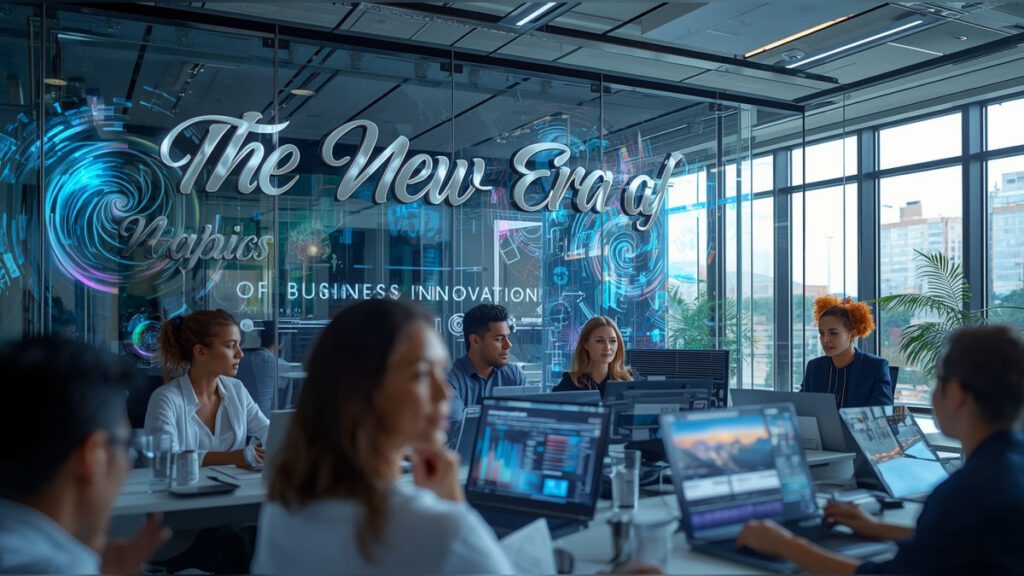
Short answer: Business adaptability is the defining edge in the 2020s economy. Companies that pivot quickly, absorb new tech, and respond to Gen Z consumer expectations outperform those chasing efficiency alone. Netflix, Tesla, and Lego show how reinvention beats stability.
The 2020s have rewritten the rulebook for business. Once, companies thrived by being stable and consistent. Today, they succeed by being adaptable. From startups to global corporations, the ability to pivot quickly, absorb new technologies, and meet evolving consumer needs has become the deciding factor between survival and obsolescence.
We are entering a business era defined not by size or legacy, but by speed, agility, and innovation. The digital economy rewards those who experiment, fail fast, and learn faster. So what does adaptability really look like, and how can young entrepreneurs harness it?
Why has efficiency lost to agility?
For decades, efficiency was the holy grail. Businesses optimised for cost-cutting and process perfection. But in an era where markets change overnight, the most efficient model is not always the most resilient one.
Agility now matters more. Instead of minimising errors, adaptable companies anticipate them. They build systems designed for quick reconfiguration, including cloud-based infrastructures, flexible teams, and iterative strategies. The rise of remote work, real-time analytics, and AI-driven decision-making has made agility a fundamental operating principle, not a buzzword.
How does technology drive business adaptability?
Technology is the enabler of modern business flexibility. Tools like AI, data visualisation, and automation improve productivity while also providing insight and foresight. Predictive analytics helps companies forecast demand, social listening reveals consumer sentiment instantly, and machine learning optimises pricing and logistics in real time.
Edge computing and decentralised data systems are speeding up decision loops. Small teams can analyse performance, prototype solutions, and roll out updates within days. This tech-driven adaptability is the great equaliser, giving startups the same analytical power once reserved for enterprise giants.

How does consumer behaviour drive change?
Businesses no longer dictate trends. Consumers do. The modern buyer is hyper-connected, socially conscious, and quick to switch allegiance if brands fail to align with their values. This has birthed a new era of responsiveness.
Gen Z and millennials expect transparency, personalisation, and purpose. They want brands that listen, adapt, and evolve alongside them. That is why leading businesses now run real-time feedback loops through social media, surveys, and engagement analytics to continuously refine products and experiences. Adaptability is not only operational. It is emotional and relational.
What is the human side of adaptability?
Behind every transformation lies people. A company’s adaptability depends as much on mindset as on technology. Employees who feel empowered to question, experiment, and innovate are the backbone of resilient organisations.
Forward-thinking leaders invest in cultures that reward curiosity over compliance. They replace rigid hierarchies with collaborative ecosystems where learning is continuous and failure is reframed as iteration. Adaptability becomes both a strategic and cultural asset.

Which companies prove adaptability wins?
Consider Netflix, which evolved from DVD rentals to global streaming, and now into original content production, all by reading the signals of change early. Or Tesla, which treated the automotive industry as a tech problem instead of a mechanical one, turning disruption into dominance.
Even traditional companies like Lego have proven the power of reinvention, bouncing back from near bankruptcy by co-creating with their community and embracing digital play. Each story proves that adaptability is not about luck. It is intentional evolution.

Who is the adaptive entrepreneur?
For the new generation of entrepreneurs, adaptability is baked into their DNA. Digital natives instinctively understand iteration, from A/B testing business ideas to building online brands that evolve daily. Staying relevant requires learning, unlearning, and relearning at unprecedented pace.
Startups that succeed now keep curiosity alive. They build modular systems, stay data-driven, and treat creativity as non-negotiable. In this climate, “done” is no longer a goal. It is a temporary state before the next upgrade.
The future belongs to the flexible
In business today, adaptability is the ultimate form of intelligence. The world is too dynamic, technology too fast, and consumers too aware for static models to survive. The winners of tomorrow will treat change not as a threat, but as a tool.
To thrive in this ever-shifting economy, entrepreneurs must build with elasticity, lead with empathy, and innovate without fear. The next generation of business legends will be defined not by stability, but by their mastery of movement.
FAQs about business adaptability
Why is adaptability more important than efficiency for modern businesses?
Efficiency optimises for a stable environment, but markets change overnight. Adaptable companies anticipate errors and build systems for quick reconfiguration using cloud infrastructure, flexible teams, and iterative strategies. That resilience beats pure cost-cutting when conditions shift.
Which technologies enable business agility in 2025?
AI, predictive analytics, data visualisation, automation, social listening, machine learning, and edge computing let small teams analyse performance, prototype, and launch updates in days. These tools give startups analytical power once reserved for enterprise giants.
What do Gen Z and millennial consumers expect from brands?
They expect transparency, personalisation, and purpose. They want brands that listen through real-time feedback loops on social media and surveys, then actually change products and experiences based on what they hear.
What companies are examples of business adaptability?
Netflix pivoted from DVD rentals to streaming to original production. Tesla reframed cars as a tech problem. Lego escaped near bankruptcy by co-creating with its community and embracing digital play. Each case shows intentional evolution, not luck.
How can young entrepreneurs build adaptable startups?
Build modular systems, stay data-driven, treat creativity as non-negotiable, and normalise A/B testing and iteration. Reward curiosity over compliance on the team, and treat every launch as a temporary state before the next upgrade.