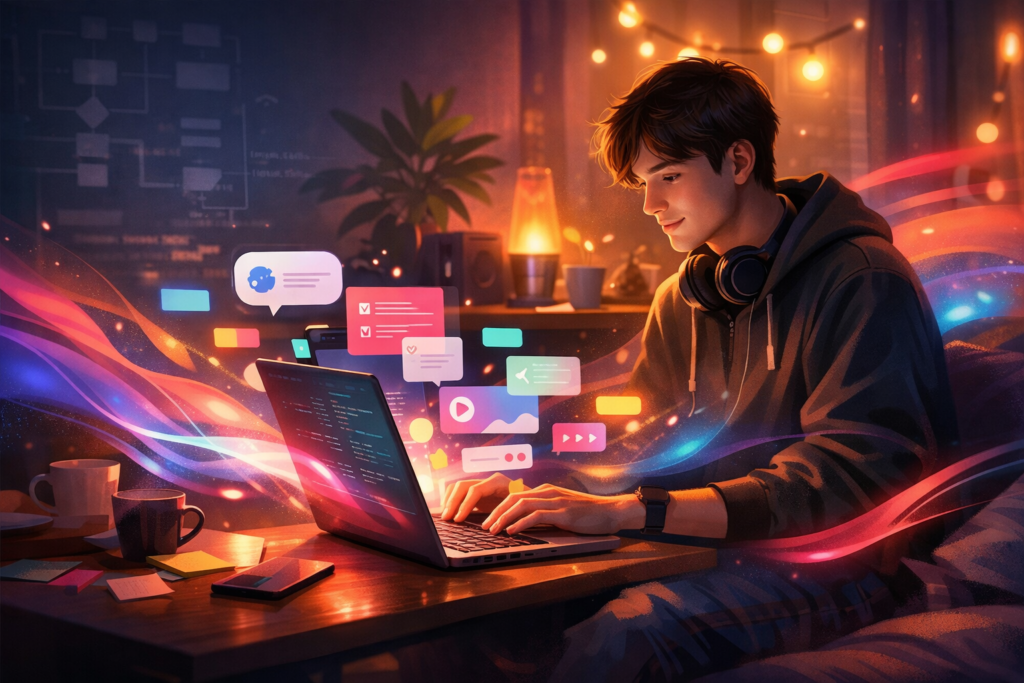
Short answer: Vibe coding is a creative-first, feeling-led way of building software with heavy use of AI tools like ChatGPT, Cursor, Replit and GitHub Copilot. Gen Z is driving it because AI removes the fear barrier, shipping projects is the new credential, and it pushes back against hustle-driven tech culture.
Not long ago, coding carried a certain stereotype. It was rigid, intimidating and reserved for people fluent in algorithms, system design and late-night debugging. For many, it felt like a gated world that demanded years of formal training before you could build anything meaningful.
Gen Z is quietly dismantling that perception.
Across campuses, creator communities, startup Discords and indie hacker forums, a new way of building is emerging. It is informal, fast, creative and driven as much by emotion and intuition as by logic.
This approach has a name now: vibe coding.
For Gen Z, coding is no longer only a technical skill. It is a form of expression. Vibe coding is how this generation is turning technology into something that feels human again.
What exactly is vibe coding?
At its core, vibe coding is a creative-first approach to building with code. Instead of starting with specs, architecture diagrams or rigid best practices, vibe coding begins with a feeling.
A vibe coder might think:
- “I want this app to feel calm and minimal.”
- “This should look playful and slightly chaotic.”
- “I want something that works for me, even if it’s rough.”
From there, they build, often quickly and experimentally.
Vibe coding typically involves:
- Heavy use of AI tools like ChatGPT, Cursor, Replit or GitHub Copilot
- Rapid prototyping instead of long development cycles
- A focus on UI, motion, aesthetics and interaction
- Willingness to ignore perfection in the early stages
- Comfort with abandoning projects that no longer excite
Code becomes creative clay, not a fixed structure. The goal is momentum, not engineering purity.
Why is this not just an internet fad?
The label sounds like a buzzword, but clear behavioural shifts back it up.
According to GitHub’s Octoverse data, developers under 25 are the fastest-growing group adopting AI-powered coding tools, with usage up over 40% year-on-year. A 2024 Stack Overflow Developer Survey reported that more than 70% of Gen Z developers actively use AI while coding, compared to under 40% among Gen X. Platforms like Replit and Glitch report that a significant share of new applications are now built by users without formal computer science backgrounds.
The data points to something simple and powerful: the distance between an idea and a working product has collapsed. Gen Z is building in that gap.
Why is Gen Z naturally drawn to vibe coding?
AI removed the fear barrier
For earlier generations, learning to code meant memorising syntax, struggling with errors and waiting a long time to see results. Gen Z does not wait.
AI now writes boilerplate instantly, explains errors in plain language, refactors messy code on command, and turns rough ideas into functional prototypes. That lets Gen Z learn while building, not study endlessly before starting. Coding feels accessible, conversational and forgiving. That shift alone is revolutionary.
Gen Z thinks in feelings, not specifications
This is a generation raised on Spotify mood playlists, TikTok aesthetics, Instagram visuals and meme-driven communication.

They create differently. Instead of saying, “I need a scalable CRUD-based application,” they say, “I want this to feel like a late-night app you open when you can’t sleep.” Vibe coding mirrors how Gen Z already makes content: intuitively, emotionally and visually. The product starts with a mood, not a feature list.
It fits seamlessly into creator culture
Gen Z does not separate tech people from creative people. Many are both.
Vibe coding sits at the intersection of indie hacking, creator tools, no-code and low-code platforms, solo entrepreneurship and side-project culture. A large share of vibe-coded projects are never meant to scale. They exist to solve a personal problem, explore an idea, experiment with design or learn by doing.
Indie builder communities consistently report that a majority of Gen Z projects are built for curiosity and learning, not monetisation. That freedom is essential.
A pushback against hustle-driven tech culture
Traditional tech narratives glorify long work hours, relentless optimisation and constant performance pressure. Gen Z is more sceptical of that mindset.
Vibe coding is a quiet rebellion. It prioritises enjoyment over exhaustion, exploration over efficiency, and creativity over constant output. For a generation that openly talks about burnout and mental health, vibe coding offers a way to build without turning creativity into stress.
Shipping projects is the new credential
Gen Z places less faith in resumes. They believe in live links over certificates, proof of work over degrees and curiosity over credentials.
With vibe coding, a student or creator can ship multiple small projects in a year, each one a tangible demonstration of initiative and skill. Recruiters and startup founders increasingly value these real-world experiments over formal qualifications. Vibe coding becomes a career accelerant, even when it starts as play.
How does vibe coding differ from traditional coding?
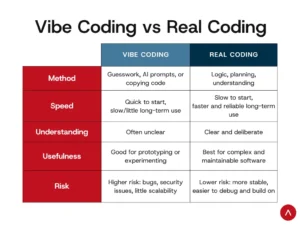
- Specs first vs Feeling first
- Clean architecture vs “Does it work?”
- Long timelines vs Rapid experiments
- Perfection-driven vs Momentum-driven
- Enterprise mindset vs Indie mindset
Vibe coding does not replace serious engineering. It often comes before it. Many polished products today began as messy, vibe-coded prototypes refined only after they proved their value.
Why are startups quietly embracing it?
Despite scepticism from senior engineers, startups benefit from vibe coding culture. The advantages are clear: faster MVPs, lower experimentation costs, more creative product ideas and increased participation from non-technical founders. Several accelerators now encourage founders to prototype quickly and worry about engineering excellence later, which aligns with vibe coding.
What are the risks, and why does Gen Z accept them?
Vibe coding has downsides: messy codebases, security blind spots, scalability challenges and over-reliance on AI. Gen Z knows these risks and accepts them early on. Learning speed and momentum matter more than long-term optimisation. As one young builder put it, “If it breaks later, that means it mattered enough to fix.”
What does vibe coding really signal?
Vibe coding is not only about how code is written. It signals a deeper shift:
- Technology becoming creative-first, not technical-first
- Builders acting as directors and curators, not only executors
- AI functioning as a collaborator, not a replacement
- Work shaped by emotion, play and intuition
This is less a coding trend and more a cultural evolution.
Building without permission
Vibe coding is Gen Z’s way of reclaiming technology. It is imperfect. It is fast. It is messy.
It is also empowering millions of young people to build without fear, without waiting to feel “ready” and without asking for permission. In a world where ideas matter more than ever, that freedom might be the most powerful innovation of all.
FAQs about vibe coding
What is vibe coding?
Vibe coding is a creative-first, feeling-led approach to building software. Instead of starting with specs or architecture diagrams, the coder starts with a mood or interaction goal and uses AI tools like ChatGPT, Cursor, Replit or GitHub Copilot to rapidly prototype.
Why is Gen Z adopting vibe coding faster than other groups?
GitHub Octoverse shows developers under 25 are the fastest-growing group adopting AI-powered coding tools, with over 40% year-on-year growth. A 2024 Stack Overflow Developer Survey found more than 70% of Gen Z developers actively use AI while coding, compared to under 40% among Gen X.
How is vibe coding different from traditional coding?
Traditional coding starts with specs, clean architecture and long timelines, and is perfection-driven. Vibe coding starts with a feeling, prioritises rapid experiments, asks “does it work?” and runs on an indie mindset focused on momentum.
Is vibe coding risky?
Yes, it has real trade-offs: messy codebases, security blind spots, scalability issues and over-reliance on AI. Gen Z knowingly accepts these early because learning speed and shipping matter more than long-term optimisation at the prototype stage.
Can vibe coding help you get a job?
Shipping live projects increasingly matters more than resumes. Vibe coders can release multiple small projects in a year, giving recruiters and startup founders real evidence of skill and initiative, often ahead of formal qualifications.