
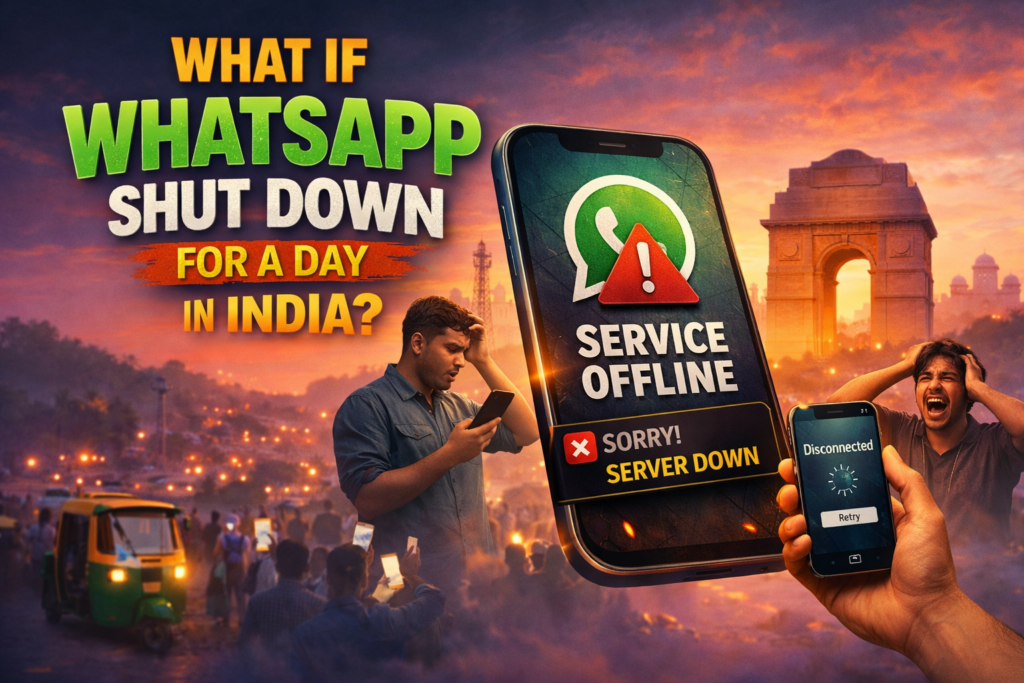
Short answer: A one-day WhatsApp outage in India would hit 500 million users at once, freezing family check-ins, college group plans, workplace approvals, small business orders, and chat-based payments. Because the app is default infrastructure in Tier 2 and Tier 3 cities, its absence exposes how centralised Indian communication has become.
What would it feel like to wake up with no WhatsApp?
You unlock your phone. No notifications. No missed messages. You tap open WhatsApp and it says “Connecting…” You refresh. Still nothing.
First you blame the internet. Then your phone. Then reality sinks in. WhatsApp isn’t working, and not for anyone.
This is a cultural pause, not just a tech issue. In a country where conversations, commerce and family connections flow through one green icon, a day without WhatsApp feels less like inconvenience and more like disruption.
Why is WhatsApp different in India?
Globally, messaging apps compete. In India, WhatsApp dominates. According to industry estimates in 2026, India has over 500 million WhatsApp users, making it the platform’s largest market. (Source: Statista, Meta reports)
WhatsApp is:
- A family check-in system
- A college notice board
- A workplace coordination tool
- A small business lifeline
For many users in Tier 2 and Tier 3 cities, it is the internet. When something this embedded disappears, the ripple effects show up within minutes.
How do Indian families react to WhatsApp going down?
Communication in Indian households is emotional. A simple “Reached” message carries weight. When WhatsApp stops working, that reassurance disappears.

Gen Z voice
“My mom literally called me within 20 minutes when WhatsApp stopped once. She thought something happened,” says Riya, a 19-year-old student from Delhi.
Parents start overthinking. Relatives begin calling. In India, no message often means something is wrong.
Why does Gen Z lose its social nerve centre?
For Gen Z, WhatsApp isn’t optional. It’s infrastructure. College groups, friend circles, event planning, everything lives there.

When it stops, plans collapse, updates get missed, and conversations pause mid-flow.
Gen Z voice
“Our entire fest coordination was on WhatsApp. If it goes down, honestly, chaos,” says Arjun, a 21-year-old college organiser in Mumbai.
Instagram DMs and other platforms exist, but they are not the default. Convenience has created dependency.
How do Indian workplaces slow down without WhatsApp?
WhatsApp has quietly become India’s unofficial office tool across startups, agencies and corporate teams.
- Quick approvals happen on chat
- Client updates come via messages
- Teams coordinate informally
When it stops, decisions get delayed, conversations fragment, and productivity dips.
Gen Z voice
“Our manager sends everything on WhatsApp. Without it, no one knows what’s happening,” says Kunal, a 24-year-old marketing executive in Gurgaon.
Unlike email outages, WhatsApp failures feel unexpected, and therefore more disruptive.
Why do Indian small businesses feel a WhatsApp outage first?
India’s digital economy runs on accessibility, not apps alone.
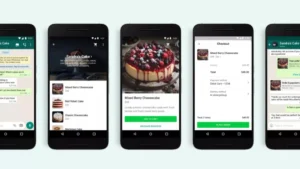
For thousands of small entrepreneurs, WhatsApp is the storefront, customer support desk and order system all at once. From home bakers to thrift stores, everything runs on chats.
When the app stops, orders freeze, queries go unanswered, and revenue pauses.
Gen Z voice
“I run a small Instagram thrift page, but all my serious buyers shift to WhatsApp. If it stops, sales stop,” says Mehak, a 20-year-old seller from Jaipur.
Even a single day can impact trust. In small businesses, trust is everything.
What happens to payments and commerce during a WhatsApp outage?
Chat-based payments have blurred the line between messaging and money. Transactions now happen inside conversations.
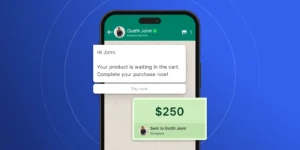
When it goes down, payment confirmations don’t arrive, delivery updates are delayed, and customers hesitate.
According to NPCI and industry insights (2025-2026), conversational commerce in India is growing rapidly, with messaging apps playing a central role.
Gen Z voice
“I’ve literally paid my tuition group fees on WhatsApp. If it’s down, everything just gets delayed,” says Sneha, a 22-year-old student in Pune.
This isn’t communication failing. It’s commerce pausing.
What does the internet feel like without WhatsApp?
No forwards. No viral videos. No “urgent” messages from family groups. For a brief moment, the noise disappears, and it feels unfamiliar.
Gen Z voice
“It was actually peaceful for like an hour, and then weird,” says Dev, a 23-year-old content creator.
WhatsApp doesn’t only distribute information. It amplifies it, including misinformation. Its absence creates a rare digital silence that feels both calming and unsettling.
How fragile has our communication become?
The biggest impact of an outage is reflective. When WhatsApp stops, people start asking: Should I call instead? Do I even have this person’s number saved properly? What’s the alternative?
Over time, we replaced calls with texts, texts with voice notes, and conversations with quick reactions. In doing so, we centralised everything on one app.
Gen Z voice
“I don’t even call people anymore. If WhatsApp stops, I genuinely don’t know what to do,” admits Aakash, a 20-year-old engineering student.
What runs under the hood of WhatsApp?
Platforms like WhatsApp run on end-to-end encryption, distributed global servers and real-time message delivery systems. When something fails, it doesn’t degrade slowly. It collapses at scale. Because billions rely on it, including users of other Meta platforms, the impact is instant and widespread.
Why do outages break user trust?
Messaging apps are built on one expectation: reliability. Users don’t tolerate failure easily because communication is personal.
If messages don’t go through, trust weakens and alternatives gain attention. Even a few hours of downtime can spark conversations around Telegram, Signal, and traditional SMS. Once users explore options, loyalty is no longer guaranteed.
When WhatsApp stops, a nation pauses
A WhatsApp outage in India isn’t a technical event. It is a social experiment that hits families, students, professionals and entrepreneurs at the same time, exposing our habits, our dependencies and our blind spots.
FAQs about a WhatsApp outage in India
How many WhatsApp users are there in India?
As of 2026, India has over 500 million WhatsApp users, the platform’s largest market worldwide (Statista, Meta reports).
What happens to small businesses if WhatsApp goes down?
For small sellers, WhatsApp acts as storefront, customer support and order system at once. Orders freeze, queries go unanswered and revenue pauses within hours, as 20-year-old Jaipur seller Mehak describes in this piece.
Can Indian payments work without WhatsApp?
UPI and bank apps still work, but chat-based confirmations and delivery updates stop flowing. NPCI and industry insights from 2025 to 2026 show conversational commerce growing fast, so outages delay confirmations even when the money moves.
Which apps do Indians turn to when WhatsApp is down?
During short outages, users try Telegram, Signal, SMS, Instagram DMs and voice calls. None have become a true default, which is why even a few hours of downtime trigger conversations about switching.
Why does WhatsApp feel like infrastructure in India?
It runs family check-ins, college groups, workplace approvals, small business orders and chat-based payments at once. In many Tier 2 and Tier 3 cities, it effectively is the internet.