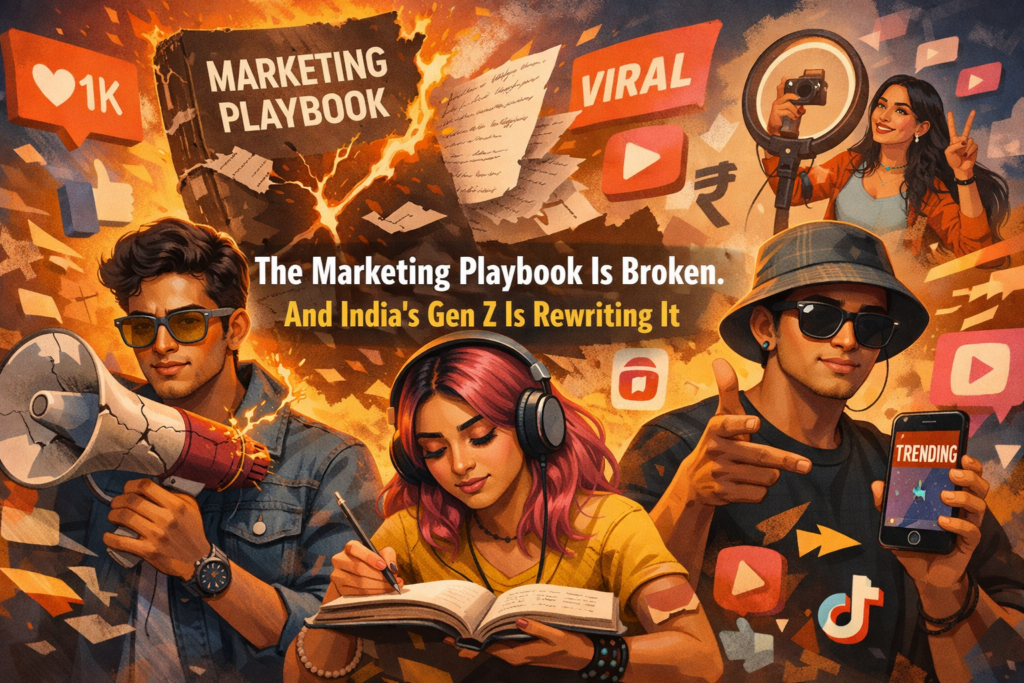
Short answer: India has over 370 million Gen Z consumers who already drive 40%+ of consumption and could control $1 trillion in spending by 2030. They don’t follow the old awareness-to-purchase funnel. They discover on Instagram, validate on YouTube, check reviews on Amazon or Flipkart, and decide in the comments. For brands, the shift is clear — stop marketing to Gen Z, build with them.
Why the old marketing rules collapsed
For years, marketing felt like a discipline you could master. There were frameworks, funnels, playbooks. If you understood them well enough, you could build a career and predict outcomes.
That predictability has disappeared. Not gradually. Suddenly.
From where I sit, building a youth-first platform like theyouthtalks.com, the reason is clear. The rules didn’t evolve. They collapsed. Not because of technology alone. Not because of AI. Because power shifted from brands to people. And nowhere is that shift more visible than in India.
Who is India’s Gen Z — an audience or the market?
Scale changes everything in India. The country is home to over 370 million Gen Z consumers. That’s not a segment — that’s an economy. Reports suggest this cohort already drives over 40% of consumption and could command upwards of $1 trillion in spending power by 2030.

This generation doesn’t behave like earlier ones. They don’t only consume content. They create it, critique it, and remix it. Multiple studies suggest that a large share of Gen Z in India identifies as creators in some form — posting, editing, sharing, influencing.
That leads to a fundamental shift. We are no longer marketing to consumers. We are marketing to people who already have an audience.
Why the funnel is dead and the loop has taken over
For decades, marketing followed a linear journey: Awareness → Consideration → Purchase. Clean. Structured. Predictable.
Watch how a 21-year-old in India buys something today and that model falls apart. Here’s what happens:
- Discovery on Instagram
- Validation on YouTube
- Reviews checked on Amazon or Flipkart
- Trust built — or broken — in comments
- Purchase may happen later, or not at all
One comment (“Not worth it.”) and the entire funnel collapses. This isn’t a funnel anymore. It’s a loop of influence — messy, non-linear, always moving. If your brand isn’t present across that loop, you’re invisible.
Why ads don’t work the way they used to
Advertising, as we knew it, is losing its edge. Gen Z scrolls faster. Skips quicker. Filters harder. They’ve grown up with constant content overload, so traditional ads often feel like noise no matter how well produced.
But they do pay attention — to comments, reviews, real experiences, peer validation.
Globally, studies indicate that a majority of Gen Z trusts user reviews more than influencer promotions. In India, where social proof is deeply ingrained in decision-making, that effect is even stronger.

I’ve seen this play out. A well-produced campaign can generate millions of impressions. A single negative comment thread? That’s what people remember. So the real question for marketers today isn’t “How do we get attention?” It’s “How do we earn trust?”
Why brands are no longer owned by companies
This is the most uncomfortable shift for traditional marketers. Earlier, brands controlled the narrative — what to say, how to say it, where to say it. That control is gone.
Now, your brand equals what people say about you.
Look at Zomato and Swiggy. Their strongest marketing asset isn’t ad spend. It’s their tone of voice, their social media replies, their meme participation, their cultural timing. They behave like people. Because Gen Z doesn’t engage with logos. They engage with personalities.
How culture became the new currency
One thing we’ve learned while building youth-first content: you cannot fake culture. You either understand it or you get called out. Gen Z has zero tolerance for inauthenticity.
In India, culture moves fast:
- Memes evolve overnight
- Language shifts weekly
- Trends peak and die within days
Marketing is no longer campaign-driven. It is culture-driven. You don’t launch campaigns anymore. You participate in conversations.
How the creator economy moved from metros to Bharat
One of the most exciting shifts in India is the democratization of influence. Content creation used to be concentrated in Mumbai and Delhi. Today, creators are emerging from Indore, Jaipur, Lucknow, and Patna. And they’re not participating — they’re leading.
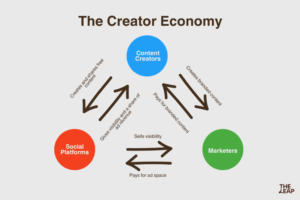
This is not a creator economy. It’s a creator revolution. And brands are still catching up. The future doesn’t belong to big celebrity endorsements. It belongs to micro-creators with real trust.
What is the comment section economy?
The real action doesn’t happen in ads. It happens in the comments. A typical Gen Z purchase journey in India looks like this:
- Sees a reel
- Opens comments
- Searches reviews
- Asks friends
- Then decides
One honest review can drive sales. One sarcastic comment can kill a product. That’s the comment section economy, and it’s more powerful than any campaign you can design.
Why offline is making a comeback — differently
Here’s the paradox. Even as India gets more digital, Gen Z is craving offline experiences. But not the traditional kind.
They’re drawn to flea markets, thrift stores, pop-up events, and community-driven spaces. You see it in Delhi’s Sarojini Nagar or Mumbai’s Colaba Causeway — the “treasure hunt” experience matters more than convenience.
Why? Digital fatigue is real. After hours on screens, Gen Z wants tangible experiences, real interactions, and discovery beyond algorithms. The future isn’t digital versus physical. It’s phygital — a blend of both.
Why the new marketer is already in your office
Here’s a hard truth. The person who understands your audience best might not be your CMO. It might be your intern.
A 21-year-old today understands meme culture, knows what’s trending, and spots “cringe” instantly. Because they are living the culture, not studying it. Most organizations still operate on hierarchy, not insight. That’s a mistake. Cultural proximity is a competitive advantage.
What should brands do now?
From a founder’s perspective, the path forward is clearer than it seems — if you’re willing to let go of old thinking.
1. Stop marketing to Gen Z
Start building with them.
2. Shift from campaigns to conversations
Engagement matters more than reach.
3. Think like a creator
Authenticity beats perfection.
4. Invest in cultural intelligence
Not just digital presence.
5. Build trust relentlessly
Trust compounds.
What does the future of Indian marketing look like?
We are entering a new marketing reality:
- Every user is a creator
- Every platform is commerce
- Every comment is influence
- Every brand is a community
In India, this shift is magnified by scale, diversity, and rapid digital adoption. This is not a trend. It’s a structural shift.
Is Gen Z really difficult to market to?
There’s a narrative that Gen Z is hard to understand — unpredictable, demanding, distracted. I don’t think that’s true. They’re honest.
They don’t want overproduced ads, scripted messaging, or forced relatability. They want realness, clarity, and value. If you can’t offer that, they won’t argue. They’ll move on.
FAQs on Gen Z marketing in India
How big is the Gen Z market in India?
India has over 370 million Gen Z consumers. Reports suggest they already drive more than 40% of consumption and could command upwards of $1 trillion in spending power by 2030.
Why don’t traditional ads work on Gen Z in India?
Gen Z grew up in constant content overload and filters harder. They trust comments, reviews, and peer validation over polished campaigns. Globally, most Gen Z users trust user reviews more than influencer promotions, and that effect is stronger in India.
What is the “comment section economy”?
It’s the idea that buying decisions are made in the comments, not the ad. A typical Gen Z journey is: sees a reel, opens comments, searches reviews, asks friends, then decides. One honest review can drive sales. One sarcastic comment can kill a product.
Where is India’s creator economy growing fastest?
Beyond Mumbai and Delhi. Creators are now emerging from Indore, Jaipur, Lucknow, and Patna, and the future belongs to micro-creators with real trust rather than big celebrity endorsements.
What does “phygital” mean for Gen Z in India?
It’s the blend of digital and physical. Gen Z still loves offline spaces like flea markets, thrift stores, pop-up events, and community venues such as Delhi’s Sarojini Nagar and Mumbai’s Colaba Causeway — but they discover and share these experiences online.