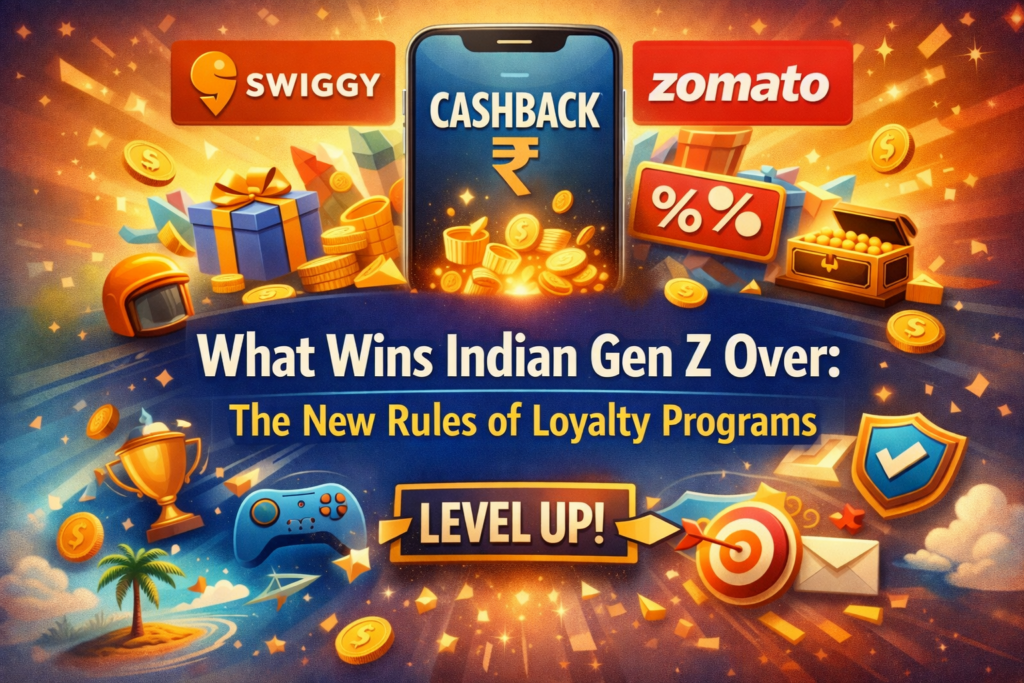
Short answer: Indian Gen Z aren’t loyal to brands; they’re loyal to value. In a market built on cashback, flash sales, and app-switching, the old points-and-redeem model is dead. Winning loyalty here means instant rewards, transparent rules, status perks, and personalised experiences — repeated every single transaction.
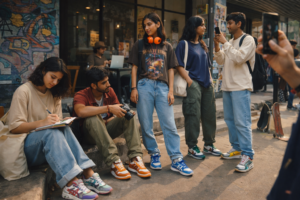
Walk into a college canteen in Delhi, scroll through a late-night hostel WhatsApp group, or watch how students order food on a Friday evening — you’ll notice a pattern. No one is loyal to a single app. One day it’s Zomato. The next, Swiggy. Sometimes both, depending on who’s offering free delivery or a better coupon.
During a campus interaction, I asked a second-year student which platform she preferred. Her answer was blunt: “Whichever is cheaper today.”
That one sentence captures the mindset of Indian Gen Z better than any research report. They aren’t emotionally attached to brands. They are value-driven, hyper-aware, and fluid in their choices.
But here’s where most brands misread the situation. It doesn’t mean Gen Z can’t be loyal. It means loyalty must be earned every single time.
Why does loyalty work differently in India?
India is not another consumer market. It is a deal economy. With multiple platforms offering near-identical services, switching costs are negligible. A few taps and you’re gone.
Layer on constant sales cycles, cashback ecosystems, and aggressive discounting. Platforms like Myntra and Flipkart have trained users to wait, compare, and optimise every purchase.
According to industry reports (including insights from firms like Deloitte), Indian consumers — especially Gen Z — show much lower long-term brand stickiness than global counterparts. The takeaway is direct: loyalty in India is not a mindset. It’s a calculation.
Why does “free” only work when it’s instant?
Nothing grabs attention like the word free. But Indian Gen Z has seen too many gimmicks. Free works only when it is immediate, obvious, and effortless.
Compare the dopamine rush of a scratch card on Google Pay, instant cashback via PhonePe, or free delivery unlocked at checkout to the dull pull of “Earn 500 points, redeem later.”
The difference is emotional. One feels like a win. The other feels like work. Indian Gen Z doesn’t chase rewards. They chase instant wins.
Are discounts still enough to create loyalty?
There was a time when discounts felt exciting. Today, they feel expected. Gen Z doesn’t ask, “Is there a discount?” They ask, “How much?”
Years of flash sales, festive offers, and coupon stacking have rewired behaviour. Discounts alone don’t create loyalty anymore. They create temporary preference. Discounts get you the first transaction. They don’t guarantee the second.
Why do Indian Gen Z prefer cashback over points?
Traditional loyalty programs love points. Customers don’t. Points feel abstract, take time to accumulate, and usually come with restrictions.
Cashback is the opposite. It’s tangible and immediate. Platforms like Paytm built entire ecosystems around this insight.
- ₹50 cashback = instant gratification
- 500 points = delayed, uncertain value
For Indian Gen Z, liquidity beats loyalty currency.
How does gamification fit into loyalty today?
If you’ve ever scratched a digital card hoping to win ₹100 and ended up with ₹7, you already understand this. India’s digital ecosystem has quietly gamified consumption.
- Spin-the-wheel rewards
- Daily streak bonuses
- Referral challenges
Users are constantly interacting with systems that feel more like games than transactions. Simplicity is key — the moment a system turns complex, users drop off. The best loyalty programs don’t look like programs. They feel like micro-games with real rewards.
Why does status still matter, even when price sensitivity is high?
Here’s where it gets interesting. Despite being price-sensitive, Indian Gen Z deeply values status and exclusivity.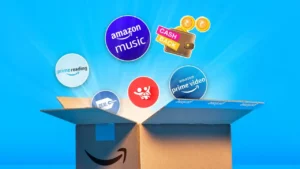
Memberships like Amazon Prime and Flipkart Plus aren’t just about savings. They offer faster delivery, early access, and priority treatment. In a crowded digital world, those small privileges create a powerful feeling — I’m not just another user.
Loyalty is no longer financial alone. It is also psychological and social.
Why experiences are becoming the real differentiator
Something subtle is changing. A growing segment of urban Gen Z is shifting from “How do I save money?” to “What can I unlock?”
The next wave of loyalty isn’t about coupons, cashback, or discounts. It’s about access, opportunities, and experiences. Imagine attending a closed-door industry event, getting access to a mentor, or unlocking an internship opportunity through a brand. That’s not a reward — it’s a life upgrade.
The future of loyalty lies in outcomes, not offers.
Why is personalisation still the missing layer?
Most loyalty programs in India still operate like broadcast systems. Same reward. Same message. Same experience. But Gen Z expects relevance.
They want offers that match their behaviour, rewards aligned with their interests, and communication that feels personal. A design student gets access to a portfolio workshop. A finance enthusiast gets exclusive webinar invites. Personalisation turns a transaction into a relationship.
Why trust is the most underrated loyalty currency
Indian Gen Z is sceptical, and rightly so. They’ve encountered misleading “up to” discounts, hidden conditions, and expiring rewards. When a brand is transparent, it stands out immediately.
Clear rules. Easy redemption. No surprises. In a market full of noise, trust is differentiation.
From loyalty programs to value ecosystems
Here’s the bigger shift most brands are missing. Loyalty is no longer a feature. It’s an ecosystem.
Old world
Spend → Earn points → Redeem later.
New world
Spend → Get value instantly → Unlock more over time.
Gen Z isn’t asking, “Am I loyal to this brand?” They’re asking, “Is this brand worth it right now?” And that question gets asked every single time.
Why loyalty is rented, not owned
If there’s one idea brands need to internalise, it’s this: You don’t own Gen Z’s loyalty. You rent it — one offer, one experience, one interaction at a time.
The brands that will win in India are not the ones shouting the loudest. They are the ones delivering consistent, visible, and meaningful value. Because in the end, Indian Gen Z doesn’t stay for the brand. They stay for what the brand does for them.
If you’re building for Gen Z, pause and ask: are you rewarding transactions, or creating value? Are you offering discounts, or unlocking opportunities? Are you building a program, or an ecosystem? The answer decides whether Gen Z scrolls past you or sticks around.
FAQs: Indian Gen Z loyalty programs
What do Indian Gen Z actually want from a loyalty program?
They want instant, visible value — cashback over points, free delivery over delayed rewards, and clear rules without hidden conditions. They also value status perks like priority access and curated experiences. The unifying principle is fast, transparent, personalised value.
Why is cashback more effective than points for Indian consumers?
Cashback feels tangible and immediate. Points feel abstract, slow to accumulate, and come with restrictions. Platforms like Paytm, PhonePe, and Google Pay have trained users to expect real money outcomes, so loyalty programs built on point balances compete poorly with ones that return actual rupees.
Do discounts still drive loyalty in India?
Discounts drive the first transaction, not the second. Years of flash sales and coupon stacking have made discounts an expectation rather than a delight. They’re an entry ticket — necessary, but not enough to keep a customer coming back.
How important is status in Indian Gen Z loyalty?
More than most brands assume. Memberships like Amazon Prime and Flipkart Plus work not only because of the savings but because of the sense of priority — faster delivery, early access, special treatment. Indian Gen Z is price-sensitive, but the feeling of being valued carries real weight.
What makes loyalty programs fail with Gen Z?
Complex redemption rules, delayed gratification, generic offers, and hidden conditions. If a program feels like work, or breaks trust through fine print, Indian Gen Z disengage quickly — because switching to a competitor takes only a few taps.